
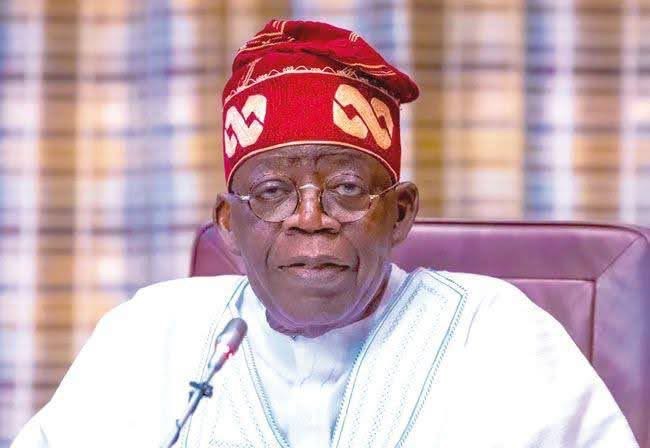

President Tinubu: Balking at The Ladder that Can Give the Country the Highest Lift.
By Banji Ayiloge
There is no argument against the fact that the country has regressed politically and economically since independence. Our politics dictates the sorry state of our economy. What we are experiencing today is a result of the political system we boxed ourselves into. We moved from a genuinely representative government to a costly winner-take-all American system prone to corruption. Also, the egregious erosion of a genuinely federal system and the systematic imposition of a quasi-unitary system have affected our country’s development. We now have an over-bloated federal government that takes resources from the states only to reallocate a pittance back to those states unequally. The resultant effect of the two abnormalities in our system is the economic disruption we are dealing with today.
When General Obasanjo came out recently to oppose the Westminster (parliamentary) system of government as suggested by some senators in the Senate, I wondered whether the good old General ever, at a period of introspection, re-examine the monster he and his fellow soldiers created and imposed on the country. It was General Obasanjo who, in a speech to the military handpicked committee to rewrite the constitution, stressed that a presidential system of Government was better than the parliamentary (Westminster) system of government. He argued, albeit unconvincingly, that the system was not conducive to our African sensibilities because it came with institutionalized opposition and, therefore, alien to African culture. Instead, Obasanjo proposed an American presidential system. We all witness the flaws in that argument and the albatross it has become on the country. The presidential system has produced demigods among our executive officeholders. From the President to the Governors and the Chairpersons of the local governments, we have a supper unquestionable breed that reigns and rules over us unquestionably. The cost of governing has become prohibitive, and what we spend to keep our elected and appointive officials in power in ten years could transform the country from a poor country to a medium-developing nation within that same period.
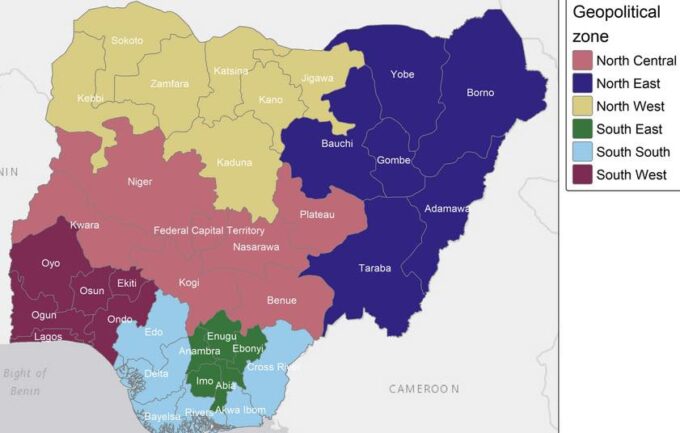
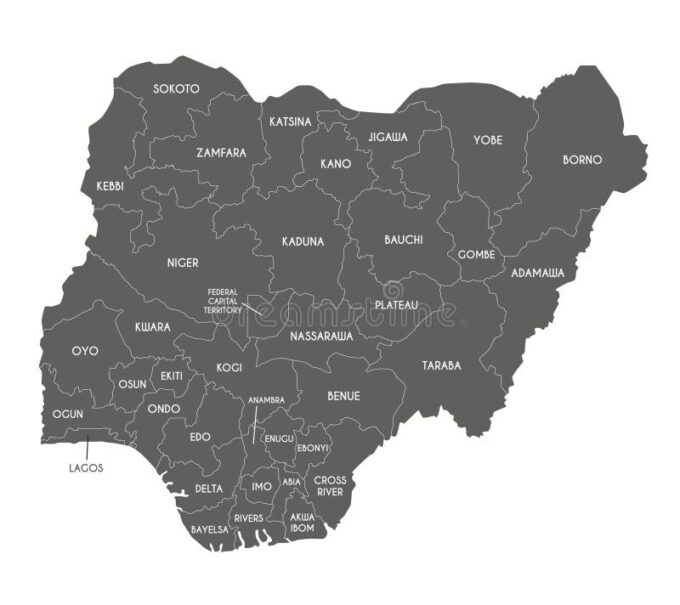
Our second most disruptive and perhaps what may destroy the country is the movement from a federal structure to a unitary system. In periods before independence, our Nationalists pressed for the creation of six regions out of the three existing three areas to create a balance to take cognizance of some minorities in the North and South. The British accepted the proposal in principle but advised that it may be necessary to postpone the independence of Nigeria to enable the newly created regions to take off. Our forebears rejected the counter-proposal, pointing out they would create more regions after independence. They embraced a truly Federal system, giving autonomy to the regions. The revenue-sharing formula was based on derivation. Post-independence politics turned to the larger ethnic groups trying to dominate the rest of the country. The fight for domination led to the creation of the Mid-West region in the South, leaving the North intact. The ensuing disputes also snowballed into a coup d’état, counter-coup, and a civil war.
Our post-independence politics has been the fight for the supremacy of one ethnic group over the others. Post 1979, the Presidential election provided fodder to capture power for self, cronies, and clans to the detriment of others. Rather than squabbling over programs and ideas, the unquestioned power in the hands of executive officeholders facilitated wanton stealing. The more stolen funds, the more is spent for thugs and strong boys to enforce victories at the polls. Economic development went down the drain. Nigeria is one of the few countries whose citizens can claim life was better several decades ago than the present.
When President Tinubu’s people argue that he did not cause the current hardship among the country’s people, nothing can be more accurate. Our problem took decades to crystallize into what it is now. There is a correlation between economic conditions and political decisions. We have designed our politics to serve the intention of the few elites controlling us. Our politicians are bereft of ideas; the private sector is full of rogues who front for those in power. They produce and add nothing, in politics and commerce, they bilk us mercilessly. To do this, they design our institutions to serve their narrow interests – rotational Presidency, rotational Governorship, rotational Senator ship, rotational Chairmanship, etc. A system someone aptly described as “You-Chop-_I_-Chop.” When a section may have “eaten’ its share, it must give way for the other. It is the best way to preserve the country as one. We give the impression that it is a country where every section has a shake. Each end of the pendulum serves eight years before moving to the opposite end. It is hardly the best system to ensure rapid development, but it keeps us together but for how long?
President Bola Tinubu is not known to be an ideologue but a much more practical politician. He is not a flame-throwing radical who can be expected to usher in a radical transformation in the political sphere. However, his silence on much-needed political reform is deafening. He is balking at the ladder that can give the country the highest lift. A decentralized federal government would have provided a greater impetus for development. However, president Tinubu may fail to use this opportunity to make himself the most consequential head of government Nigeria ever produced. He may fall into the same pit as all the presidents before him. Upon getting to power, those who find themselves in that position have found it hard to relinquish the enormous power of the office. Obasanjo was not primed to do it based on several debilitating factors. Jonathan enjoyed those powers and played politics to ensure a second term. In the end, he lost to Buhari. Muhammadu Buhari made no pretense at nation-building.
President Bola Tinubu may be making the same mistakes those before him made by allowing the allure of the enormous power to cloud his judgment. He may think that he only needs to lessen the current economic distress. Without the much-needed political reforms, the call by separatists for their parts of the country to push for separation will get stronger. The current economic downturn will bring impetus to the call for Yoruba, Ijaw, Biafra, or Arewa nations to chart a course for their separate nations.











Leave a comment