By Okoi Obono-Obla
Throughout human history, people have moved or migrated from one place to another. In their new places of abode, they meet other peoples, live together with them, copy aspects of their culture, intermarry, and acquire or learn their languages. From that new relationship, a new language or culture evolves. No group, tribe, or ethnicity can therefore claim to be pure or to have no mixture with other tribes or ethnic groups.
Yet, while no identity is pure, every identity has a right to define itself.
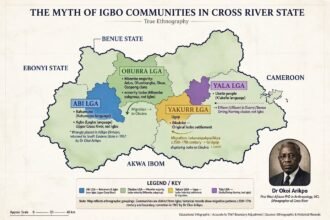
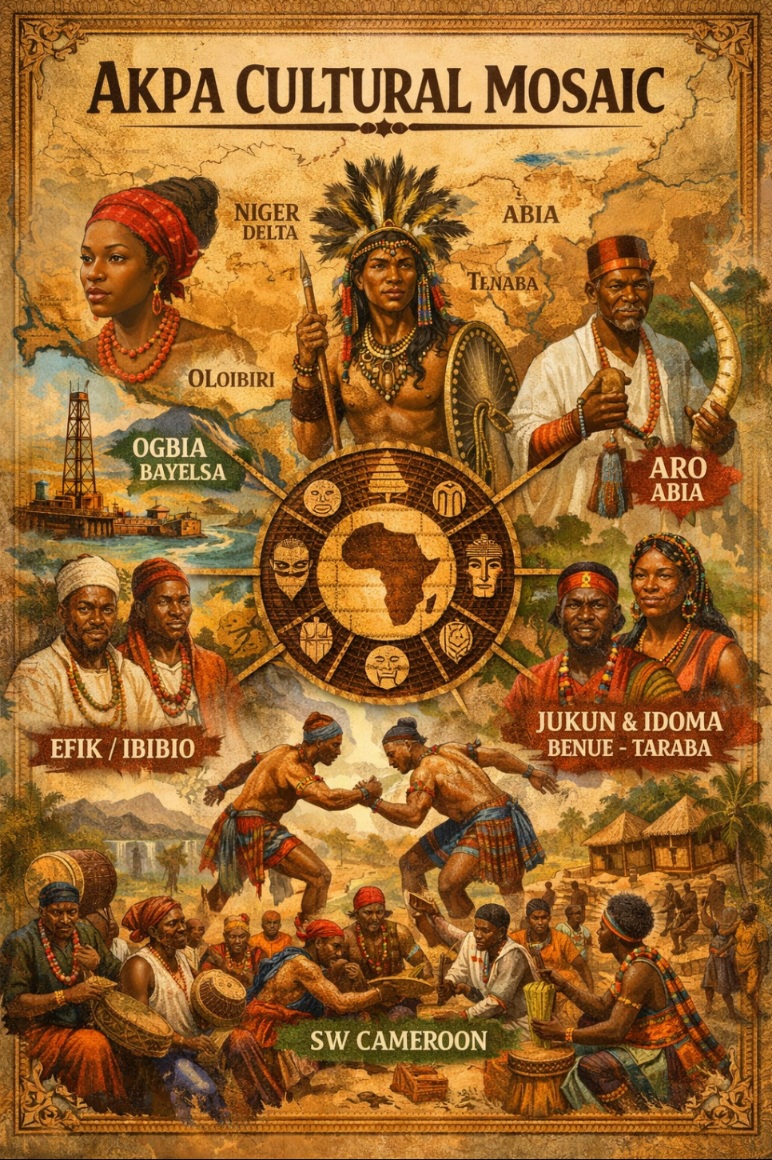
There is a new trend which I have identified in the relationship between the South-South and the South-East geopolitical zones. In a frenetic quest for new political alignment, some people are trying to rewrite or revise history and anthropology by constructing new identities or even ethnicities. This is being done through the appropriation of some ethnic nationalities in the South-South, labeling them as part of a broader South-East identity, or foisting on them an identity to which they do not belong.

This hegemonic and expansionist tendency takes us back to the old days of Eastern Nigeria and the pre- and post-Nigerian Civil War years. This history is important. The present-day South-South was largely part of the former Eastern Region until 1967. The agitation by minority groups in the East against fears of domination led to the Willink Commission of 1957/58. The subsequent creation of Rivers State and the South-Eastern State in 1967, and later the evolution of the South-South geopolitical zone, was a direct response to the demand for distinct political identity. The current attempt to blur those lines is therefore not new; it is a recurrence of an old debate.
This is a dangerous and diversionary tactic that is injurious to social harmony and peaceful coexistence. Identity is synonymous with the right to self-determination – the right of a person or a people to say who they want to be and how they want to identify themselves. It is central to human existence. Any attempt to force an identity on a people who do not want to ascribe to it is akin to appropriation, and can boomerang into resentment and ill-feeling that may degenerate into catastrophe.
Some proponents of this appropriation rely on glottochronology, similar personal names, or related dialects as proof of a single identity. This is anthropologically untenable. Glottochronology is merely a linguistic method for estimating how long ago related languages diverged; it is not a determinant of ethnic identity. While linguistic similarity may indicate historical interaction or membership in a larger language family like Niger-Congo, identity goes far beyond language.
Modern anthropology distinguishes clearly between biology and social identity. Ethnicity is not determined solely by genetics or biology; it is a social construct shaped by shared historical consciousness, territory, self-ascription, common political experience, and a sense of community. Social construct is different from biology and cannot be used to force people into an ethnic category they reject.
In Conclusion: The lesson of history is twofold. First, all groups are products of mixture and migration, so no one can claim absolute purity. Second, precisely because identities evolve through contact, the right to self-definition becomes even more sacred. Progress in the South-South and South-East, and in Nigeria at large, will not come from expansionist labeling or historical revisionism for political advantage, but from mutual respect for the right of each nationality to affirm who it is and who it wants to be. To respect that right is to protect social harmony; to violate it is to sow the seeds of future discord.