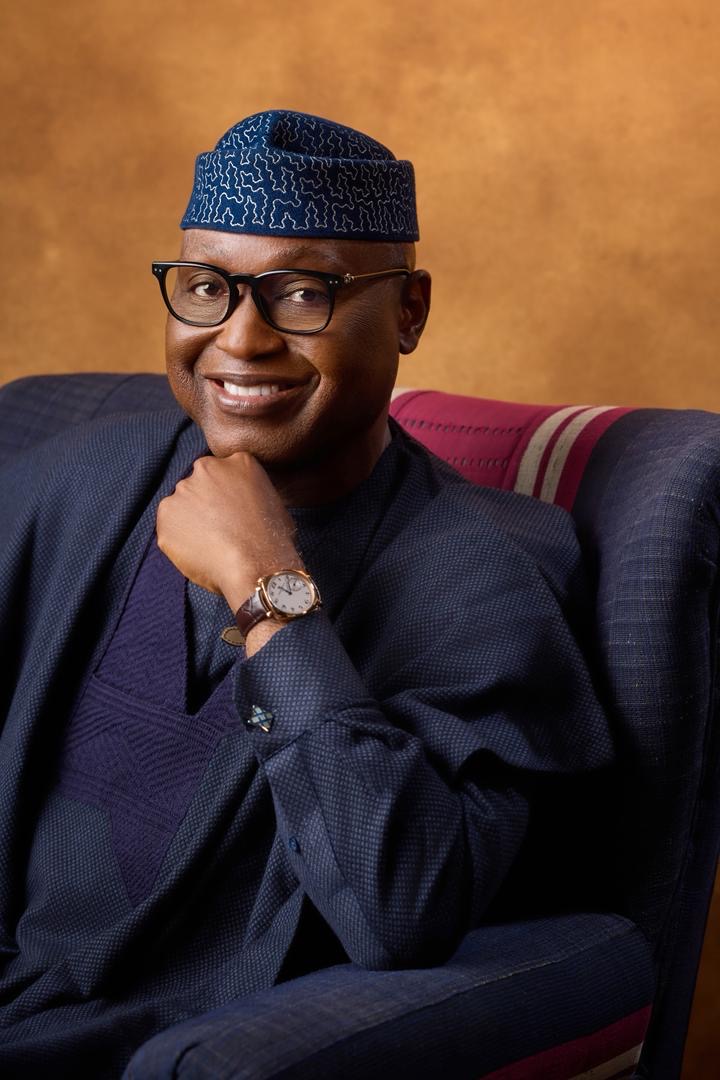
By Khaleed Yazeed
There is a hospital in every Nigerian town where the generator has failed, the doctor has travelled, and the nurse is asking the family to bring gloves. The patient lies there, sweating through a fever that could have been prevented, while the relatives take turns fanning him with a cardboard carton. This scene repeats itself every night, in every state, and no one considers it news. It has become the ordinary architecture of Nigerian life.
But that hospital is not only a building in Katsina or Enugu or Bayelsa. It is the country itself. Nigeria is a patient on a bed, and the illness is not one disease but a whole ward of them. And the most dangerous thing about the illness is not its severity. It is that the patient has stopped asking the doctor what is wrong.
This piece is a diagnosis. Not a political essay, not a campaign document. A diagnosis, written in the plain language of symptoms and causes.

DISEASE ONE: THE FEVER OF THE BROKEN ROAD
Start with the most visible symptom.
The road from any Nigerian city to any Nigerian village is a story in itself. Potholes deep enough to swallow a tyre. Trucks overturned on their sides like dead animals. Police checkpoints every twenty kilometres, where a man with a rifle asks for money he has no right to. A journey that should take three hours takes seven. And at the end of it, the village has no electricity, no clinic, and a school where the roof has been missing since the last administration.
This is not a natural condition. Roads are built. Clinics are stocked. Schools are repaired. These are the most basic functions of a government, and there is no mystery about how to perform them. Countries poorer than Nigeria have done it. Countries with fewer resources, worse weather, and more difficult terrain have done it.
The fever of the broken road is not caused by poverty. It is caused by the decision not to build. And that decision is made every year, deliberately, by people who know exactly what they are doing.
DISEASE TWO: THE INFECTION OF THE EMPTY PLATE
Then there is hunger.
A country with the largest expanse of arable land in West Africa, with three harvests a year in some regions, with rivers that could irrigate the Sahel, and yet the price of a bag of rice has become a family negotiation. A father in Kano, a mother in Aba, a young man in Jos, all asking the same question at the end of the month: what do we cut?
And the answer is always something. The meat. The milk. The second meal. The school fee. The medicine.
This is not a food problem. This is a distribution problem. This is a policy problem. This is a decision, made year after year, to import instead of produce, to consume instead of build, to allow a few men to corner the market while a hundred million people negotiate with their plates.
A nation that cannot feed itself is a nation that has been told, by its own leaders, that feeding itself is not a priority.
DISEASE THREE: THE CANCER OF THE CENTRE
And then there is the deep one. The one that causes the others.
Everything flows to one place. Every allocation, every approval, every contract, every appointment, every decision that matters must pass through a single point, and that point must be reached through a small circle of men. The states are not partners. They are supplicants. The local governments are not governments. They are waiting rooms.
This is not federalism. It is centralisation wearing federalism’s clothes. It is a system that was deliberately built first by the colonial administration, then preserved by the military, then cemented by successive civilian governments to concentrate power at the centre so that whoever captures the centre captures everything.
And what does the centre do with everything? It distributes it. To its friends. To its allies. To its voting blocs. To the contractors who know the right people. To the states that voted the right way. To the communities that made the right noise at the right time. And the rest of the country is left to queue.
The cancer of the centre is the reason a country this rich has citizens this poor. It is the reason the same families appear in every government. It is the reason a young person with a first-class degree will still be unemployed ten years after graduating, while the son of a senator has a ministry waiting for him.
DISEASE FOUR: THE PARALYSIS OF THE WATCHERS
But here is the disease that no one talks about, the one that has done more damage than all the others combined.
The citizens stopped asking questions.
Not all of them. Not everywhere. But enough of them. Enough that the silence has become a culture, a habit, a way of surviving. Ask too many questions and you are called an enemy of the state. Write too much truth and you are called a tribalist. Demand accountability and someone will ask why you are not grateful for what works. Point at the embezzled billions and someone will ask what you have personally done to help the poor.
The questions stopped. And the reading stopped with them.
There was a time when a Nigerian child could name the dates, the coups, the constitutions, the betrayals. Now, a generation has been raised on a curriculum that removed history from the classroom in 2008. An entire generation of Nigerians has been produced without any formal education about the country they live in. They know the names of foreign musicians. They do not know the names of the men who signed away their future.
This is not an accident. A people who do not know their history cannot understand their present, and a people who do not understand their present cannot demand a different future. The silence in the classroom is the foundation of the silence in the country.
And so we have arrived at a remarkable situation. A nation of two hundred million people, with more phones than the United States, more data than half of Europe, and yet the loudest noise in the country is the sound of people scrolling past.
THE ARCHITECTS
Now, let me be specific, because the disease has authors.
The first authors are the men who built the structure. The colonial administrators who drew the lines, designed the extraction, and left behind a state built for resource collection rather than human development. They did not leave by accident. They left by design, and the design is still functioning. The British did not just colonise Nigeria. They engineered a system that would continue to produce what Britain needed long after the flag came down. And it has worked.
The second authors are the military men who took the structure and perfected it. They centralised power, abolished the regions, created states as instruments of patronage, and wrote a constitution that handed the centre everything. They governed with decrees, and when they finally left, they left behind a civilian class that had learned to govern the same way.
The third authors are the civilian politicians who inherited the machine and discovered that they loved it. They learned to manipulate the same levers, to exploit the same divisions, to feed the same networks. They have been in power for most of the last twenty-five years, and they have produced a country that is poorer, more insecure, and more unequal than the one they inherited.
And the fourth authors are the ones we do not talk about. The professionals who advise. The academics who legitimise. The journalists who spin. The clerics who bless. The traditional rulers who consecrate. The technocrats who produce the figures and the press releases. The system does not survive on politicians alone. It survives because a whole class of educated Nigerians has decided that the survival of the system is more important than the survival of the country.
This class is not poor. This class is not hungry. This class is comfortable. And that comfort is purchased with the silence of the country.
THE LIE OF THE GOOD COUNTRY
Nigeria is not a failed country. Nigeria is a country that has been failed. There is a difference, and the difference matters.
A failed country is one that cannot produce. Nigeria produces. It produces oil, gas, tin, gold, cocoa, yams, musicians, writers, doctors, engineers, footballers. It produces the kind of people who succeed everywhere except at home. The talent is not missing. The resources are not missing. The missing ingredient is a political class willing to build rather than extract.
Every time a Nigerian succeeds abroad, the country is told that it has produced a success story. But the real story is that the country could not keep the person who produced it. The success is not Nigeria’s success. It is Nigeria’s loss, dressed up as a victory.
THE PEOPLE WHO STOPPED READING
And now the part that hurts the most, because it is about us.
The Nigerian citizen is not innocent. We have been deceived, yes. We have been failed, yes. But we have also participated in our own deception. We have sold our votes for bags of rice. We have praised leaders who built nothing. We have attacked the people who asked the questions we were afraid to ask. We have shared the propaganda without reading it. We have believed the story because it was easier than checking it.
And we stopped reading. That is the deepest wound. We stopped reading the documents. We stopped reading the books. We stopped reading the budgets. We stopped reading the history. We let the past become a rumour, and then we were surprised when the present repeated it.
A nation that does not read is a nation that will believe anything. And a nation that will believe anything can be governed by anyone. That is the truth that no politician will tell you, because it is the truth that keeps them in power.
WHAT THE DIAGNOSIS DEMANDS
So what does a diagnosis demand? It demands treatment. And treatment demands a decision.
The decision is not a slogan. It is not a hashtag. It is not an election. It is a choice, made every day, by every citizen, about whether to ask questions or to look away.
Read the budget. Read the constitution. Read the history books that were removed from the curriculum. Read the memoirs of the men who ruled you, and check what they say against what the records show. Ask your representative what he has done with the allocation. Ask your governor why the road is still broken. Ask your senator why the hospital has no drugs. Ask your cleric why he has never spoken about the treasury.
Ask the questions that the country has been trained not to ask. And when they call you an enemy of the state for asking, remind them that a citizen who asks questions is not an enemy of the state. A citizen who asks questions is the only thing that keeps a state honest.
THE PATIENT AND THE WARD
The patient in the hospital bed is not only the country. The patient is the child whose school has no roof. The patient is the mother who cannot afford the medicine. The patient is the young man who has a degree and no job. The patient is the farmer who cannot reach his farm. The patient is the country.
And the doctor has been coming to the ward for sixty years, writing prescriptions, promising treatment, collecting his fee, and leaving without looking at the patient.
At some point, the family in the ward has to stop waiting for the doctor. At some point, the relatives have to ask what the doctor has been doing all these years, where the money for the medicine went, and why the same doctor keeps coming back with the same prescription.
That is not a call to violence. It is not a call to despair. It is a call to memory, to reading, to asking, and to refusing to accept a diagnosis that has never been examined.
The country is not a hopeless case. It is a case that has never been properly examined, because the people who were supposed to examine it were paid to look away.
The patient is still waiting. The question is whether the family will keep fanning him with a carton, or whether someone will finally stand up and ask the doctor what is wrong.
Khaleed Yazeed
Founder, Wakilin Yamma Youth Development Network
Katsina State, Nigeria