


By Ibrahim Bunu
ibrahimbunu2520@gmail.com
The 2027 presidential contest should not be reduced to slogans, social-media enthusiasm or the noise of campaign rallies. It must be examined through the harder realities of geography, voter concentration, incumbency, political structures, coalition mathematics and the ability to convert popularity into actual votes.
The political proposition is therefore straightforward:
Wherever Atiku Abubakar finishes first, Bola Ahmed Tinubu finishes second. Wherever Peter Obi finishes first, Tinubu finishes second. But wherever Tinubu finishes first, the margin could be substantially wider.
This is not a declaration of an election result; it is an argument about the structure of the contest.
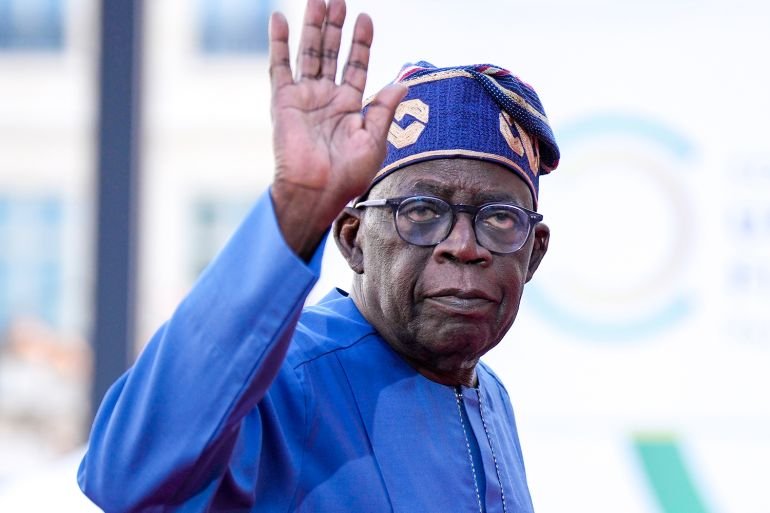
As of September 2026, INEC’s final presidential list contains 18 candidates, including Tinubu of the APC, Atiku Abubakar of the ADC and Peter Obi of the NDC. The presidential election is scheduled for 16 January 2027.
The first reality: Atiku and Obi have different electoral strengths
Atiku’s political strength has historically rested heavily on Northern political networks, established party structures and his long-standing presence in presidential politics. Obi, by contrast, has demonstrated a different kind of political reach, particularly among younger voters and sections of the South-East and urban electorate.
That distinction matters.
If Atiku dominates a particular electoral zone, the argument is that Tinubu possesses enough countervailing political infrastructure in other zones to remain immediately competitive. If Obi dominates in areas where his support is concentrated, Tinubu similarly retains substantial territorial and organisational bases elsewhere.
The central question is therefore not simply who is popular, but where that popularity converts into votes.
The second reality: Nigerian presidential elections are won nationally
Nigeria does not elect its President through a single regional contest. The constitutional framework requires a candidate to secure the required national spread in addition to the highest overall vote total.
That makes the presidential race fundamentally different from a popularity contest confined to one geopolitical zone.
A candidate can dominate particular constituencies and still confront a difficult national arithmetic. Conversely, a candidate with sufficiently broad geographical support can remain competitive even where another candidate is overwhelmingly dominant.
This is where the phrase “wherever Tinubu is first” becomes politically significant.
The argument is not that Tinubu will necessarily dominate every region. Rather, it is that his coalition potentially operates across multiple electoral territories, giving him opportunities to accumulate votes beyond his strongest base.
The real battlefield is the margin
The most important forensic question may therefore not be who wins individual states, but by how much each candidate wins or loses them.
A candidate who wins a state by 100,000 votes and loses another by 500,000 has a very different national arithmetic from one who wins the first by 300,000 and loses the second by 350,000.
That is why electoral geography matters more than online excitement.
Atiku’s path depends on converting Northern strength into a sufficiently broad national coalition. Obi’s path depends on converting his strongest regional and demographic support into wider national penetration. Tinubu’s path depends on maintaining a coalition capable of competing across several geopolitical zones simultaneously.
And this is where the “astronomical gap” argument comes from
The phrase “wherever Tinubu will be first, the gap will be astronomical” should be understood as a political hypothesis, not a verified prediction.
It reflects the argument that if an incumbent president manages to finish first in a state or region where his principal challengers expect to be dominant, that result could have disproportionate implications for the national arithmetic.
Why?
Because such a result would potentially indicate that the incumbent has penetrated the opposition’s presumed electoral territory, rather than merely defended his traditional support base.
That is the deeper meaning of the argument.
The decisive issue in 2027 may therefore be less about where each candidate has supporters and more about where each candidate can actually convert those supporters into votes at scale.
The electorate will ultimately settle that question.
Until then, political certainty is premature. The campaign remains a contest of coalitions, turnout, geography, organisation, persuasion and arithmetic—not merely personalities.
The ballot box, not the microphone, will conduct the final forensic audit.