
By Okoi Obono-Obla
The notorious “Black Maria” incident remains one of the darkest chapters in Nigeria’s law enforcement history. In March 1980 in Lagos, 50 detainees suffocated to death inside an overcrowded police transport van.
The 1980 Lagos Black Maria Tragedy
Historical records show the facts were slightly different from popular memory:
The Arrests: On February 29, 1980, during the Second Republic under President Shehu Shagari, police raided the Tin Can Island area in Lagos after a robbery incident. They arrested about 100 men – passers-by, street hawkers, labourers and migrants – not just from Isolo and Mushin. 32 were released after questioning. The remaining 68 were detained at Central Police Station, Adeniji Adele.
The Charges: They were charged with “wandering and loitering” at the St. Anna Magistrate Court at Tinubu Square, Broad Street, Lagos Island, and ordered remanded to Ikoyi Prison.
The Overcrowding: All 68 men were packed into a single dark blue Bedford police van – a windowless Black Maria designed to hold about 30 people, with only small ventilation openings. The registration was NPF.
The Ordeal: The van was left parked under the hot afternoon sun for over three hours outside the court while clerks prepared remand papers. Detainees screamed for air and water and banged on the walls. A parking attendant and a military prosecutor raised alarm. The door was briefly opened and a few cups of water were passed in, but it was insufficient. When warned that the men would die, the driver reportedly replied: “Dead men don’t cry”.
The Death Toll: When the van arrived at Ikoyi Prison at about 2:05 p.m., 47 men were already dead, 17 were unconscious and only 4 were conscious. Three more died later in hospital, bringing the total death toll to 50. Autopsies on 20 bodies showed death by asphyxiation, aided by starvation.
The Aftermath: The tragedy sparked national outrage. President Shagari constituted a judicial inquiry which sat from March 17 to April 8, 1980, taking 53 witnesses and 97 exhibits. The tribunal found the van was grossly overloaded and identified Inspector Reuben Ikem as principally responsible, recommending prosecution for manslaughter under Section 317 of the Criminal Code. It does not appear that any officer was ultimately convicted.
That was 46 years ago. It reverberated again this past week.
The 2026 Niger State NSCDC Custody Deaths
On September 15 and 16, 2026, the Nigeria Security and Civil Defence Corps (NSCDC) arrested scores of suspected illegal miners during enforcement operations in the M.I. Wushishi and Lukoto axis of Niger State.
On the morning of September 17, the NSCDC confirmed that some detainees had been found dead in its facility in Minna. The Command initially attributed it to a “suspected outbreak of disease”.
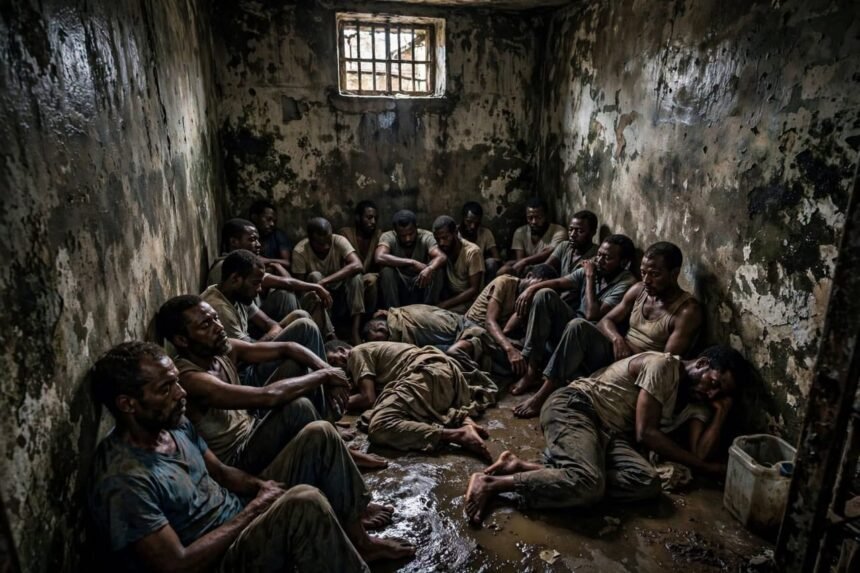
Niger State Governor Mohammed Umaru Bago subsequently confirmed that 37 people had died while in NSCDC custody. Survivors alleged that about 65 detainees were packed into a poorly ventilated cell and were denied water despite pleas.
The public outrage was immediate. President Bola Tinubu ordered a full and transparent investigation and directed that officials found culpable be arrested and prosecuted. He stressed that “no citizen should die in government custody as a result of negligence, abuse, inhumane treatment or dereliction of duty”.
The Minister of Interior, Olubunmi Tunji-Ojo, suspended the Niger State NSCDC Commandant, Suberu Siyaka Aniviye, and ordered a full-scale investigation. The NSCDC also constituted a high-powered investigative team, while Governor Bago imposed a 24-hour curfew following protests and declared a three-day mourning period.
A Call for Urgent Reform
What happened in Niger State is not an isolated aberration. It brings to the front burner the predilection of Nigeria’s law enforcement agencies to use strong-arm tactics and high-handedness to instil fear, treating suspects as already guilty even before trial.
Our police stations and detention facilities across the country have horrid detention cells that dehumanize suspects. Those dingy cells lack basic amenities – no beds, no sleeping space, and no sanitary facilities for detainees to bathe or ease themselves. The cells are in perpetual darkness, and detainees in overcrowded, ill-ventilated cells are forced to lie on damp floors infested with bedbugs and other insects throughout their stay.
What has happened in Niger State is food for thought and a call for urgent reform of the colonial manner in which the law-and-order system in this country treats suspects. Enforcement must be firm, but it must also be lawful. As President Tinubu noted, “The fact that these individuals were suspected of illegal mining does not in any way remove their right to life, dignity and humane treatment while in government custody”.
Until detention conditions, accountability, and respect for the presumption of innocence are addressed, the ghost of the 1980 Black Maria will continue to haunt us.