By DAN Osa-Ogbegie, Esq.
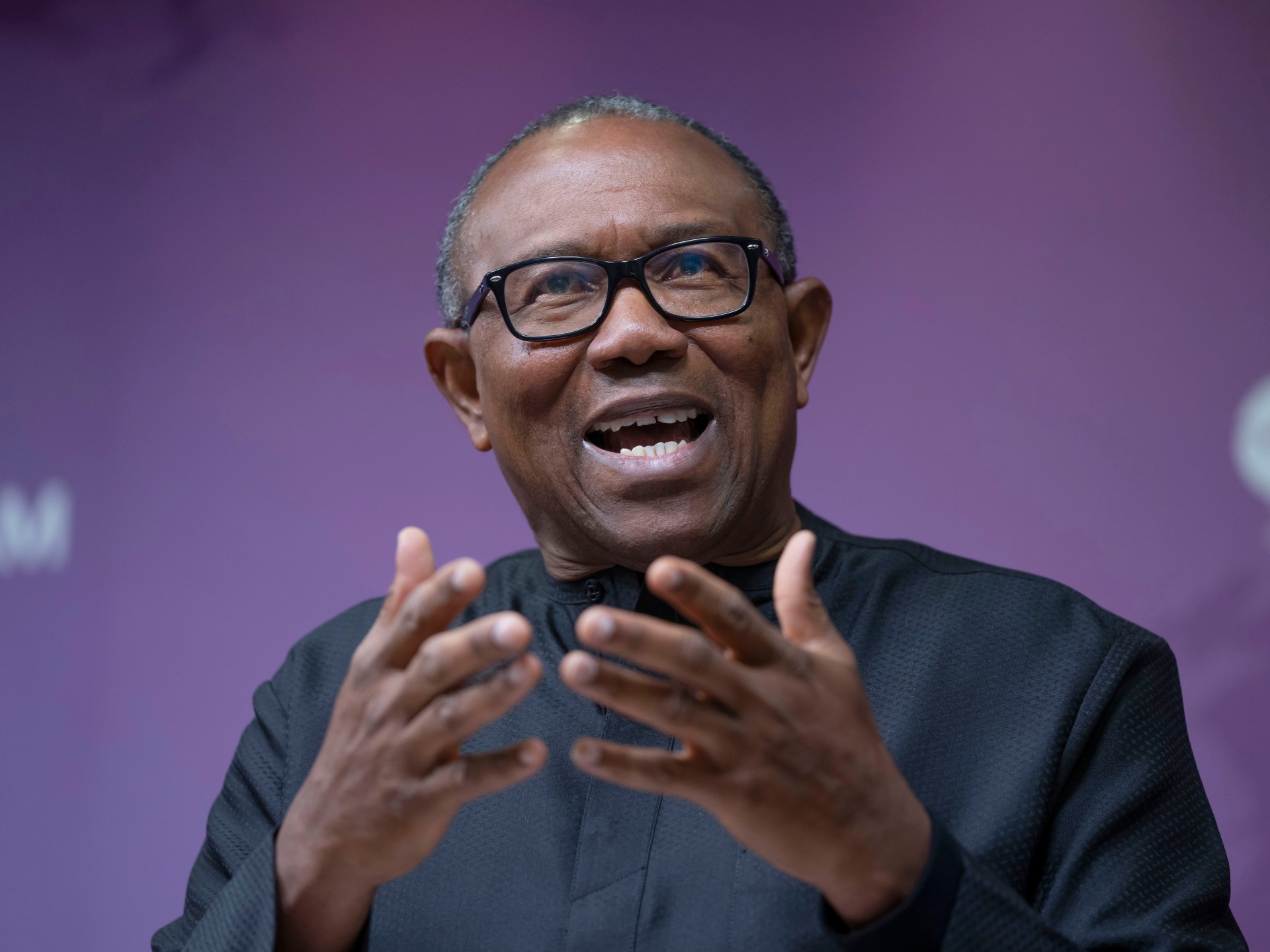
There is something fundamentally troubling about the Peter Obi presidential proposition. After several years of relentless presidential campaigning, Nigerians are still being invited to believe far more about Peter Obi than Peter Obi has demonstrated about himself.
His candidacy has become an extraordinary exercise in political fantasy.
A considerable part of the Peter Obi phenomenon is not Peter Obi at all. It is the Peter Obi that frustrated Nigerians have created in their imagination. Into one man they have poured their anger with the establishment, hunger for change, yearning for competence and understandable desperation for a better country. From these legitimate aspirations, they have constructed an extraordinary political character and proceeded to attribute that character to Peter Obi.
That is the danger.
His supporters see in him whatever they desire Nigeria to become: prudence, competence, discipline, economic sophistication, incorruptibility and national rebirth. Yet desire is not evidence. Hope is not competence. Anger with an incumbent is not a credential belonging to his challenger.
A nation cannot build its Presidency on castles in the air.
Strip Obi of the mythology and interrogate the man himself: his record, ideas, political choices, temperament and demonstrated capacity. The distance between the man and the mythology becomes considerably more interesting.
I have repeatedly listened to Peter Obi speak. Beneath the statistics, anecdotes and familiar exhortations about moving Nigeria “from consumption to production”, I encounter an uncomfortable deficit of precision. Simply put, Peter Obi has never made sense to me or to any other perceptive person.
Ask how Nigeria will industrialise and the answer becomes a discourse on production. Ask about electricity and one hears comparisons with other countries. Ask about restructuring, security or fiscal federalism and one is frequently taken on a bizarre convoluted excursion around the question rather than through it.
A President does not govern with aphorisms.
After years of seeking the Presidency, where is Peter Obi’s comprehensive governing blueprint?
Then examine Anambra without the incense of political canonisation.
Where is the revolutionary infrastructure associated with the Obi years? Where is the industrial architecture he created? What enduring institutional reforms fundamentally altered Anambra’s economic trajectory? What economic ecosystem emerged from those eight years and became a national model?
Anambra’s greatest strength remained what it had always been: the extraordinary entrepreneurial energy of its people.
Compare that with Lagos under Bola Ahmed Tinubu. Whatever one’s politics, Lagos became a laboratory for reforms in taxation, public finance, transportation and administration. Successive governments built upon structures created or strengthened during that period.
Where is the equivalent Peter Obi model?
More damagingly, important pillars of the Obi mythology have been challenged by men who governed Anambra before and after him. Willie Obiano’s administration disputed the celebrated ₦75 billion handover narrative. Chris Ngige has challenged aspects of Obi’s infrastructure narrative.
Then came Professor Charles Soludo, incumbent Governor of Anambra, economist and former CBN Governor. Asked about Obi’s much-advertised investments, Soludo’s verdict was brutal: from what he had seen, their value was “worth next to nothing.” He also questioned the wisdom of fetishising savings and investments while schools, hospitals and public infrastructure required development.
These are not APC campaign pamphlets. They are conflicting testimonies from men who governed the same state.
The intelligent response is not worship. It is verification.
Too much of the Peter Obi story increasingly resembles bubuyeye wrapped in statistics, repeated as gospel and deployed to gaslight Nigerians into confusing narration with transformation.
His political history presents another difficulty.
APGA. PDP. Labour Party. ADC. NDC.
At what point does political mobility become political rootlessness?
Victor Oye, former APGA National Chairman, said Obi vowed never to leave APGA “until death do them part”, describing it as a covenant with God. Soludo separately recalled that Obi was said to have sworn to the late Dim Chukwuemeka Odumegwu Ojukwu and publicly declared that he would quit politics the day he left APGA.
Obi left APGA.
Changing political parties is not inherently disqualifying. Credibility, however, matters. A man marketed as the moral alternative must expect Nigerians to compare yesterday’s solemn declarations with today’s political conveniences.
Then there is the increasingly intolerant political culture surrounding him.
Question Obi’s record and an online army descends. Challenge his statistics and abuse frequently replaces argument. Ask for specifics and scepticism itself becomes evidence of corruption.
We have seen this movie before.
Before 2015, Nigerians constructed another political saviour. Muhammadu Buhari became everything an angry country desperately wanted him to be. Integrity substituted for competence. Spartan imagery replaced economic philosophy.
I was on television studios shouting myself hoarse, warning about the emptiness Buhari displayed. He was an open book to me then, as Peter Obi is today. Nigerians dressed Buhari in an oversized messianic toga and discovered, painfully, that perceived personal virtue is not a governing programme.
We must not repeat that mistake merely because the vocabulary and demographics of the new movement are different.
Obi may be frugal. Good.
He may be disciplined. Commendable.
He may genuinely desire a better Nigeria. Fine.
None establishes presidential competence.
Nigeria does not require a national motivational speaker. It requires a President capable of managing a complicated federation, assembling formidable human capital, taking difficult decisions, building coalitions and translating economic philosophy into measurable outcomes.
The 2027 election must therefore be an examination, not a revival meeting.
What precisely is Obi’s programme? How will he finance it? What legislation will it require? What happens when the National Assembly disagrees?
These are presidential questions. They require presidential answers.
He cannot continue hiding his plans for Nigeria on the preposterous excuse that other candidates might steal his ideas. A man seeking to govern Nigeria owes Nigerians his ideas before he asks for their votes.
Nigeria needs a vigorous opposition. Tinubu and the APC must be challenged and held accountable. Yet hardship under an incumbent does not magically confer competence upon his opponent.
Peter Obi must earn the Presidency on his own record, programme and demonstrated capacity.
Nigeria has already experimented with electing a national fantasy.
We cannot manufacture another messiah, dress him in a borrowed messianic cloak, build castles around him in the air, hand him the keys to the Republic and only afterwards discover that the magnificent structure existed largely in our imagination.
Nigeria cannot afford another Presidency built on fantasy.
Daniel A. Noah Osa-Ogbegie, Esq. is a Benin-based public intellectual, legal practitioner and Lead Counsel, Noah Attorneys.
#followerseveryone
#PeterObi