By Ibrahim BUNU
ibrahimbunu2520@gmail.com
How Repeated Violence, Territorial Fear and the Failure of Accountability Are Quietly Redrawing Plateau
INTRODUCTION: THE MAN WALKING TO CHURCH
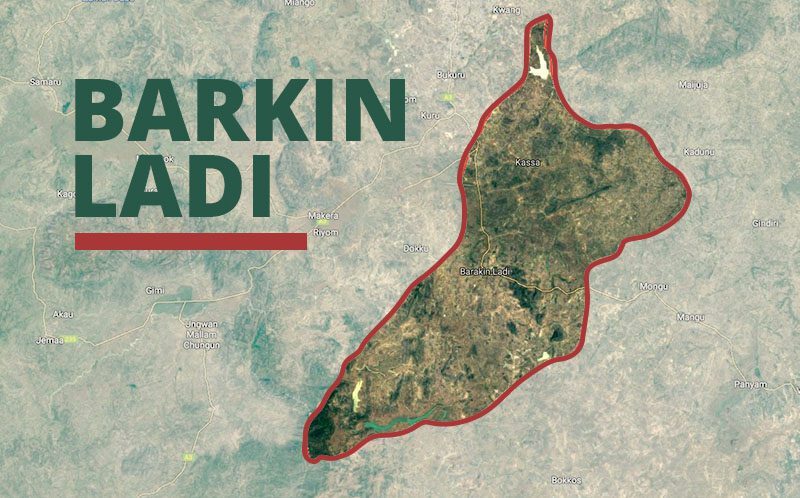
There is something profoundly disturbing about the image at the centre of the latest report from Barkin Ladi.

A man.
A Bible.
A Sunday morning.
A road leading toward worship.
And then a gunshot.
If the account of the reported 9 August 2026 Fan Village killing is ultimately confirmed by police, eyewitnesses and independent reporting, the significance of the incident goes beyond the death of one individual.
It would represent another point in a much longer story.
But we must begin with intellectual honesty.
The particular 9 August incident has not yet been sufficiently independently documented in the reliable sources I could verify. It should therefore not be turned into a settled fact simply because it appears in a video or circulating account.
That distinction matters.
Because if we are going to demand accountability from government, security agencies and armed groups, we must also demand accuracy from ourselves.
A false fact weakens a true argument.
And the true argument is already strong enough.
Barkin Ladi does not need an invented tragedy.
It has experienced enough real ones.
In January, a Christian missionary, Rev. Bulus Madaki, his daughter and son-in-law were reportedly killed in an ambush in Fan District, with their three-month-old grandchild injured. (Daily Report)
In April, three people were killed at Pwomol Village. The Plateau Police Command said a suspect was arrested following the attack. (Punch Newspapers)
In May, five Christians were reported killed in Fan village, while attacks across three villages in Barkin Ladi over two weeks were reported to have killed 11 Christians and injured five others. (Morningstar News)
In another May incident, seven people were killed at Nding in Fan District, followed by an attack on mourners gathered to bury victims. (Channels Television)
In June, the nearby Kawel community in Bokkos was attacked, with police confirming 20 deaths. (ICIR News)
So the question is not whether Plateau has a security problem.
It does.
The deeper question is:
What kind of political and security system allows violence to become repetitive enough that communities begin to organise their lives around the expectation of the next attack?
That is the question I want to examine.
And my conclusion is uncomfortable:
Barkin Ladi’s greatest danger may no longer be the individual attack.
It may be the emergence of a permanent geography of insecurity.
1. THIS IS NOT ONE STORY — IT IS THREE STORIES
The easiest mistake is to reduce the Plateau crisis to one explanation.
“Farmer-herder conflict.”
“Christian persecution.”
“Ethnic conflict.”
“Banditry.”
“Land dispute.”
“Political failure.”
Each captures something.
None captures everything.
The reality operates on at least three levels simultaneously.
LEVEL ONE: RESOURCE COMPETITION
Farmers need land.
Pastoralists need grazing space and water.
Population pressures have increased.
Cultivation has expanded.
Traditional grazing arrangements have weakened.
Climate and environmental pressures have altered pastoral mobility.
This is not propaganda. Academic research on Plateau repeatedly identifies resource competition, historical grievances, environmental pressures and governance failures as important drivers. (FUDMA Journal of Sciences)
LEVEL TWO: IDENTITY
The conflict does not occur in an ethnic or religious vacuum.
In much of Plateau, farming communities are predominantly Christian while many pastoral communities are predominantly Muslim and Fulani.
Therefore, an attack that may begin over land can quickly acquire a religious meaning.
A farmer does not necessarily experience an armed attack merely as:
“A dispute over acreage.”
He may experience it as:
“They came for people like us.”
The same psychological transformation can occur on the other side.
A pastoralist who experiences attacks, cattle theft or exclusion may not interpret the event merely as an agricultural disagreement.
He may experience it as:
“They are driving people like us away.”
That is how economic conflict becomes identity conflict.
And once identity enters the equation, every dead person becomes more than a victim.
He becomes evidence.
Evidence for one community.
Evidence against another.
And eventually evidence for retaliation.
1. THEN COMES THE THIRD LEVEL: TERRITORY
This is the part that receives insufficient attention.
The Plateau crisis is not merely about who owns land.
It is increasingly about:
Who can safely occupy land.
That is a completely different question.
Suppose a farming family has lived in a village for decades.
An armed group attacks.
The family survives but abandons the village.
The government later restores calm.
But the family does not return.
What happened?
There may have been no formal change of ownership.
No government proclamation.
No official transfer of property.
No legal declaration.
Yet the demographic reality has changed.
The land has effectively changed hands through fear.
This is one of the most important dimensions of rural conflict that is often missed.
You do not always need to physically seize territory to alter territorial control.
Sometimes you simply make the previous occupants too frightened to remain.
That is why displacement is not merely a humanitarian consequence.
Displacement can become a security strategy.
I am not asserting that every attack in Plateau is necessarily part of a coordinated master plan to seize Christian land.
The available evidence does not justify such a sweeping conclusion.
But policymakers should take seriously the possibility that repeated violence can produce territorial consequences regardless of the original motive of each individual attacker.
That distinction is crucial.
The attacker may be motivated by revenge.
Another may be motivated by cattle.
Another by land.
Another by criminal profit.
Another by ethnic hatred.
Another by religious extremism.
But if the cumulative effect is:
attack → displacement → abandoned farms → reduced population → altered access to territory,
then the strategic consequence can be territorial transformation even without a centrally coordinated conspiracy.
That is the hidden danger.
1. THE MOST DANGEROUS WORD IN THIS CRISIS MAY BE “CLASH”
There is a semantic problem in Nigeria’s security vocabulary.
We routinely describe complex episodes as:
“communal clashes.”
Sometimes that description is accurate.
But sometimes it is dangerously incomplete.
There is an enormous difference between:
two communities fighting after a dispute
and
an organised armed group entering a vulnerable settlement, killing civilians and withdrawing before security forces arrive.
The two events should not automatically receive the same analytical classification.
Why?
Because the security response should be different.
A communal clash requires:
* mediation;
* separation;
* early warning;
* community dialogue;
* dispute resolution.
A coordinated armed raid requires:
* intelligence;
* surveillance;
* rapid response;
* weapons tracing;
* arrest;
* forensic investigation;
* prosecution;
* disruption of the armed network.
If the second is repeatedly treated administratively as the first, the state may accidentally convert a security problem into a dialogue problem.
And dialogue cannot arrest a gunman.
1. THE “THREE-WEEK CYCLE” — A HYPOTHESIS, NOT YET A FACT
The supplied video identifies what it describes as an approximately three-week rhythm of attacks.
That is an interesting hypothesis.
But it needs proper statistical testing before anyone should present it as established fact.
A genuine pattern would require a dataset containing:
* date;
* location;
* attack type;
* number killed;
* number injured;
* number abducted;
* perpetrators alleged;
* perpetrators confirmed;
* response time;
* arrests;
* prosecutions;
* weapons recovered;
* displacement;
* retaliatory attacks.
Then we could ask:
Are attacks genuinely clustered around a roughly 21-day interval, or does the human mind simply recognise patterns in a sequence of irregular events?
That distinction matters.
But there is an even more interesting possibility.
The apparent periodicity may not necessarily represent a fixed timetable among attackers.
It could emerge from the ecology of retaliation.
Attack.
Fear.
Funeral.
Anger.
Mobilisation.
Rumour.
Retaliation.
Security deployment.
Temporary calm.
Return to farming.
New confrontation.
Then another attack.
In such a system, the “cycle” is generated not by a single mastermind but by interacting incentives.
That would actually be more frightening.
Because killing the leader of one armed group would not necessarily kill the system producing violence.
1. THE REAL ENEMY MAY BE THE FEEDBACK LOOP
Imagine Plateau as a machine.
A farmer is attacked.
His relatives demand justice.
No arrest follows.
Anger grows.
A herder is subsequently attacked.
His relatives demand justice.
No prosecution follows.
Anger grows.
Community leaders issue warnings.
Young people become mobilised.
Weapons circulate.
Rumours spread faster than facts.
Another village is attacked.
Security forces arrive.
People are killed.
Politicians condemn the attack.
Relief materials arrive.
Television cameras leave.
The village remains traumatised.
Then the system resets.
That is a violence feedback loop.
And this is why merely increasing the number of soldiers may not solve the problem.
Soldiers can suppress the visible eruption.
They cannot by themselves repair:
* land administration;
* criminal justice;
* community trust;
* weapons circulation;
* local intelligence;
* displacement;
* youth radicalisation;
* political incentives;
* intercommunal relationships.
1. THE MOST IMPORTANT DISTINCTION: SECURITY RESPONSE VS. JUSTICE RESPONSE
This is where much Nigerian security discourse becomes confused.
Suppose soldiers arrive and drive attackers away.
That is a security success.
But it is not necessarily a justice success.
Suppose police arrest someone.
That is an investigative success.
But it is not necessarily a prosecution success.
Suppose prosecutors file charges.
That is a justice-system success.
But it is not necessarily a conviction.
And even a conviction of one individual does not necessarily dismantle an armed network.
Therefore, we should stop measuring success only by:
“How many terrorists were neutralised?”
We should also ask:
How many attacks were prevented?
How many suspects were identified?
How many suspects were arrested?
How many weapons were recovered?
How many cases reached court?
How many convictions were secured?
How many displaced families returned?
How many abandoned farms became productive again?
How many attacks occurred in the same location after security deployment?
That is the difference between a military scoreboard and a security scoreboard.
Nigeria needs the second.
1. BUT THE “NO ARRESTS EVER” NARRATIVE ALSO NEEDS CORRECTION
The supplied narrative says there has effectively been no arrest or prosecution.
That is too absolute.
There have been arrests.
For example, Plateau police reported an arrest after the April 6 Pwomol attack in Barkin Ladi. (Punch Newspapers)
In May, troops also arrested a suspect connected to an attack at an illegal mining site in Barkin Ladi. (Zagazola)
Another suspect was arrested in May following an assault on a farmer. (Zagazola)
So the more defensible criticism is not:
“Nobody is ever arrested.”
It is:
“Arrests and tactical responses have not yet translated into a consistent, visible, transparent accountability chain capable of breaking the recurring cycle.”
That argument is stronger.
Because it survives fact-checking.
1. THIS IS WHERE THE STATE’S REAL WEAKNESS APPEARS
A state does not demonstrate power merely by possessing guns.
A state demonstrates power when citizens believe:
If you kill me, the state will find you.
That belief is deterrence.
And deterrence is psychological.
An attacker does not need to know the exact probability of arrest.
He needs to believe that arrest is sufficiently likely to make the attack dangerous to him.
If he believes:
Attack → escape → disappear → no prosecution,
the expected cost of violence falls.
And when the expected cost falls, violence becomes easier to repeat.
This is basic criminal deterrence.
Therefore, the real enemy is not simply insecurity.
It is:
LOW-COST VIOLENCE.
1. THE STRANGEST THING ABOUT IMPUNITY: IT TEACHES
Every unresolved attack teaches someone something.
It teaches the victim:
“You are not fully protected.”
It teaches the community:
“You must protect yourselves.”
It teaches the attacker:
“You may escape.”
It teaches young people:
“The government cannot guarantee justice.”
It teaches politicians:
“Condemnation is cheaper than intervention.”
And it teaches the next generation:
“Violence is normal.”
That final lesson is perhaps the most dangerous.
Because once children grow up believing that gunfire is simply part of farming season, the state has lost something much deeper than territory.
It has lost normality.
1. THE FARMING CALENDAR MAY BE MORE IMPORTANT THAN THE POLITICAL CALENDAR
Here is another angle that deserves much greater attention.
Security analysts often watch political calendars.
But rural communities live according to agricultural calendars.
Planting season.
Weeding.
Growing season.
Harvest.
Movement of cattle.
Water availability.
Dry season.
Rainy season.
These cycles influence where people move and when communities become particularly vulnerable.
An attack during planting season is not merely a killing.
It can become an economic attack.
If farmers are too frightened to cultivate:
* food production falls;
* household income falls;
* food prices rise;
* dependence on humanitarian aid increases;
* young people migrate;
* villages weaken economically.
So:
A gunshot can become an economic weapon without anyone firing another bullet.
That is why the security of Barkin Ladi is also an agricultural-security issue.
1. THE ATTACK ON THE FARM IS AN ATTACK ON THE FUTURE
Imagine a farmer with ten hectares.
He spends money on:
* seeds;
* fertiliser;
* labour;
* transport;
* equipment.
Then armed men attack.
He survives.
But he does not return.
The immediate statistic is:
Zero deaths.
The economic reality is:
One household has lost its productive asset.
Multiply that across hundreds of households.
The result becomes:
* lower production;
* higher food prices;
* unemployment;
* rural poverty;
* displacement;
* urban migration;
* increased dependence;
* social instability.
This is why the government should stop treating rural insecurity as merely a policing problem.
It is a development problem.
It is a food-security problem.
It is a demographic problem.
It is an investment problem.
It is ultimately a sovereignty problem.
1. SOVEREIGNTY DOES NOT END AT THE CITY LIMITS
Nigeria often has an unusual conception of state authority.
There is enormous government visibility in Abuja.
Government presence is substantial in state capitals.
But the farther one travels into remote rural settlements, the thinner the state becomes.
That creates what political scientists sometimes describe as a state-capacity gap.
A village may have:
* no police station;
* poor telecommunications;
* bad roads;
* limited emergency medical services;
* no permanent intelligence presence;
* no rapid-response capability.
Yet the Nigerian state still formally claims sovereignty over the territory.
This creates a paradox.
**Legal sovereignty remains.
Operational sovereignty becomes intermittent.**
That distinction is central to understanding rural insecurity.
A flag may fly over a village.
A constitution may apply to it.
But if an armed group can enter, kill, burn and leave before government arrives, the practical experience of sovereignty is radically different.
1. THIS IS WHY RESPONSE TIME MATTERS
The argument about security response should therefore not be reduced to:
“The army was nearby.”
Distance alone does not determine response time.
We need to know:
* Was there an alert?
* When was the alert received?
* By whom?
* Was telecommunications available?
* What unit received it?
* What route did troops take?
* Were roads passable?
* Were troops authorised to move?
* Did intelligence identify the attackers?
* Was the force adequately equipped?
* Was there coordination with police?
* Was the attack already over before the call reached command?
Only then can we determine whether the problem was:
capacity, logistics, intelligence, command, communications, readiness, or willingness.
That is why allegations that a garrison was “less than one kilometre away” require investigation rather than political assumption.
The question is not simply:
“Where were the soldiers?”
It is:
“What did the state know, when did it know it, what did it order, what did the unit do, and how long did every stage take?”
That is the forensic question.
1. THE KAWEL LESSON
The June Kawel attack is particularly important because the public record contains competing narratives about response.
Police said officers and other security personnel responded to the attack and engaged the assailants.
AP reported that police responded swiftly and exchanged gunfire with the attackers, who retreated.
Yet no arrests were reported in the immediate aftermath. (ICIR News)
This illustrates a crucial distinction:
A response can be operationally fast and strategically inadequate.
If attackers are repelled but escape every time, the system may become a revolving door.
Attackers enter.
Security forces respond.
Attackers withdraw.
No one is identified.
No network is dismantled.
The next attack comes.
That is not total failure.
But neither is it sustainable success.
1. THE POLITICAL QUESTION: WHO BENEFITS?
The phrase “who benefits?” can easily become conspiratorial.
We should avoid that.
There is no evidence sufficient to claim that the federal government deliberately allows attacks in order to manipulate elections.
There is also no evidence sufficient to claim that every Plateau attack is centrally coordinated by a political actor.
But politics still matters.
Because politicians respond to incentives.
And insecurity creates political incentives.
A governor wants to demonstrate that he is fighting for his people.
A president wants national stability.
Security chiefs want operational credibility.
Community leaders want protection.
Religious leaders want their communities protected.
Political parties want votes.
International actors want accountability.
Everyone has an incentive.
And sometimes these incentives conflict.
That is where policy becomes difficult.
1. THE PRESIDENT’S DILEMMA IS REAL — BUT IT CANNOT BECOME AN EXCUSE
The federal government has to govern a country containing:
* Christian communities;
* Muslim communities;
* Fulani pastoralists;
* farming communities;
* ethnic minorities;
* regional political blocs;
* insurgent groups;
* criminal gangs;
* vigilantes.
Any security policy that appears to favour one identity group can produce a political backlash.
But there is a danger in trying so hard to avoid political backlash that government becomes hesitant to enforce law.
The correct principle should be simpler:
Do not punish Muslims for the crimes of criminals.
Do not protect criminals because they belong to a politically sensitive community.
Do not dismiss Christian fears as propaganda.
Do not treat every Fulani pastoralist as a terrorist.
Do not treat every Christian farmer as automatically innocent.
Investigate individuals.
Prosecute perpetrators.
That is what a constitutional state is supposed to do.
1. THE SAME RULE MUST APPLY TO EVERY COMMUNITY
This is perhaps the most important moral principle.
If a Fulani civilian is killed:
Investigate.
If a Christian farmer is killed:
Investigate.
If a Muslim herder is killed:
Investigate.
If a village is burned:
Investigate.
If cattle are stolen:
Investigate.
If farms are destroyed:
Investigate.
If a vigilante retaliates:
Investigate.
If an armed group massacres civilians:
Investigate.
The law cannot become communal.
The moment justice begins to operate according to identity, the state loses legitimacy.
1. THE RELIGIOUS DIMENSION CANNOT BE WISHED AWAY
At the same time, Nigeria must not make the opposite mistake.
Because some attacks have economic or criminal motivations does not mean religion is irrelevant.
Open Doors’ 2026 World Watch List reported that 3,490 Christians were killed for their faith in Nigeria during its reporting period, out of 4,849 globally — approximately 72 percent. (EWTN News)
That is an extraordinarily serious statistic.
But it must be interpreted carefully.
Open Doors measures deaths it classifies as related to Christian faith, and its figures should not automatically be interpreted as proof that every killing in Nigeria is religiously motivated.
The Nigerian crisis contains several overlapping forms of violence.
That nuance does not diminish Christian suffering.
It strengthens the argument for accurate diagnosis.
1. THE DANGEROUS POLITICAL EFFECT OF RELIGIOUS GRIEVANCE
If Christian communities repeatedly see Christian victims, Muslim attackers, and weak prosecutions, they may gradually construct a political conclusion:
“The state does not value our lives.”
Whether that conclusion is objectively correct or not, the political effect can be enormous.
And the same process can happen in the other direction.
A Muslim community that experiences attacks by Christian-linked vigilantes may conclude:
“The state does not protect us.”
This is how security failure becomes identity politics.
And identity politics eventually becomes electoral politics.
1. 2027 IS NOT THE CAUSE — IT IS THE AUDIT
This is where I depart from the simplistic idea that everything happening in Plateau is about the 2027 election.
No.
The violence did not begin because 2027 is approaching.
The farmer-herder conflict is decades old.
Research on Barkin Ladi documents recurring conflict over many years, while international analyses have repeatedly identified land, resources, ethnic and religious tensions as interconnected drivers. (Sryahwa Publications)
But 2027 can become an audit of political memory.
People will remember:
Who came?
Who promised?
Who arrested?
Who prosecuted?
Who rebuilt?
Who protected?
Who visited after the cameras arrived?
Who disappeared after the funeral?
That is politics.
1. THE NEW TWIST: VIOLENCE MAY BE CREATING A “POLITICAL MAP” WITHOUT A POLITICAL CAMPAIGN
This is the outside-the-box point I believe deserves serious attention.
Nobody needs to sit in a room and draw a political map.
Repeated insecurity can draw one automatically.
Consider the chain:
Violence
↓
Fear
↓
Displacement
↓
Abandoned farms
↓
Economic decline
↓
Population movement
↓
Changed local demographics
↓
Changed political behaviour
↓
Changed electoral geography
That means security policy can indirectly influence future political geography without anyone openly intending it.
This is why rural insecurity should concern every serious politician.
Because territorial instability eventually becomes political instability.
1. THE SECOND NEW TWIST: THE TRUE BATTLE MAY BE OVER “RETURN”
Politicians often say:
“We have restored peace.”
But what does peace mean?
Does it mean there were no attacks for three weeks?
Or does it mean displaced families have returned?
Those are completely different measurements.
A village where everyone has fled may experience zero attacks.
Not because it is secure.
But because there is nobody left to attack.
Therefore:
NO ATTACKS ≠ SECURITY
A more intelligent security index would measure:
1. Population return
2. Farm resumption
3. School reopening
4. Market reopening
5. Religious services resuming
6. Night-time movement
7. Local economic activity
8. Number of attacks
9. Arrests
10. Convictions
That is what genuine stabilisation looks like.
1. THE THIRD NEW TWIST: FUNERALS ARE BECOMING SECURITY EVENTS
The attack on mourners at a mass burial in Nding is particularly revealing.
People were not simply attacked in their homes.
They were attacked while burying people already killed.
That transforms the social meaning of violence.
A funeral is supposed to close a chapter.
Instead, the funeral becomes another battlefield.
This produces what I would call:
“Compounded Trauma.”
First death.
Then mourning.
Then another attack during mourning.
The psychological message becomes:
“Even your grief is unsafe.”
That can radically accelerate displacement.
1. THE FOURTH NEW TWIST: THE MOST EFFECTIVE WEAPON MAY BE FEAR, NOT BULLETS
A gun kills one person.
Fear can move an entire population.
One armed attack may kill five.
But if 500 farmers subsequently stop going to their farms, the strategic effect is much larger.
If 100 families relocate:
* farmland is abandoned;
* businesses close;
* schools empty;
* local tax revenue falls;
* food production declines;
* community institutions weaken.
So the number of bodies may not capture the full impact.
The real casualty count includes economic behaviour that never happens.
The harvest that was never planted.
The market that never opened.
The schoolchild who never returned.
The business that never reopened.
The family that never came home.
These are invisible casualties.
1. STATE POLICE: SOLUTION OR NEW POLITICAL BATTLEFIELD?
Nigeria has now moved much closer to state policing.
The National Assembly advanced constitutional reform allowing states to establish police forces alongside the federal police. The measure still requires approval by at least two-thirds of the 36 state Houses of Assembly before becoming constitutional law. (Reuters)
Plateau is already preparing.
Governor Mutfwang inaugurated a 14-member State Advisory Committee on State Police in March 2026. President Tinubu subsequently praised the initiative. (State House Abuja)
This creates an enormous opportunity.
But also an enormous danger.
State police can solve the distance problem.
Local officers can potentially:
* know the villages;
* know the roads;
* understand local languages;
* identify suspicious movements;
* receive intelligence faster;
* respond faster.
But state police can also create another problem:
political capture.
If governors control policing without effective independent oversight, the police could become instruments of political intimidation.
Therefore, Plateau should not merely ask:
“When will we get state police?”
It should ask:
“What constitutional safeguards will prevent state police from becoming partisan police?”
1. THE PLATEAU TEST SHOULD BE BIGGER THAN STATE POLICE
Plateau should become a national laboratory for a modern rural-security model.
Imagine a system where every high-risk community has:
* permanent security mapping;
* community liaison officers;
* emergency communication channels;
* rapid-response units;
* drone surveillance where legally appropriate;
* forensic capacity;
* attack databases;
* weapons-tracing capability;
* protected farming corridors;
* early-warning mechanisms;
* displaced-person return plans.
Then measure the results publicly.
If an attack happens, citizens should eventually be able to know:
When was the distress call received?
Which unit responded?
How many minutes elapsed?
How many suspects were identified?
How many arrests were made?
Where is the case now?
This would transform security from political rhetoric into measurable public administration.
1. STOP COUNTING ONLY DEAD BODIES — COUNT UNANSWERED CASES
Here is a proposal Nigeria badly needs.
Create a public:
PLATEAU SECURITY ACCOUNTABILITY REGISTER
For every serious attack:
Question
Required information
Date
Exact date
Location
Village/LGA
Victims
Names and number
Injuries
Number
Property destroyed
Estimated value
Initial report
Time received
First response
Time
Response unit
Police/military/other
Suspects identified
Yes/No
Arrests
Number
Weapons recovered
Details
Case file
Reference
Prosecuting authority
Agency
Court
If filed
Current status
Investigation/trial/conviction
Displaced families
Number
Return status
Number returned
Imagine publishing this monthly.
Suddenly:
“Government is doing something” becomes measurable.
And:
“Government is doing nothing” becomes testable.
That is the accountability revolution.
1. WHAT THE GOVERNOR SHOULD BE JUDGED ON
Governor Caleb Mutfwang has visibly engaged federal authorities and affected communities after attacks. The Plateau government has also announced measures including restrictions on night mining, night grazing and underage grazing following the May violence. (Plateau State Government)
The governor should therefore not be judged merely by whether he visits villages.
No Nigerian governor can personally prevent every armed attack.
But he can be judged on:
* state intelligence architecture;
* community policing;
* emergency coordination;
* displacement response;
* agricultural recovery;
* justice coordination;
* local reconciliation;
* state-police preparedness;
* transparency.
The same standard should apply to Abuja.
1. WHAT THE FEDERAL GOVERNMENT SHOULD BE JUDGED ON
The presidency should not be judged by the number of condolence statements.
It should be judged by:
PREVENTION
Did intelligence identify the threat?
PROTECTION
Were vulnerable communities adequately protected?
RESPONSE
How quickly did security forces arrive?
ACCOUNTABILITY
Were perpetrators arrested and prosecuted?
RECOVERY
Did displaced citizens return?
REBUILDING
Were destroyed homes, farms and schools restored?
DETERRENCE
Did the frequency of attacks decline?
That is the scorecard.
1. THE BIGGEST POLITICAL MISTAKE WOULD BE TO TURN PLATEAU INTO A RELIGIOUS WAR
There is a temptation among some voices to transform every Plateau attack into:
Christian vs Muslim.
That is politically powerful.
But it can also become socially catastrophic.
The opposite temptation is equally dangerous:
“This is only a farmer-herder dispute.”
That can erase genuine religious persecution and the lived experience of Christian communities.
The mature position is:
Some attacks are criminal. Some are communal. Some have religious dimensions. Some are ethnically charged. Some are retaliatory. Some may involve extremist actors. Some may involve overlapping motives. Each incident must be investigated rather than predetermined by ideology.
That is not weakness.
That is serious analysis.
1. THE REAL TEST OF LEADERSHIP
Leadership is not tested when nothing happens.
Leadership is tested when something terrible happens.
The question is:
Can the state transform tragedy into institutional learning?
If five people are killed and nothing changes, the tragedy has produced only grief.
If five people are killed and the state discovers:
* how the attackers entered;
* how they communicated;
* who supplied weapons;
* where they came from;
* who sheltered them;
* why the warning failed;
* why the response was delayed;
* why prosecution failed;
then those five deaths become part of institutional learning.
That is how states become stronger.
1. THE 30-DAY TEST — REFRAMED
The original video proposes a 30-day window after the reported Fan Village killing.
I would modify that.
Thirty days should not be presented as some magical constitutional deadline.
It should be treated as a political accountability benchmark.
Within 30 days of any serious attack, citizens should reasonably expect to know:
1. Has a formal investigation begun?
2. Has the police publicly identified the investigating authority?
3. Have suspects been identified?
4. Have arrests occurred where evidence supports them?
5. Have weapons or forensic evidence been recovered?
6. Has the case been transferred for prosecution where appropriate?
7. What has happened to displaced families?
8. What preventive measures have been implemented?
9. What has changed operationally in the affected community?
If government cannot answer these questions repeatedly, the problem is larger than individual attacks.
It is institutional.
1. THE QUESTION NOBODY WANTS TO ASK
Here is perhaps the hardest question:
What if the state has become better at responding to violence than preventing it?
That would explain a great deal.
The government can send troops.
It can deploy police.
It can issue statements.
It can impose curfews.
It can evacuate victims.
It can provide relief.
But if the same communities keep getting attacked, something upstream is failing.
Prevention requires:
intelligence before violence.
Response begins:
after violence has already happened.
A government that becomes excellent at responding to massacres but poor at preventing them may appear active while remaining strategically ineffective.
That is the distinction Nigerians should watch.
1. THE FUTURE OF BARKIN LADI MAY BE DECIDED BY WHETHER PEOPLE RETURN
This is the metric I would put above everything else.
Not speeches.
Not press conferences.
Not troop numbers.
Not political appointments.
Not campaign promises.
RETURN.
Do families return?
Do farmers return to their farms?
Do children return to school?
Do churches reopen?
Do markets operate?
Do herders and farmers resume safe economic interaction?
Do communities stop sleeping with one eye open?
If yes, then security is improving.
If no, then the crisis continues regardless of what the official press release says.
1. THE FINAL TWIST: THE REAL WAR IS OVER EXPECTATIONS
Barkin Ladi may be entering a dangerous stage where the physical conflict is no longer the only conflict.
There is now a conflict over expectations.
The community expects government to protect it.
Government expects communities to provide intelligence.
Security agencies expect citizens to report threats.
Citizens fear that reporting may expose them.
Politicians expect voters to remember their interventions.
Voters increasingly expect results rather than condolences.
Religious leaders expect protection.
Young people increasingly expect government failure.
And attackers exploit the gaps between all of them.
That is the battlefield.
1. WHAT SHOULD HAPPEN NOW?
Nigeria should pursue a six-layer Plateau security compact.
Layer One — Immediate Protection
Deploy permanent security presence around repeatedly attacked communities during high-risk periods.
Layer Two — Early Warning
Create functioning community-security communication networks that do not depend solely on ordinary telephone calls.
Layer Three — Rapid Response
Establish clearly measured response-time standards.
Layer Four — Justice
Every major attack should have a publicly trackable investigative and prosecutorial status.
Layer Five — Economic Recovery
Protect farms and facilitate safe agricultural return.
Layer Six — Reconciliation
Where genuine farmer-herder disputes exist, establish local mechanisms for land, grazing, water and compensation disputes.
1. AND ONE MORE THING: DO NOT WAIT FOR THE NEXT MASSACRE
The worst mistake would be to wait for another major attack before acting.
The purpose of early warning is not to predict the exact next victim.
It is to identify conditions under which violence becomes more likely.
If a particular corridor has:
* repeated attacks;
* rising cattle disputes;
* threats;
* retaliatory killings;
* youth mobilisation;
* arms movement;
* displacement;
* inflammatory rhetoric;
then the state should treat the area as a high-risk security zone before the next massacre.
Prevention is cheaper than burial.
CONCLUSION: BARKIN LADI IS NOT ASKING FOR PITY
Barkin Ladi does not need another speech.
It does not need another convoy of dignitaries after bodies have been recovered.
It does not need politicians competing over who condemned the attack first.
It needs something much more boring and much more powerful:
A state that works.
A state that knows when danger is coming.
A state that responds quickly.
A state that investigates.
A state that arrests.
A state that prosecutes.
A state that protects witnesses.
A state that restores farms.
A state that brings displaced citizens home.
A state that treats Muslim victims as citizens.
A state that treats Christian victims as citizens.
A state that treats Fulani civilians as citizens.
A state that treats Berom civilians as citizens.
A state that does not ask the identity of the victim before deciding whether justice matters.
That is the real test.
Because the most frightening thing about Barkin Ladi is not that violence exists.
Nigeria has experienced violence before.
The frightening possibility is that violence could become normalised infrastructure — something communities learn to live around, politicians learn to campaign around, security agencies learn to respond to, and young people learn to expect.
That is how a conflict stops being an emergency.
It becomes a system.
And once violence becomes a system, killing individual attackers is not enough.
You have to dismantle the system that makes violence repeatable.
THE IBRAHIM BUNU THESIS
Let me put the entire argument in one sentence:
The deepest danger in Barkin Ladi is not simply that armed men can kill people; it is that repeated violence can gradually change who feels safe enough to live, farm, worship and remain on the land while the state measures success by its response to yesterday’s attack instead of its ability to prevent tomorrow’s.
That is the point Nigeria must confront.
The issue is not whether every attack is religious.
It is not whether every attacker is Fulani.
It is not whether every victim is Christian.
It is not whether every incident is a farmer-herder dispute.
Those are questions for investigation.
The larger question is:
WHO CONTROLS THE FUTURE OF A COMMUNITY WHEN THE STATE CANNOT GUARANTEE ITS PRESENT?
That is the question Barkin Ladi is asking Nigeria.
And that question is bigger than 2026.
It is bigger than 2027.
It is a question about whether Nigeria’s rural citizens still believe that the Nigerian state belongs to them.
Because when citizens stop believing that the state can protect them, they begin looking elsewhere for protection.
And when citizens begin looking elsewhere for protection, the monopoly of the state over legitimate force begins to fracture.
That is how insecurity becomes something far more dangerous than crime.
It becomes a crisis of sovereignty.
— Ibrahim BUNU
ibrahimbunu2520@gmail.com