
By Chief Akinwumi Akinfenwa
There are statements made by political leaders that disappear almost as quickly as they are uttered. There are others that linger because they reveal something deeper about the political philosophy of the speaker.
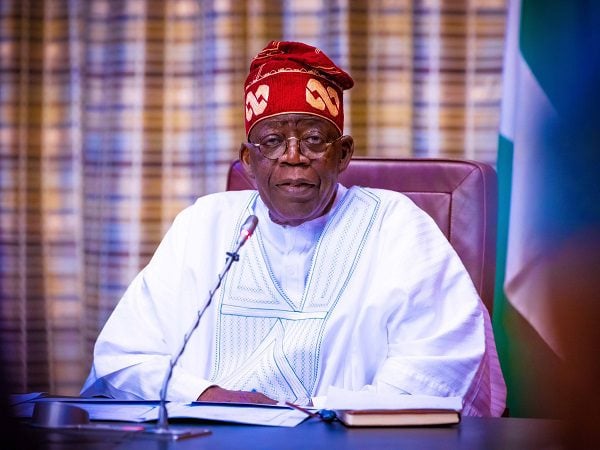
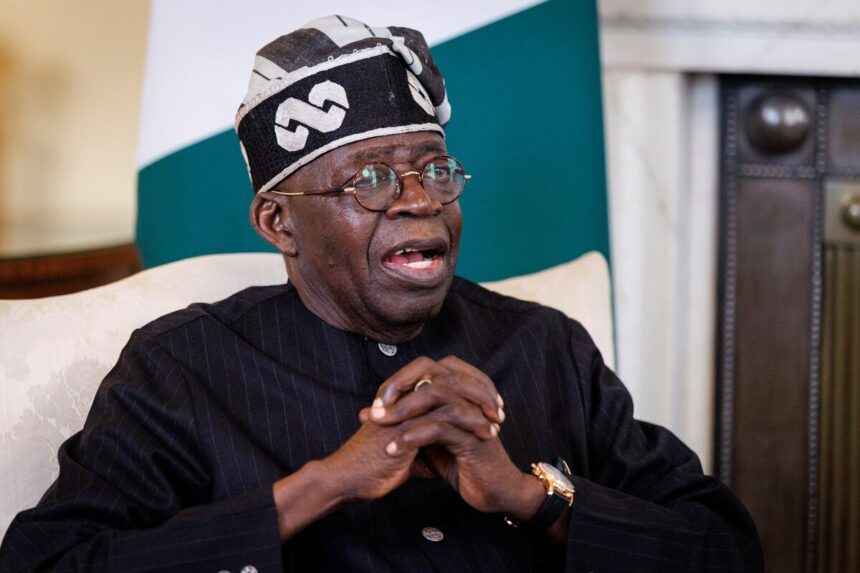
The reported remark by President Bola Ahmed Tinubu, during the recent meeting with Catholic Archbishops led by Cardinal John Onaiyekan, that “all is fair in politics” belongs to the second category.
It deserves to be challenged—not because politics should be sanitized of competition, ambition or hard bargaining, but because there are things that can never be fair in politics if democracy is to remain democracy.

There can be fierce competition.
There can be strategic alliances.
There can be political realignments.
There can be tough negotiations.
There can even be political manoeuvring.
But there can never legitimately be a place for electoral manipulation, institutional capture, intimidation, inducement, abuse of state power, suppression of opposition or the deliberate weakening of the referee.
That is not politics. That is the corruption of politics.
And when such a philosophy is expressed by a sitting President—especially as Nigeria approaches another consequential electoral cycle—it cannot simply be dismissed as rhetoric.
The Cardinal was not talking about politics. He was talking about people.
The Catholic delegation reportedly came to Aso Rock with a message that should trouble every responsible government: there is too much hunger and misery in the land.
They also appealed to the President to ensure that the Independent National Electoral Commission remains independent and impartial.
Those are not partisan demands.
They are democratic demands.
The first concerns the stomach of the Nigerian.
The second concerns the ballot of the Nigerian.
And both ultimately concern the legitimacy of government.
The World Bank’s April 2026 Nigeria Development Update acknowledges that macroeconomic stabilisation has improved, but warns that household incomes have not fully recovered and poverty remains high. Its latest country assessment estimates that about 63 percent of Nigerians lived below the national poverty line in 2025, with roughly seven million additional Nigerians estimated to have fallen into poverty during that year. Poor households can spend up to 70 percent of their income on food.
The food-security picture is equally sobering. A government-backed Cadre Harmonisé assessment projected that 34.76 million people across the areas analysed could experience Crisis-level or worse food insecurity during the June–August 2026 lean season.
These are not opposition-party statistics.
They are not Catholic statistics.
They are not ADC, PDP, Labour Party or APC statistics.
They are statistics about Nigerians.
So when men of the cloth come to the Presidential Villa and say Nigerians are hungry, the appropriate response should not be political defensiveness.
It should be presidential reflection.
Mr President, politics is not a moral vacuum
There is a dangerous intellectual shortcut in the expression that “all is fair in politics.”
If taken literally, it would mean that an otherwise unacceptable action becomes acceptable merely because it produces political advantage.
That proposition is incompatible with constitutional democracy.
Politics is not exempt from morality.
Politics is not exempt from law.
Politics is not exempt from accountability.
Politics is not exempt from history.
And, most importantly, politics is not exempt from the Nigerian Constitution.
INEC exists because Nigeria’s Constitution deliberately removed the conduct of elections from ordinary partisan competition and entrusted it to a constitutional electoral body.
Section 153 establishes the Independent National Electoral Commission, while the Third Schedule sets out its constitutional functions, including organising, undertaking and supervising elections and monitoring political parties.
Indeed, the constitutional arrangement recognises the sensitivity of the Commission’s leadership. The President appoints its chairman and members subject to constitutional procedures, including consultation with the Council of State and Senate confirmation.
Why such elaborate safeguards?
Because the referee must not become the player.
That is the very heart of the Catholic bishops’ warning.
Nigeria has paid dearly whenever elections became warfare
Our national history should make every Nigerian politician extremely careful with electoral language.
The Western Region crisis of 1965 descended into political violence, arson and reprisals that became remembered as “Operation Wetie.” It was one of the final convulsions of the First Republic before the military coup of January 1966.
Then came the disputed elections and political crisis surrounding the Second Republic.
Then came 1983.
Then came the unforgettable tragedy of 12 June 1993.
The June 12 election is particularly instructive because it demonstrated both the power and fragility of electoral legitimacy.
The United States Department of State’s contemporary human-rights report described the June 12 presidential election as the freest and fairest in Nigeria’s history, while noting that the military government subsequently annulled the results before the formal declaration could be completed.
The annulment produced mass protests, civil disobedience, political repression and a profound crisis of legitimacy.
The lesson is simple:
When citizens believe their votes have been stolen, they do not merely lose an election. They lose faith in the state.
And when citizens lose faith in the ballot, they begin looking elsewhere for justice.
That is how democratic crises become national crises.
2007 should still embarrass us
The 2007 elections provide another uncomfortable lesson.
The European Union Election Observation Mission concluded that the elections fell “far short” of basic international standards, citing poor organisation, inadequate transparency, widespread procedural irregularities, evidence of fraud, voter disenfranchisement, unequal conditions and violence.
Nigeria survived.
But survival should not be confused with success.
A country can survive a bad election while its democratic institutions are permanently weakened.
And 2023 should not be forgotten
The 2023 general elections were supposed to demonstrate how far Nigeria had travelled technologically and institutionally.
BVAS and the INEC Result Viewing Portal raised expectations that technology would make electoral manipulation substantially more difficult.
Instead, the European Union Election Observation Mission concluded that shortcomings in electoral law and administration damaged public trust in INEC.
Among its priority recommendations were a more accountable process for selecting INEC members and real-time publication and access to election results.
The NDI/IRI joint observation mission similarly reported logistical, technological and communications failures, political violence, vote manipulation and regional disparities in electoral integrity.
Therefore, when Nigerians today ask for an independent and impartial INEC, they are not inventing a problem.
They are responding to history.
The President should understand the peculiar symbolism
President Tinubu is not merely another politician.
He is the incumbent President.
He controls the executive branch.
His party controls the Federal Government.
His administration has enormous influence over the machinery, resources and political environment within which the next general election will take place.
That makes presidential reassurance particularly important.
The President should therefore be the first Nigerian to say:
“INEC will be free.”
“The opposition will be protected.”
“State institutions will not be weaponised.”
“The security agencies will remain professional.”
“The electoral referee will not work for the ruling party.”
That would be statesmanship.
It would reassure the opposition.
It would reassure civil society.
It would reassure investors.
It would reassure international observers.
Most importantly, it would reassure ordinary Nigerians.
*Look beyond Nigeria*
There are countries from which Nigeria can learn.
South Africa constitutionally entrenched the independence and impartiality of its Electoral Commission. Section 181 expressly states that constitutional democratic institutions, including the Electoral Commission, are independent and must exercise their functions without fear, favour or prejudice. It also prohibits state interference with their functioning.
That is not accidental constitutional decoration.
It reflects a profound understanding:
The institution conducting the election must belong to the republic, not to the government of the day.
Kenya has provided another important lesson.
In 2017, its Supreme Court annulled a presidential election and ordered a fresh election. Whatever one’s political interpretation of the Kenyan experience, the episode demonstrated an essential democratic principle:
No election result is more important than the integrity of the process that produced it.
India offers another model of the importance attached to electoral administration. Its Election Commission is constitutionally grounded under Article 324, with broad responsibility for the superintendence, direction and control of elections.
The lesson across these democracies is not that electoral commissions are perfect.
They are not.
The lesson is that institutions must be stronger than individuals.
Ghana understood something Nigeria must never forget
Ghana has experienced competitive elections, alternations of political power and intense political rivalry without allowing the political system to collapse every time one side loses.
Why?
Because democracy eventually becomes sustainable when political actors accept a fundamental truth:
Today you may be the government. Tomorrow you may be the opposition.
The electoral referee therefore cannot be designed to favour the ruling party because the ruling party will eventually need the same referee to protect it when it becomes the opposition.
That is the genius of democratic institutions.
They protect tomorrow’s minority as much as today’s majority.
Mr President, you know this history
This is perhaps the most important point.
President Tinubu is not a political novice.
He understands political struggle.
He understands opposition.
He understands coalition building.
He understands the power of political organisation.
He understands the importance of institutions.
He understands the history of Nigeria’s democratic struggles.
He was himself part of the generation that resisted military dictatorship and fought for democratic restoration.
That history makes the current moment even more significant.
A man who once fought for democratic space should not preside over circumstances in which Nigerians begin to fear that the political space is narrowing.
The greatest legacy of a political leader is not how many elections he wins. It is whether the institutions he leaves behind are strong enough to defeat him if he ever deserves to lose.
That is the ultimate test of democratic patriotism.
Politics cannot be an excuse for institutional warfare
There is another danger.
Once politicians convince themselves that everything is permissible because “politics is politics,” every institution becomes a potential weapon.
The police become political.
The judiciary becomes political.
The legislature becomes political.
INEC becomes political.
The civil service becomes political.
Regulatory agencies become political.
Even poverty becomes political.
And once everything becomes political, nothing remains truly public.
That is how a republic slowly becomes a partisan possession.
The government then begins to confuse the state with the ruling party.
That is precisely the line a constitutional democracy must never cross.
The hunger question is equally political—but in a different sense
There is an irony that should not escape us.
Millions of Nigerians are struggling to eat.
The World Bank says poor households can devote up to 70 percent of their income to food.
NBS’s current CPI data show that food inflation remains materially higher than headline inflation, even after the considerable decline from the extraordinary inflation levels of the previous two years.
So the Nigerian government must recognise that macroeconomic indicators and household reality are not always the same thing.
A reduction in inflation means prices are rising more slowly.
It does not mean prices have returned to what they were.
A family that could buy a basket of food for ₦20,000 yesterday and must now spend ₦40,000 is not comforted because the rate of increase has fallen from 30 percent to 15 percent.
The arithmetic may be improving.
The kitchen may not be.
This is why Cardinal Onaiyekan’s intervention should be treated as a moral alarm, not a political attack.
Mr President, Nigerians need bread—and a ballot they can trust
There is a direct connection between economic hardship and democratic legitimacy.
When citizens are hungry, they become more vulnerable to vote buying.
When citizens are desperate, political inducements become more powerful.
When unemployment is widespread, young people become easier targets for political violence.
When poverty deepens, political godfathers acquire greater leverage.
And when institutions are weak, desperation becomes an electoral commodity.
Therefore, economic hardship and electoral integrity cannot be treated as unrelated issues.
A hungry population requires stronger democratic safeguards, not weaker ones.
The most dangerous political victory is the one that destroys the referee
Mr President, there is nothing wrong with wanting your party to win.
That is politics.
There is nothing wrong with building political structures.
That is politics.
There is nothing wrong with persuading Nigerians to vote for you.
That is politics.
There is nothing wrong with defeating the opposition at the ballot box.
That is democracy.
But there is everything wrong with seeking victory by compromising the institution whose constitutional responsibility is to determine who actually won.
That is not politics.
That is institutional subversion.
And history has a brutal way of exposing it.
The 2027 election must not become another test of Nigeria’s survival
Nigeria does not need another election whose legitimacy becomes the central issue after the results.
Nigeria does not need another election in which technology promises transparency but institutional failure produces suspicion.
Nigeria does not need another election in which the losing side believes the referee was compromised before the match began.
Nigeria does not need another cycle of political violence, litigation, recrimination and ethnic suspicion.
What Nigeria needs is something much simpler:
Let the people vote.
Let the votes count.
Let INEC do its job.
Let security agencies protect voters rather than political interests.
Let every candidate campaign under the same rules.
Let the courts remain the courts.
And let the winner emerge from the ballot—not from the manipulation of the system surrounding it.
Mr President, all cannot be fair in politics
Mr President, politics may be a game of strategy.
But Nigeria is not a game.
Nigeria is a country of more than 200 million human beings.
The farmer who cannot afford fertiliser is not playing politics.
The mother who cannot afford a nutritious meal for her child is not playing politics.
The graduate without a job is not playing politics.
The displaced family living in insecurity is not playing politics.
The voter standing under the sun for hours to cast a ballot is not playing politics.
And the citizen who asks that his vote be counted is not asking for a favour.
He is exercising a constitutional right.
Therefore, Mr President, respectfully but firmly:
All cannot be fair in politics.
Not in a constitutional democracy.
Not in Nigeria.
Not if we have learnt anything from 1965.
Not if we remember 1983.
Not if we remember June 12, 1993.
Not if we remember 2007.
Not if we remember the credibility crisis surrounding the 2023 elections.
And certainly not if we genuinely believe that democracy is government of the people, by the people and for the people.
Politics must have boundaries.
Power must have limits.
Institutions must have independence.
Elections must have integrity.
And leadership must have conscience.
The President has an historic opportunity before him.
He can preside over an election in which his party wins—and the opposition accepts the result because the process was demonstrably fair.
Or he can preside over an election in which his party wins but the country spends years arguing about whether the referee was neutral.
The first would be a political victory.
The second would be an institutional defeat disguised as a victory.
History will not ultimately ask President Tinubu how cleverly he played politics.
It will ask a much harder question:
When he possessed the power to strengthen Nigeria’s democracy, did he strengthen the republic—or merely strengthen his party?
That is the question before Mr President.
And Nigeria is watching.
*©️ Chief Akinwumi Akinfenwa*
*07062986613 for Calls/SMS*
*09091700203 for WhatsApp*