


by Prof Adeyemi Ademowo
There are certain practices in our universities that have become so normal that hardly anyone (or only very few) pauses to ask the most fundamental question: Why?
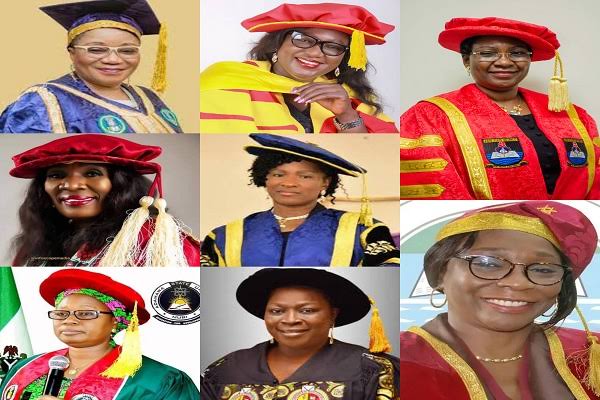
One of them is the curious insistence on addressing female academics as “Dr (Mrs)” or “Prof (Mrs).” Every time I encounter these titles on an official document, conference programme, a university website, or a departmental noticeboard, I find myself wondering what exactly the university intends to communicate.
How can two worlds be seamlessly sewed in a shameless manner: the doctorate/professorship was earned in an academic world while marriage was negotiated and “approved” in a social world.
As an anthropologist, I have learnt that ordinary practices often reveal extraordinary truths about society. They expose our assumptions, our values, our anxieties, and the invisible rules by which we organise social life. The seemingly harmless expression “Dr (Mrs)” is one such practice.
Over the years, I have deliberately raised this issue during academic engagements in different Nigerian universities. What has fascinated me is not merely the defence of the practice, but the depth of its cultural entrenchment. Many newly promoted female doctors and professors adopt the designation almost instinctively, as though scholarship alone is somehow incomplete until accompanied by a declaration of marital status.
I have often asked a simple question: If I am not officially addressed as “Prof (Mr)”, why should my female colleague who spent the same sleepless nights writing her doctoral thesis, survived the same external examinations, published scholarship of the same quality, and earned her professorship through the same rigorous process be officially introduced as “Prof (Mrs)”?
The question is not rhetorical rather a case of “grassilation” (double speaking). It exposes an institutional contradiction. Universities claim to celebrate merit, intellectual independence and equality. Yet, in the same breath, they officially attach a woman’s marital identity to her academic title while leaving the man’s title untouched. It is a subtle distinction, a significant one. It suggests, however unintentionally, that a man’s professional identity is complete in itself, while a woman’s requires an additional social qualifier. Or is it a case of some women seeking validation or intentional subtly traumatizing the female others?
Some will argue that women choose the designation themselves. That is entirely possible. But anthropology teaches us that culture is most powerful when it no longer appears imposed. The deepest forms of socialisation are those that become habit; those we reproduce willingly, often without questioning their origins or the assumptions they carry.
This is why the debate is larger than punctuation or nomenclature. It is about the ways institutions reproduce social expectations. Universities should be among the first places where intellectual achievement is detached from social identities that have no bearing on scholarship. Instead, they sometimes become the custodians of conventions that ought to have been re-examined long ago.
The irony is difficult to ignore. The academy teaches gender equality, critiques patriarchy, and celebrates women’s intellectual accomplishments, yet its official documents continue to distinguish female professors according to their marital status. One wonders what message this sends to younger scholars. Is marriage now an institutional credential worthy of appearing beside an earned doctorate?
There is another dimension that deserves attention. The practice quietly categorises women according to marital status. One woman’s marriage becomes institutionally visible; another’s unmarried status becomes equally conspicuous by omission. Professional identity should never depend on whether one is married, unmarried, divorced, or widowed. The university has no academic interest in any of these.
Academic titles are among the few honours that rest solely on demonstrated intellectual achievement. They should therefore remain professionally neutral. Universities should recognise scholarship not marital status as it is in other climes.
Perhaps the time has come for Nigerian universities to adopt a simple and consistent protocol: Professor is Professor. Doctor is Doctor. Nothing more is required.
The struggle for gender equality in academia is not always about grand declarations or sweeping reforms. Sometimes it begins with questioning ordinary practices that have survived simply because they have become familiar. Retiring the official use of “Dr (Mrs)” and “Prof (Mrs)” would not diminish the institution of marriage. Rather, it would reaffirm a principle that universities, of all places, ought to cherish: academic distinction is earned through scholarship, not defined by marital status.
Marriage may enrich a scholar’s personal life, but it should never qualify a scholar’s professional title.
Until this is considered and necessary actions taken, I shall henceforth be comfortable being addressed as “Prof (Mr) Ademowo”.
Ire o!
Adeyemi Johnson Ademowo is a social anthropologist in the department of Sociology, Afe Babalola University Ado-Ekiti yemiademowo@gmail.com