By Segun Dipe
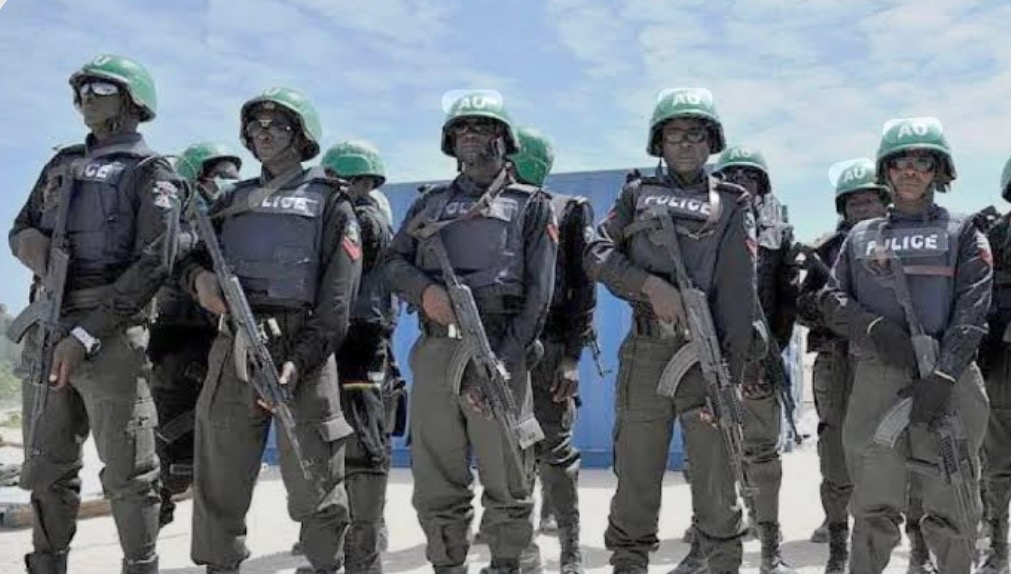
There is one line in our Constitution that has shaped how Nigeria is policed for this long. It states, inter alia, that there shall be only one police force for the country, and that “no other police force shall be set up for the Federation or any part thereof.”
That is Section 214 of the 1999 Constitution. And it is absolute.
For a quarter of a century, that single sentence has stood like the Wall of Gibraltar against Nigeria’s security architecture. It has blocked every serious attempt to allow states to organise their own policing.
The world has changed since that provision was enacted on May 29, 1999. Nigeria has not. And the gap between law and reality is costing us lives.
Security-wise, one size cannot fit 200 million people. From Maiduguri to Ado-Ekiti, from the creeks of the Niger Delta to the borders of Katsina, Nigeria is vast and different. Crime in one place is not the same as crime in another. Yet we run a security system that is designed and directed from one centre.
We have seen what that costs us. In Zamfara and Katsina between 2019 and 2023, bandits turned forests into headquarters and sacked entire villages. Governors raised the alarm repeatedly, but they could not deploy or direct police. By the time federal reinforcements arrived, the damage had been done and thousands had fled their homes. In Benue and Plateau, communal clashes have dragged on for years. State governments had the intelligence and the local knowledge, but they had to wait for approvals from Abuja before men and resources could move. Response came late, and lives were lost. In the South East in 2021 and 2022, unknown gunmen attacked police stations and INEC offices.
Governors watched helplessly because they had no power to re-deploy police to protect critical assets in their own states. And on highways like the Kaduna-Abuja road and the Ekiti-Kogi borders, kidnapping became a business because there were not enough officers who knew the terrain. A policeman transferred from Bayelsa to Birnin Gwari does not know the three footpaths that lead into the forest. By the time backup arrives, the damage is done.
We are asking a single command to monitor forests, highways, markets, schools, and farms across 36 states. This is not sustainable. I doubt if it was ever designed to be.
We practice federalism everywhere except in security. States build hospitals, states build schools, states build roads, states attract investment. But when it comes to protecting citizens, states are told to watch from the sidelines. A governor is called the Chief Security Officer, but he has no direct control over the men and women on the ground.
So what happens? States improvise. The South West has Amotekun. The North East has Civilian JTF. Communities fund vigilantes. In practice, we have created layers of local security because the law left a vacuum. If we trust states with education and health, we must also trust them with safety. Anything else is federalism in name only.
The fear of abuse is real. The biggest pushback is that governors will misuse state police. But that is a governance problem, not a reason to keep a broken system. We don’t scrap the judiciary because some judges are compromised. We strengthen oversight. The same must happen with policing. State police will work if we build it right with clear laws that separate duties between federal and state commands, with independent commissions to recruit, promote and discipline officers outside political control, with national standards for training, weapons and human rights, and with community boards so citizens can question and monitor their local police. Proximity brings accountability. When a crime wave hits, people will know exactly who to ask — their governor, their state assembly, their state police chief.
It is about time to amend the wall in Section 214. That clause that says “no other police force shall be established” was written to keep us together. Fine. But unity that ignores security is unity in name only. Removing that barrier does not break Nigeria. It can only strengthen it. Let the Federal Police handle terrorism, interstate crime, and border security. Let State Police handle community crime, traffic, kidnapping, and local intelligence. Two levels, one country. The objective must be to keep Nigerians safe.
This cannot wait any longer. No investor will build a factory on a dangerous road. No farmer will go to his farm if he fears being kidnapped. No parent will send a child to school if the journey is not safe. Security is the foundation. Everything else sits on it.
The National Assembly is already debating constitutional reforms. The question is no longer “Should we have state police?” The question now is “How do we design it to work?”
For 25 years, Section 214 told us one force was enough. For 25 years, our reality has said otherwise. It is time to update the law to match the times.
It is time for State Police.
Know this, know peace.
_Segun Dipe writes as public opinion anlayst and Publicity Secretary of All Progressives Congress, APC, Ekiti State_