

By Otunba (Dr) Abdulfalil Abayomi Odunowo
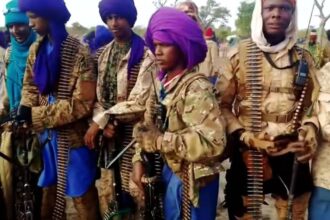
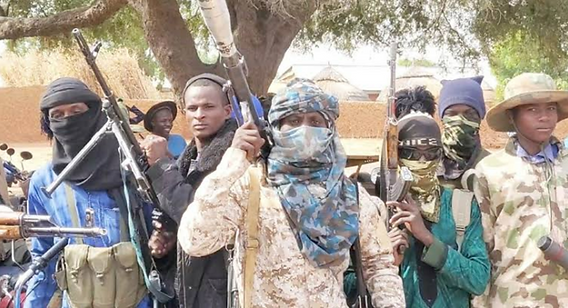
Recent security initiatives under President Bola Ahmed Tinubu have stirred fresh hope that Nigeria may finally be turning a corner in its long fight against banditry, terrorism, and kidnapping. These efforts signal a move away from piecemeal responses toward a more joined-up strategy, one aimed not only at gunmen hiding in the forests, but at the whole ecosystem that keeps them going.
Among the key measures now being reinforced are intensified intelligence operations to map, investigate, and break up the financial networks of sponsors; continued arrests of major financiers and coordinators; the training and deployment of specialized elite military and security units for counter-banditry missions; tighter border controls to slow the flow of arms, ammunition, and foreign fighters; and better inter-agency coordination among the Armed Forces, Police, intelligence services, and other institutions to improve rescues and operational effectiveness.
This broad approach, pairing kinetic pressure with disruption of logistics, recruitment, financing, and cross-border support, shows a sharper grasp of modern asymmetric threats. Military sweeps on their own have, frankly, fallen short in the past; real progress requires simultaneous action across all these fronts, backed by steady political will and judicial follow-through.

Lessons from Successful Counter-Insurgencies
Nigeria isn’t alone in dealing with challenges like this, and history offers some encouraging examples. Several countries have used similarly comprehensive strategies, intelligence-led targeting of networks, elite forces, financial disruption, and stronger border security, and saw major reductions in rural banditry, insurgency, and related violence.
Colombia stands out as a particularly striking case. In the early 2000s, while confronting the powerful FARC insurgency, which financed itself through kidnapping, extortion, and drug trafficking and controlled large swathes of territory, the government rolled out Plan Colombia. This integrated U.S.-supported effort centered on intelligence fusion, high-value targeting of leaders and financiers, specialized mobile units with stronger mobility and precision capabilities, interdiction of supply lines, and tighter coordination across agencies. By disrupting finances, leadership, and logistics, Colombia sharply reduced FARC’s strength from around 20,000 fighters to about 7,000, recovered most of the territory it had lost, and opened the door to a peace process. What made the difference was sustained operations, elite intelligence-driven strikes, and cutting off outside support, elements that closely echo Nigeria’s current path.
Peru, for its part, effectively dismantled the Shining Path (Sendero Luminoso) insurgency through focused intelligence work and leadership decapitation. After years in which conventional approaches produced only limited gains, specialized intelligence units tracked and captured top figures, including founder Abimael Guzmán in 1992. That fractured the group’s command, ideology, and cohesion. Combined with military pressure, rural defense militias (rondas), and attempts to address some underlying grievances, Peru largely neutralized the threat. It’s a reminder that precise intelligence and network targeting often matter more than brute force alone.
Sri Lanka offers another example of a decisive victory against the LTTE (Tamil Tigers), a sophisticated insurgent group with robust financing from diaspora networks, external safe havens, and hybrid tactics. In the final phase, Eelam War IV, from 2006 to 2009, the government mounted a comprehensive campaign: military modernization and elite operations, naval blockade and border interdiction to cut supplies, intelligence penetration, disruption of funding channels, and relentless pressure that wiped out leadership and territorial control. Controversial in both execution and human cost, yes, but it brought a 26-year conflict to an end by systematically dismantling the group’s capabilities.
Taken together, these examples make one thing clear: consistent, intelligence-driven, multi-domain strategies, especially when shielded from political interference and supported by inter-agency unity, can produce serious gains against stubborn criminal-insurgent networks.
Realistic Expectations and the Path Forward
If Tinubu’s initiatives are carried out with professionalism, continuity, and full resourcing, including the reported massive defense allocations and recruitment drives, Nigeria could begin to see tangible declines in banditry and kidnapping within months. That progress might show up in fewer highway attacks, higher arrest and prosecution rates, dismantled sponsor networks, safer rural communities, and more successful rescues.
Still, expecting total eradication by any near-term deadline, such as September, would be unrealistic. These threats are deeply rooted, adaptive, and tied up with poverty, governance gaps, and regional spillovers. Success will depend on sustained intelligence, community cooperation, state-level buy-in, judicial efficiency, and tackling root drivers like ungoverned spaces and illicit economies.
The real test isn’t the number of operations carried out or the volume of press statements. It’s whether ordinary Nigerians, farmers, traders, travelers, and families, can get back to living without the constant shadow of fear. Restoring public confidence and a sense of normalcy in the Northwest, Northeast, and beyond will be the true measure of victory.
Nigeria has the resources, the manpower, and now, arguably, a clearer strategic framework. By drawing on proven international models while adapting them to local realities, the country can break this cycle of banditry. The months ahead will test resolve, coordination, and implementation. If execution stays disciplined, optimism could yet turn into lasting security gains. Nigerians deserve no less.