

By Okoi Obono-Obla
Fertility Shrines (Yose) and Matriclans among the Yakurr People of Cross River State: An Anthropological Exploration
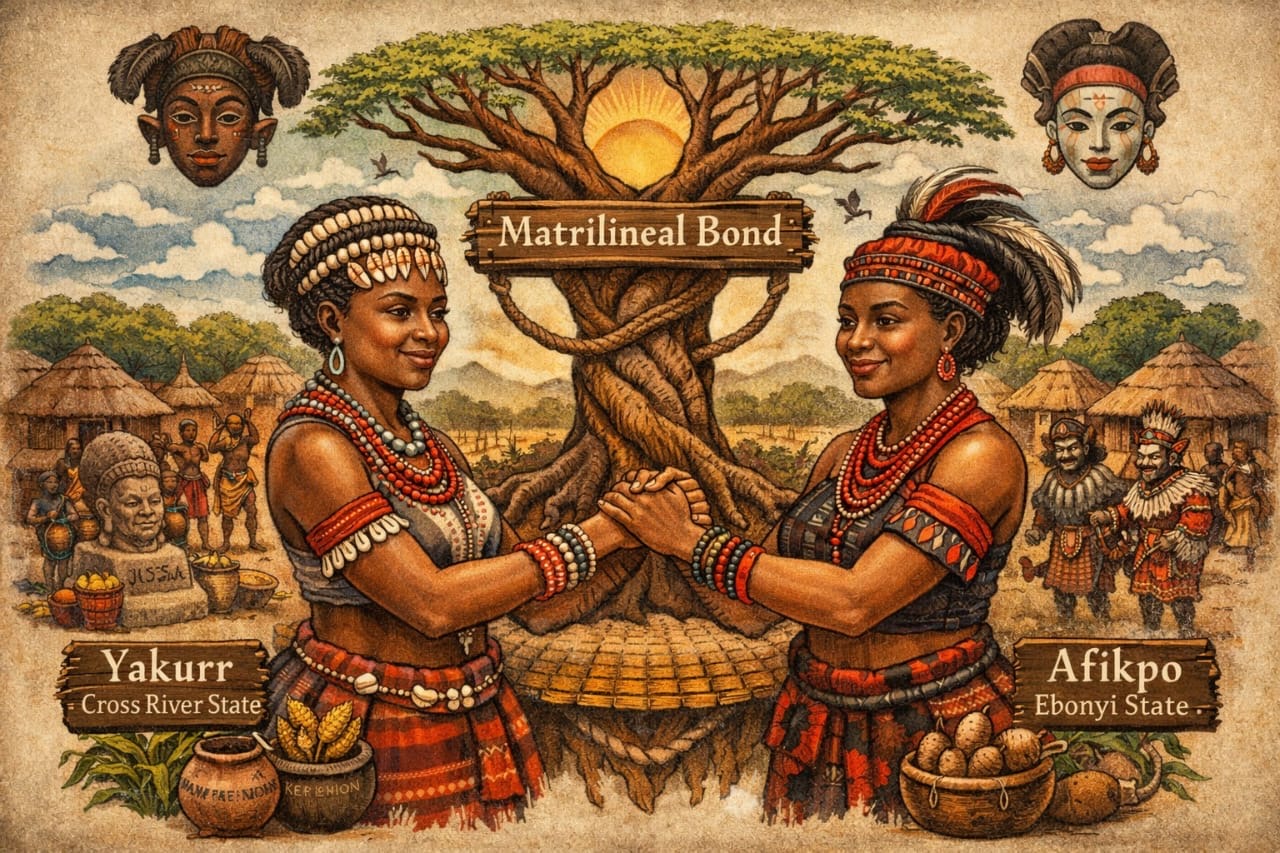
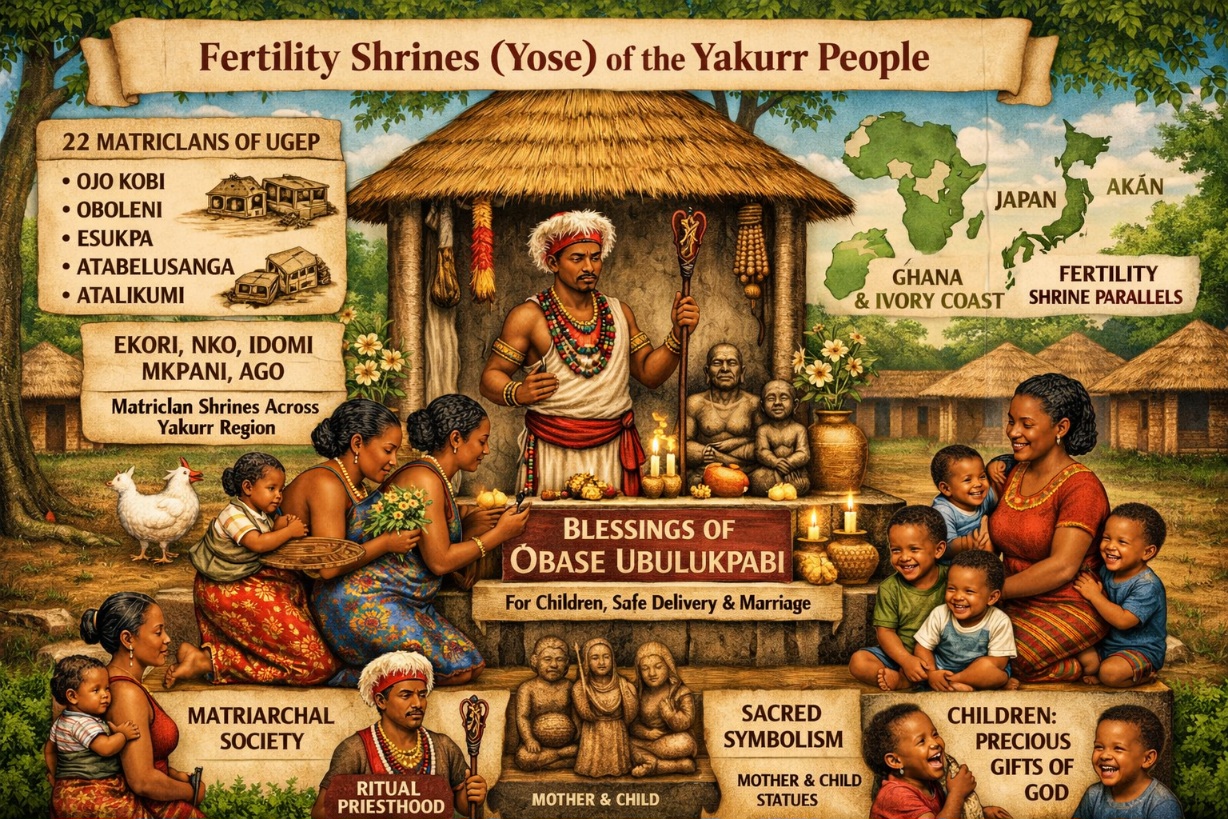
The Yakurr people of Cross River State are organized into matriclans, a clear evidence of their matriarchal social structure, where women hold a special status in society. Each matriclan possesses its own fertility shrine, known as Yose. These shrines are central to Yakurr cosmology and social life, symbolizing the sacredness of women as fountains of reproductive health and continuity of life.
Interestingly, while the shrines are devoted to women’s fertility, the heads or priests of these matriclans are men. This paradox reflects a broader anthropological pattern where male ritual authority coexists with female symbolic centrality in reproduction and lineage continuity.

What is a Fertility Shrine?
A fertility shrine is a sacred space devoted to the appeasement of the Almighty God, Obase Ubulukpabi (Obase Woden), to bless women of a matriclan with children, safe delivery, and good marriages.
– In Japan, fertility shrines such as Asuka Niimasu Shrine in Nara Prefecture are integral to Shinto religious practice.
– In Africa, the Akan people of Ghana and Ivory Coast—who share striking social structures with the Yakurr—also maintain fertility shrines as part of their belief systems.
Among the Yakurr, infertility or barrenness is regarded as a taboo and a curse. Every woman is seen as a sacred being, and childbearing is considered imperative for the sustainability of life and the continuity of the matriclan. Women without children are often stigmatized, while children are revered as precious gifts of God.
Fertility Shrines and Matriclans
The Yakurr communities—Ugep, Ekori, Nko, Idomi, Mkpani, and Agoi—each have distinct matriclans with corresponding fertility shrines.
Ugep
22 matriclans with shrines such as Ojokobi, Oboleni, Esukpa, Ọtabẹlusanga, Ọbọkupo, Atalikumi, Obetedel, Ọsẹngawẹkakọn, Yakamakama, Atewa.
– Example: Yabol, Yakunkunebol, and Yakpelebọl (collectively Lẹbọljimạ) share the shrine Ojokobi.
– Yawambọl, Yakpambọl, and Yajeni share Oboleni.
Ekori
16 matriclans, where most shrines are named after the matriclans themselves (e.g., Yọsẹ bạ Yajokpọli). Exceptions include Ọbọlokona and Mkpatu.
Nko
15 matriclans, with shrines named directly after them, reinforcing the identity of each lineage.
Idomi
22 matriclans, but unlike Nko, their shrines are not named after them. Examples include Ina, Kejidom, Ekor.
Mkpani
16 matriclans with shrines such as Obetedel, Obol Etel, Obol Lema, Ataya, Kekpomo, Ọbọkupo, Lekpakpa, Ọbọl Yetem, Asakpa.
Agoi
Matriclans include Yawambol, Yayor, Yatheomoh, Yayami, Yakpong, Wakop, and Yajirajit.
Anthropological Analysis
Fertility shrines in Yakurr society embody the intersection of religion, kinship, and gender. They serve as ritual centers where the continuity of the matriclan is ritually secured.
– Symbolism of Women: Women are revered as sacred vessels of life, yet ritual authority is vested in men. This duality reflects a common anthropological theme where male ritual power legitimizes female biological power.
– Social Cohesion: Shrines reinforce communal identity, binding members of a matriclan through shared rituals of fertility and continuity.
– Comparative Insight: Similar shrines among the Akan and Japanese highlight the universality of fertility cults across cultures, though expressed differently.
Conclusion
The fertility shrines (Yose) of the Yakurr people are more than religious sites; they are cultural institutions that safeguard lineage continuity, sanctify women’s reproductive role, and reinforce the matrilineal identity of the society. Despite male ritual leadership, the shrines ultimately celebrate the primacy of women in sustaining life.