By Okoi Obono-Obla
Restructuring Nigeria and Reconciling the Eastern Region: A Call for Truth and Renewal
Historical Foundations of the Nigerian Federation
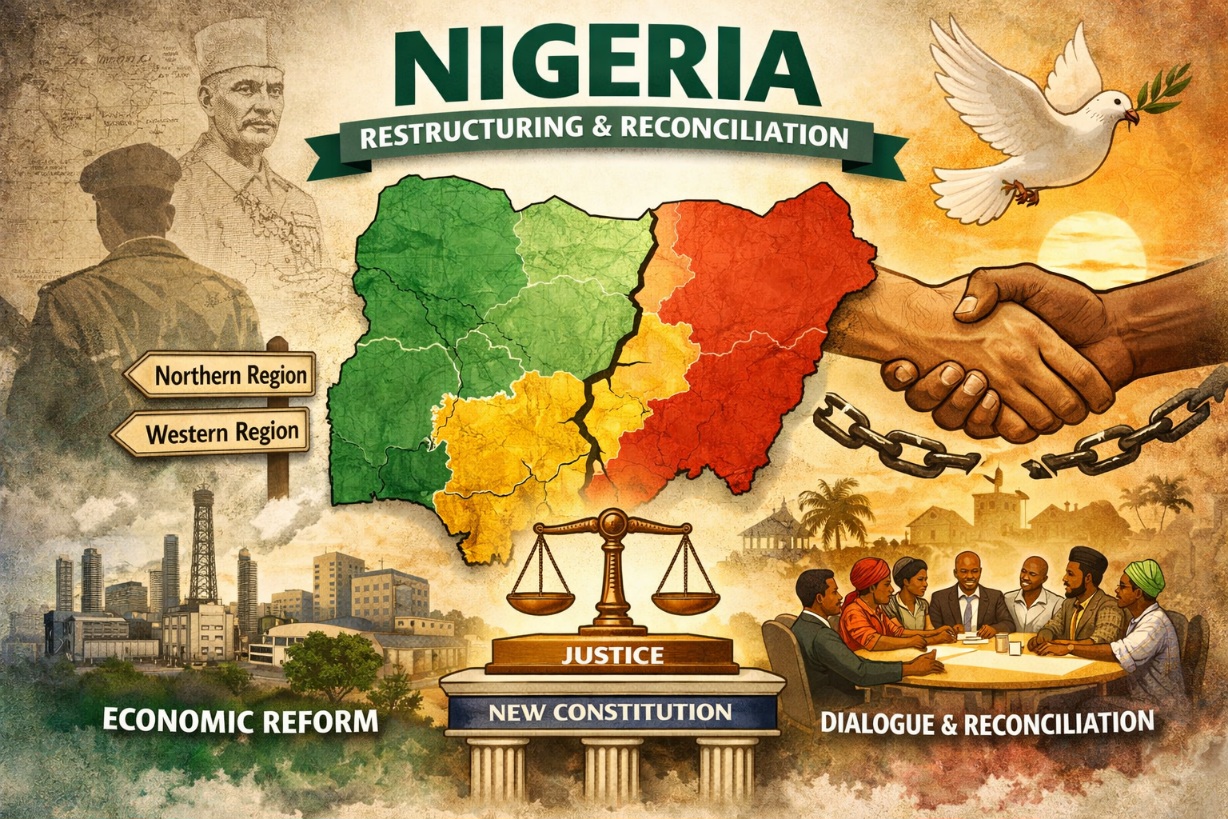
The Nigerian Federation was originally founded on three tripod political structures: the Northern Region, the Western Region, and the Eastern Region. These constitutional thresholds were established by the Richards Constitution of 1945 under Colonial Governor-General Sir Arthur Richards. The federation itself formally came into being on January 1, 1914, when Lord Frederick Lugard amalgamated the Colony of Lagos with the Protectorates of Northern and Southern Nigeria. From the outset, Nigeria struggled with centripetal and centrifugal forces—inevitable when diverse peoples attempt to unite under one political umbrella.

Regionalism, though abolished in 1966 after the military intervened in the politics of the young nation, had been the legal and constitutional fulcrum upon which independence was negotiated. At the London constitutional conferences of 1958 and 1959, regionalism was agreed upon as the foundation for the new nation. It fostered healthy competition among the regions, each striving to modernize and develop at its own pace. Unfortunately, military adventurism halted this progress, replacing it with amorphous state structures hinged on unitarianism. Nearly sixty years into this experiment, which has largely failed, Nigeria faces the urgent need for fundamental restructuring of its political, economic, legal, and constitutional foundations.
Tinubu’s Reform Agenda and the Prospect of 2027
If President Bola Tinubu is given another opportunity through reelection in 2027, his mandate could become pivotal. Tinubu has already demonstrated boldness in attempting to reform Nigeria’s economy after decades of stagnation. The next frontier must be political restructuring—restoring balance to the federation and addressing long-standing structural imbalances. His legacy could hinge on whether he embraces this dual mandate: rebuilding Nigeria’s constitutional foundations while fostering reconciliation among its diverse peoples.
Ugochukwu Uko’s Proposal for Reconciliation
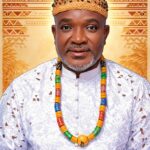
Elliot Ugochukwu Uko, an intellectual from the South Eastern geopolitical zone, offered a rare moment of candor in a conversation I had with him on June 19, 2026. He admitted that the Igbo people had hurt the people of Akwa Ibom, Bayelsa, Cross River, and Rivers States in their relationships over the past eighty years. This bruised egos and fractured the Eastern Region of Nigeria. Uko emphasized that the time has come for the Igbo people to sit down with their neighbors, discuss candidly, offer apologies, and reconcile as a way of moving forward.
I strongly agree with his proposal. It was the first time in my adult life that an elite Igbo voice spoke with such honesty, recognizing the shortcomings of the Igbo people in their relationship with their cousins and neighbors. From the 1953 crisis in the old Eastern Region House of Assembly that led to Professor Eyo Ita stepping down as premier, to the minorities’ struggle for their own region culminating in the creation of states in 1967, the fractures have been evident. The secession of Biafra brought brutalities and massive violations of human rights against minorities—realities many Igbos have continued to deny or dismiss as sabotage of Biafran interests.
Yet Uko, who was only five years old when the tragic civil war erupted, reflected with nostalgia on living and schooling alongside minority families in Enugu, such as the Imokes and others. His candor offers a rare opportunity for truth, reconciliation, and healing. For the minorities of the East and the Igbo people alike, his proposal for healing, dialogue, forgiveness, and total reconciliation is worth the while. It is a courageous step toward rebuilding trust and repairing the fractured bonds of the old Eastern Region.
Conclusion
Nigeria’s future depends on leaders willing to confront history honestly and communities willing to embrace dialogue and forgiveness. Restructuring without reconciliation will be incomplete, and reconciliation without restructuring will be fragile. If Tinubu secures reelection in 2027, his greatest legacy could be to merge both paths—rebuilding Nigeria’s constitutional foundations while encouraging the kind of truth and reconciliation that Uko has called for. Only then can Nigeria move beyond its historical wounds toward a more united and prosperous federation.