by Banji Ayiloge
This approach was on full display with the posting of retired Colonel Kayode Are to Washington as Nigeria’s Ambassador. Sending a retired military officer with deep knowledge of Nigeria’s security architecture is a strategic choice. It gives Abuja a representative who can speak authoritatively to U.S. officials about counterterrorism, regional instability, and security cooperation without losing the plot in translation.
It’s a reminder that diplomacy is not just about visibility. In an era where perception is shaped globally, having a credible voice in Washington who understands both the security realities in the Sahel and the language of American policy circles is worth more than a viral speech.
Critics who expected a rupture or a diplomatic snub will be disappointed. Tinubu’s method suggests he prefers outcomes over optics. Whether you agree with his style or not, the results so far show a leader who is playing the long game—building relationships, managing risk, and ensuring Nigeria is not boxed out of key conversations in Washington.
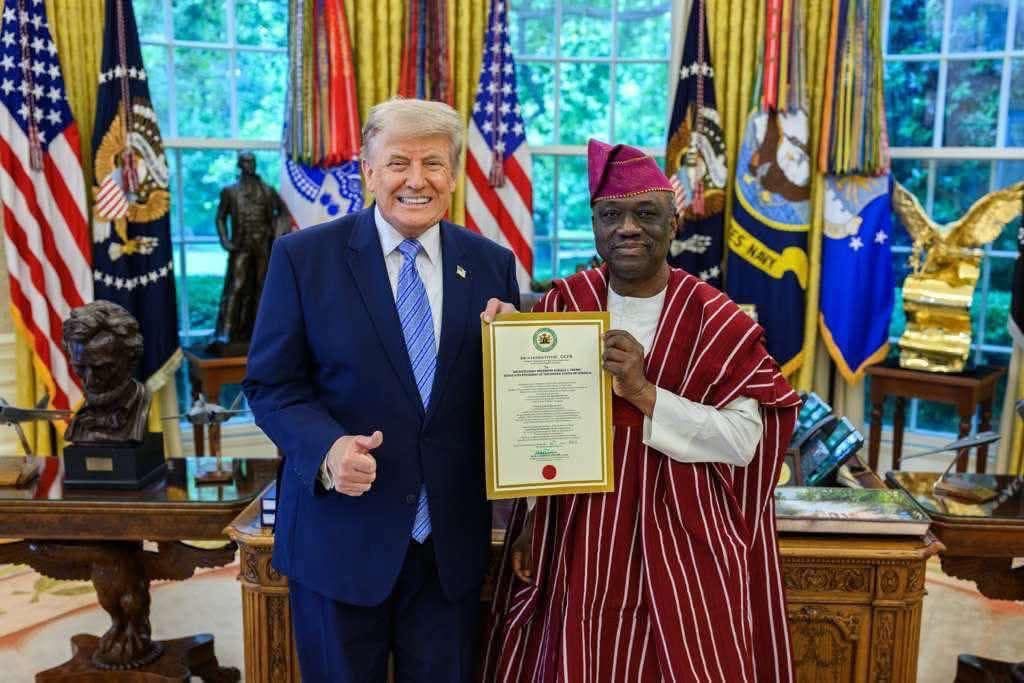
Congratulations to Ambassador Kayode Are on presenting his Letters of Credence to President Donald Trump. His role will be pivotal in shaping how Nigeria’s security and economic interests are framed in the U.S. for the next few years.
For those still questioning Tinubu’s grasp of power politics, the evidence is accumulating: his playbook is not limited to Nigerian politics. It extends to West Africa’s security dynamics, and now, to the corridors of Washington.