By Boma West
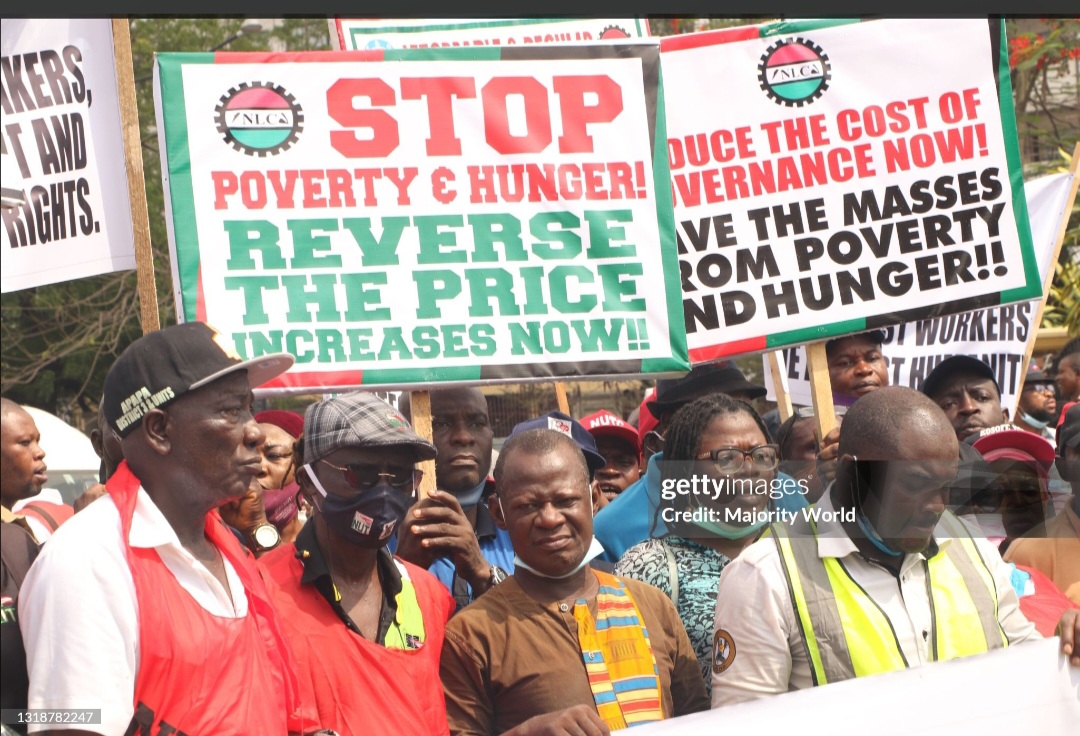
Nigeria sits on the largest proven oil reserves in Africa, over 37 billion barrels of crude, exports more petroleum than any country on the continent, and has generated an estimated $1 trillion in oil revenue since the 1970s. Yet nearly 133 million of its 220 million people live in what the World Bank classifies as multidimensional poverty. Children across the States wake to hunger. Graduates queue for jobs that pay less than $100 a month. Many farmers tend soil they no longer own. Something has gone terribly and deliberately wrong.
Wealth, it turns out, is not the same thing as prosperity. A country can be extraordinarily rich and its people extraordinarily poor at the same time, and Nigeria has spent the better part of six decades proving this point with heartbreaking precision.
The story begins underground. When oil was discovered in commercial quantities in Oloibiri in 1956, it looked like a miracle. The colonial sun was setting, independence was arriving, and beneath the creeks of the Niger Delta lay what seemed an unlimited engine of national fortune. Obafemi Awolowo had built schools in the West from cocoa revenue. The North exported groundnuts. The East thrived on palm oil. Agriculture fed the nation and funded the state. Then oil came, and everything else slowly stopped mattering.

Nigeria fell into what economists call the resource curse, a paradox well-documented across Angola, Venezuela, and the Congo, where the very abundance of natural wealth hollows out every other productive sector. Farming became unglamorous. Manufacturing became unnecessary. A government that could fund itself by simply pumping crude no longer needed to tax its citizens, and a government that does not tax its citizens has very little reason to answer to them.
Nigeria earned more from oil in one decade than it had earned from all exports in the previous century. The money arrived so fast it outpaced any institutional capacity to absorb it. Contracts were inflated. Projects were duplicated. Billions were simply stolen. General Sani Abacha, whose regime ruled through the 1990s, allegedly looted between $3 billion and $5 billion from state coffers, funds that western courts are still attempting to repatriate decades later. His story is extraordinary only in scale, not in kind.
What makes Nigeria’s poverty genuinely astonishing is that it exists alongside visible, flamboyant wealth. In Banana Island, Lagos and Maitama, Abuja, real estate sells for prices that would embarrass Manhattan. Private jets cluster at Murtala Muhammed International Airport in numbers that rival Dubai on a busy weekend. Twenty minutes across the lagoon in Makoko, an estimated 100,000 people live in wooden structures built on stilts above polluted water, without toilets, reliable electricity, or schools. In other parts of the country, poverty wear different faces. Both realities exist simultaneously, neither cancelling the other out.
This is inequality not as a statistical abstraction but as a lived, spatial, visible fact. Nigeria ranks among the most unequal societies on earth, and the gap is not closing. It widens year by year, budget by budget, election by election.
The political architecture of the country has made redistribution nearly impossible. The federal structure, inherited and modified from colonial administration, distributes oil revenue through a formula so contested and complicated that it has generated more litigation than any other question in Nigerian jurisprudence. States receive monthly allocations from Abuja regardless of what they produce, which means governors have every incentive to capture the allocation and very little incentive to build. A state like Rivers, sitting directly atop the oil wealth it produces, receives far less than it generates and still manages to mismanage what it gets. Internal accountability mechanisms are weak, judicial independence is compromised, and civil society, though vibrant and vocal, is frequently ignored by those in power.
Infrastructure tells the same story in concrete and rust. Nigeria has a road network so dilapidated that moving agricultural produce from farm to market can cost more than the produce is worth. The power sector, arguably the single greatest constraint on economic activity, has been the subject of reform programs and privatization schemes for thirty years without producing reliable electricity for the average Nigerian home or business. An economy cannot industrialize without power. Small businesses cannot scale without power. The absence of electricity is not an inconvenience in Nigeria. It is an economic sentence, served by 200 million people for crimes they did not commit.
Manufacturing has consequently never taken root at scale. Nigeria imports what it should produce, from tomato paste from China, toothpicks from Indonesia,to textile fabric from India, not because Nigerians cannot make these things, but because the environment for making them has never been seriously constructed. The cost of doing business in Nigeria is among the highest in the world when you factor in the price of diesel generators, borehole water, private security, and the unofficial payments that grease every regulatory encounter. Entrepreneurs survive despite the state, not because of it.
Education, the one infrastructure that could break the cycle, has been systematically starved. The Academic Staff Union of Universities has gone on strike so many times in the last thirty years. The youth population, with Nigeria being one of the youngest countries on earth and a median age under 18, is growing faster than any capacity to absorb it into productive work. A demographic dividend, celebrated by economists as a development opportunity, becomes a demographic time bomb when there are no jobs, no skills training, and no functioning safety net to catch those who fall.
The people, for their part, have not been passive. Nigerians are among the most entrepreneurially active people in the world. Lagos state, by itself, has a GDP that would rank it among the thirty largest economies in Africa. Nigerian diaspora remittances, money sent home by citizens working abroad, now exceed $20 billion annually, surpassing foreign direct investment and rivalling oil revenue in economic importance. This is not a population waiting to be saved. It is a population working relentlessly against structural headwinds that no individual ingenuity should have to overcome.
The tragedy is not that Nigeria lacks solutions. The tragedy is that the solutions are known, have been proposed repeatedly by Nigerian economists, civil society leaders, technocrats, and reformers, and have been blocked at every turn by the people whose wealth depends on the dysfunction continuing. Fuel subsidies, which cost the government trillions of naira annually, did not exist primarily to help the poor, who rarely own cars. They existed to create a system through which oil was imported, invoiced at inflated rates, and subsidized with public money, generating profit for a small network of connected businessmen. President Bola Tinubu ended the subsidy regime in 2023, a genuinely courageous economic decision, but without the social infrastructure to cushion the poor from the resulting price shock, the move transferred pain downward while the structural beneficiaries of the old system remained untouched and unaccountable.
Nigeria’s poverty, seen clearly, is not a natural disaster. The soil is fertile, the people are capable, the resources are present. What is missing is a governing class that sees its prosperity as tied to the prosperity of those it governs. What is missing is a state that collects taxes, delivers services, and earns legitimacy through performance rather than patronage. What is missing is the political will, generated either from within the elite or from sustained citizen pressure, to dismantle the architecture of extraction that has served a few so well for so long.
Nigeria remains rich while Its people remain poor. This distance is not a mystery but a choice.