A People, A River, A Legacy
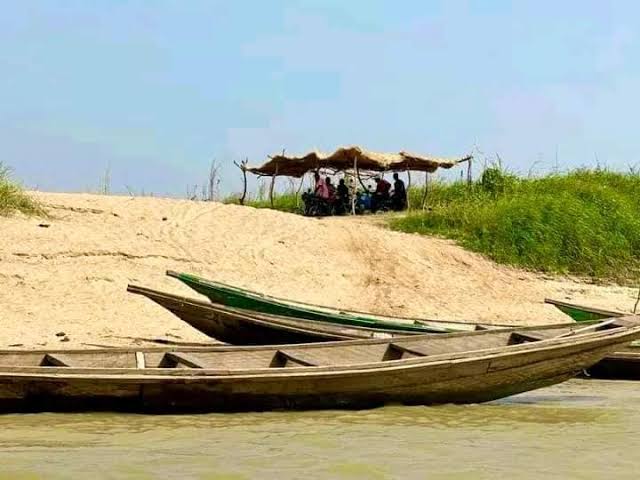
Long ago, two brothers stood at the edge of a great river. Behind them lay an extraordinary journey spanning continents, ancient kingdoms, and centuries of resilience. Before them flowed the mighty River Gongola, its banks fertile, generous, and full of promise. The brothers were twins; Zaro Kpalame, the elder, and Zaro Dembune, the younger. They had arrived at a moment of destiny. But this was no peaceful parting. Driven by rivalry, betrayal, and the fires of the 19th-century Fulani Jihad, one brother crossed to the north bank and founded the Bachama kingdom, making Lamurde his seat of power. The other remained on the south bank, sustaining the Batta kingdom at Demsa. As Zaro Kpalame watched his brother row across the Benue, he declared: “Henceforth, you must live on the northern bank and I shall live on the southern.”
We are the children of those twins. We are the Bwaatiye.
Ancient Roots, An Unbreakable Spirit

Our story does not begin at the Gongola. It begins far earlier, in the ancient Nubian kingdoms of present-day Egypt and northern Sudan, where our ancestors lived as far back as 1000 AD. When the last great Nubian kingdom of Makuria fell, rather than surrender, our ancestors migrated southward across the Sahara, absorbing and assimilating communities along the way. Over centuries, through the 15th, 16th, and 17th centuries, we journeyed westward across the breadth of Africa, eventually arriving in what is today northwestern Nigeria, in the region of Sokoto and Gobir. Our oral tradition holds that our ancestors were the founders of Sokoto itself, long before the Fulani Jihad reshaped the region.
It was while our ancestors were in Sokoto that Islam came and encountered them, through the young Fulani scholar Shehu Usman Dan Fodio. The king at the time, Bawa Zangorsa, welcomed him as a teacher. But when Bawa died and his young son Daniya inherited the throne, Shehu and his brothers seized their moment. During the annual hunting festival, while the king was away, Shehu was crowned. Two loyal counsellors, Ndwamwato and Kpana, witnessed the betrayal. Swiftly and in secret, they gathered the most sacred objects; the brass flutes, the elephant tusks, the sacred rain pot, and the golden stool engraved with ancient hieroglyphs brought from across the desert, and fled to find the king. The council gathered, a decision was made, and most of our ancestors left Sokoto (although a few chose to stay) moving eastward along the Benue River towards a new home. They knew what would await them should they have chosen to stay.
An Empire Along the River
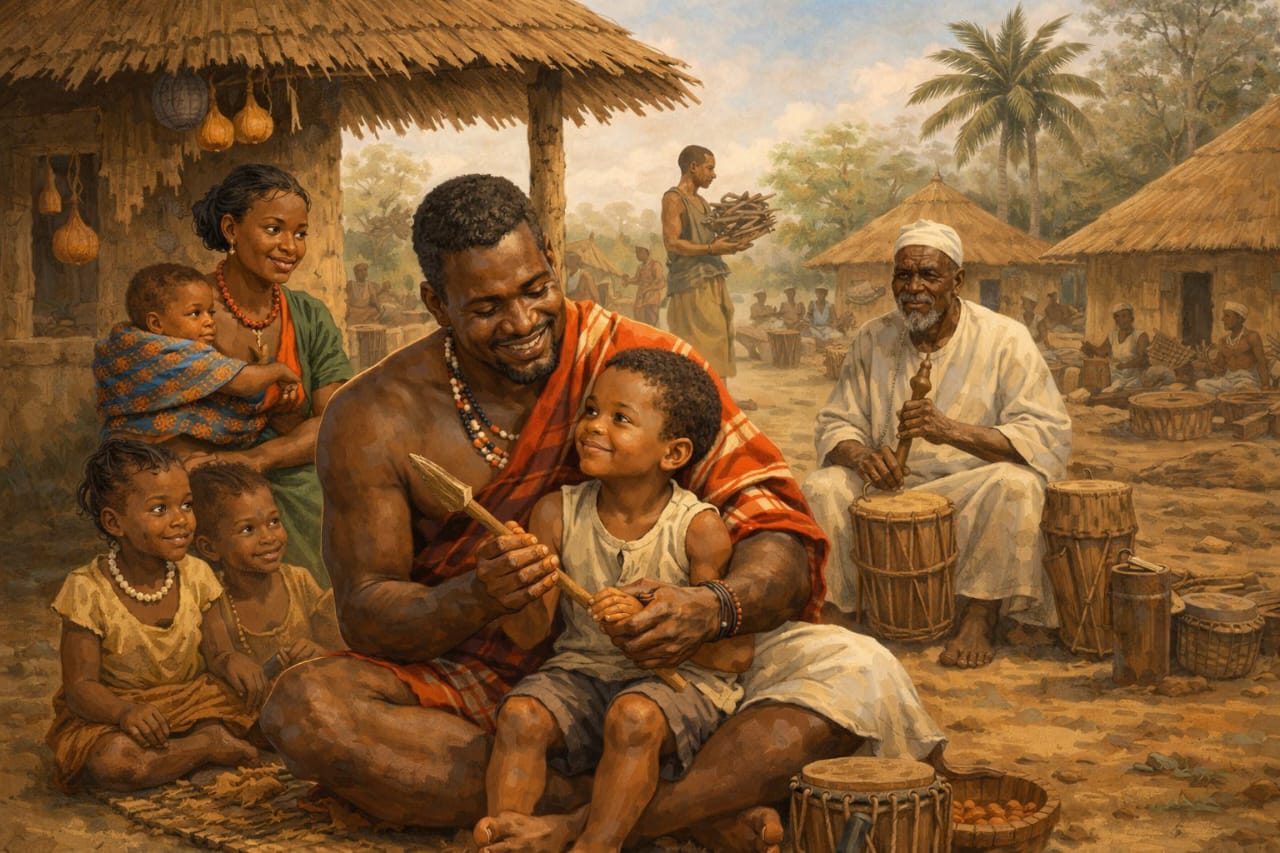
Our ancestors arrived at the confluence of the River Benue and the River Gongola and found land worthy of our history. Rich, fertile, and abundant… perfect for the farmers and fishermen we had always been. Millet, rice, maize, and sorghum fed our families. The river gave them fish and connected them to the wider world.
Before colonial borders were drawn, our ancestors were not merely a riverside community. They had built an empire. Their authority stretched from Numan to Garwa and from Song to the Vere Hills, encompassing what is today Adamawa and Taraba States in Nigeria and the Garwa region of Cameroon. Our ancestors governed through independent pre-colonial states, each politically and spiritually sovereign. When the Fulani Jihad came, our ancestors did not submit. The Bachama fought through the 1850s and were never defeated or Islamised. That warrior spirit is not just history, it is our identity.
Today we are found across three groups; the Bachama, the Batta, and the hill-dwelling Jirai. We are spread across Numan, Demsa, Lamurde, Girei, Fufore, and into Cameroon. Our central town of Numan became a significant colonial river port, where the John Holt Company once used barges to carry goods along the Benue, giving our homeland a cosmopolitan edge that endures today. Administratively, the Numan Federation united us with our neighbours the Mbula, Longuda, and Shelleng kingdoms, a recognition of the deep ties binding our riverside communities.
One People, One Name
Our society is anchored by a proud monarchical tradition, led by the Hama Bachama, whose palace stands in Numan with an ancestral home in Lamurde. Our two main clan structures… the royal Zomye (of which there are six royal clans) and the Kabe, custodians of our sacred rituals, hold our institution together across generations.
Our calendar pulses with living tradition. The Kwete festival in Lamurde and the Vunon festival in Farai near New Demsa honour our ancestral deities Nzeanzo and Matiyavune. These are sacred, joyful celebrations that remind us who we are and where we come from.
In 1979, the Bachama and Batta kingdoms, long separated by a river and a rivalry, formally reunified under the name Bwaatiye, meaning the people of God, the people from above. Approved by the government of Gongola State on 6th September 1979, it was a homecoming centuries in the making.
Separate, yet always one. We are the great Bwaatiye nation.
Like so many African peoples, much of our heritage has been carried not in books, but in voices… passed from elder to child, generation to generation, around fires and in the intimacy of family. Across Africa, oral tradition is not a lesser form of history… it is history in its most living form. The Bwaatiye story you have just read has been preserved for centuries not in archives, but in the memories and voices of our elders. This article is our small attempt to honour that tradition by committing it to the page. Our history lives in the stories we tell.
This article was compiled with contributions from:
Dr. Julian Mamiso MBBS FRCOG, Consultant Gynaecologist, Wales, UK
Dr. Tennyson Nadah MD MB BS, JCPTGP, AMRCGP, DFFP, Principal Partner/Family Physician
Mr. Wilson J. Myenguron, CEO, Sahel Hospitality Development & Management Limited