by Agbonmagbe Kazeem
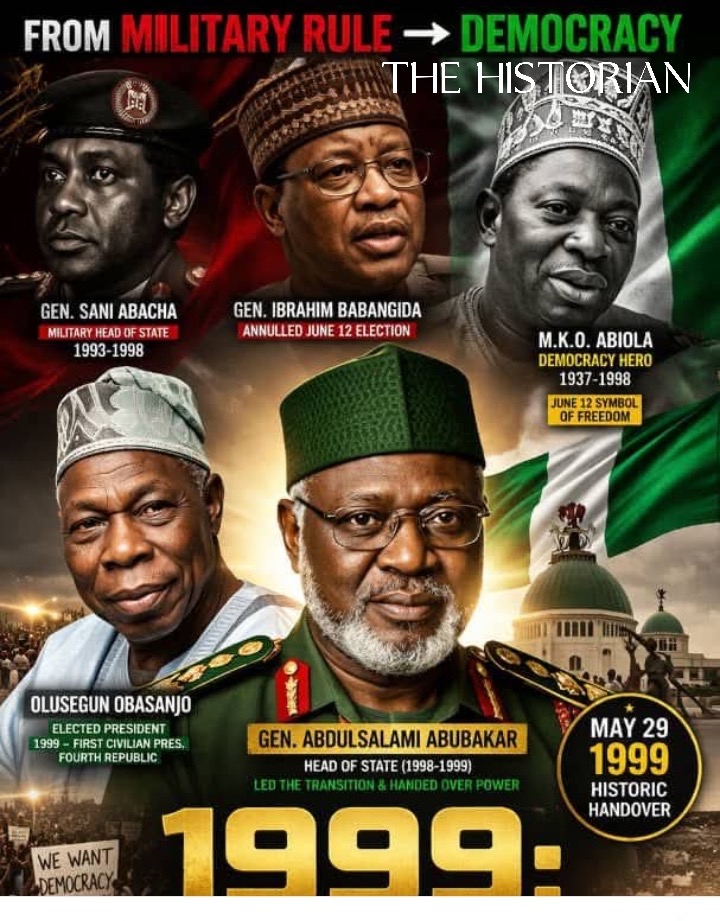
Nigeria’s return to democratic rule in 1999 stands as one of the most defining moments in the nation’s history—a transition shaped by crisis, sacrifice, negotiation, and national pressure.
BACKGROUND: THE FALL OF MILITARY RULE
Nigeria was under prolonged military governance from 1983 to 1999, dominated by regimes that controlled political power and suppressed democratic structures.
A major turning point came after the annulment of the June 12, 1993 presidential election, widely believed to have been won by Moshood Kashimawo Olawale Abiola. The annulment by Ibrahim Babangida triggered:
Nationwide protests
Civil unrest
International condemnation
Nigeria entered a period of instability under successive military leadership.
CRITICAL EVENTS THAT CHANGED EVERYTHING (1998)
Two major events forced a transition:
June 8, 1998: Death of Sani Abacha
July 7, 1998: Death of Moshood Kashimawo Olawale Abiola while in detention
These events removed key obstacles and created urgency for political reform.
THE MAN WHO LED THE TRANSITION
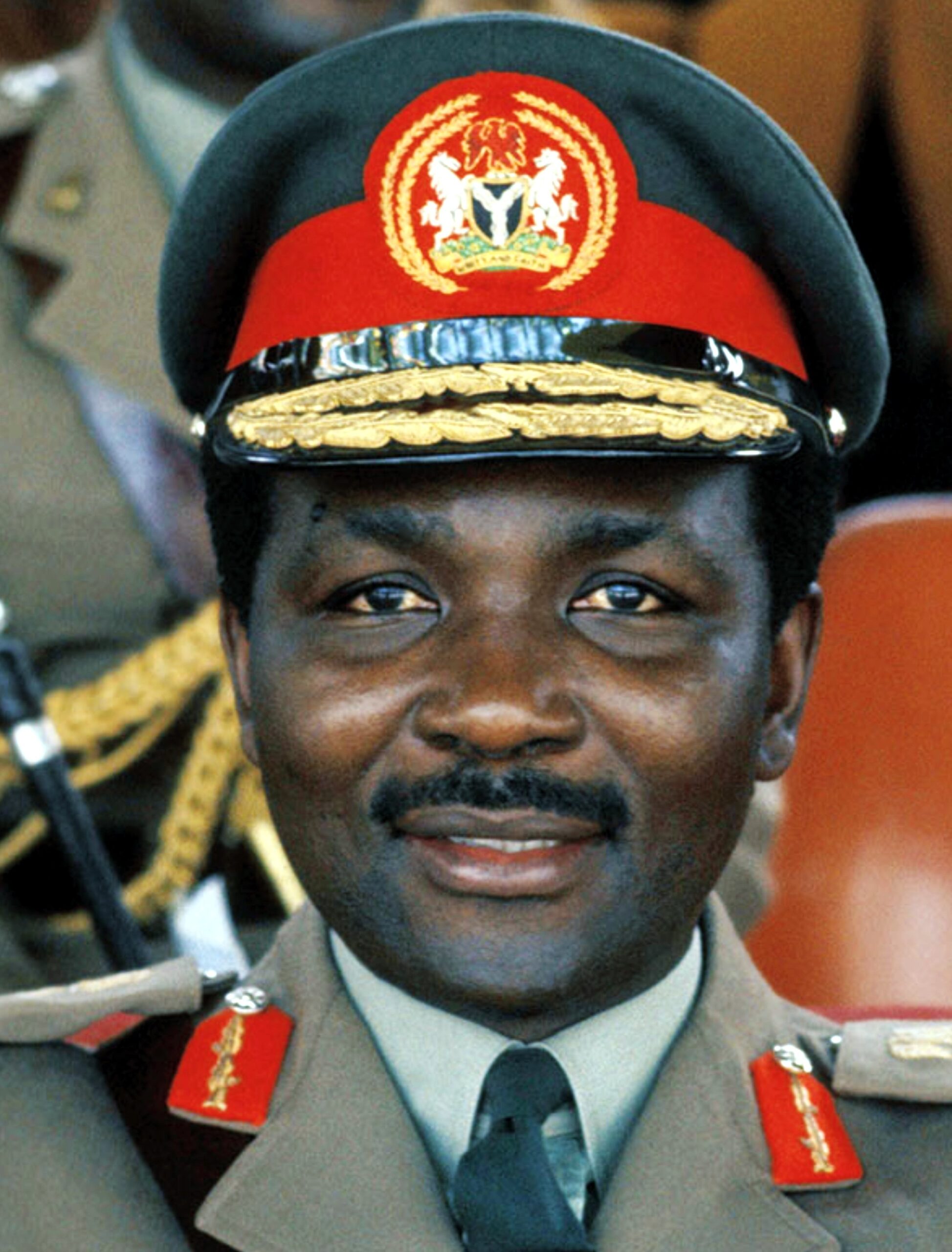
Abdulsalami Abubakar
After Abacha’s death, Abubakar became Head of State and played a decisive role in restoring democracy.
His Key Actions:
Released political prisoners (including Olusegun Obasanjo)
Initiated a rapid transition program
Established a new electoral body under Ephraim Akpata
Promulgated the 1999 Constitution
Scheduled and conducted nationwide elections
Publicly committed to handing over power—and fulfilled it
THE 1998–1999 GENERAL ELECTIONS
Nigeria conducted a phased democratic transition:
December 1998 – Local Government Elections
January 1999 – Governorship & State Assembly Elections
February 1999 – National Assembly Elections
February 27, 1999 – Presidential Election
MAJOR POLITICAL PARTIES
People’s Democratic Party (PDP)
Alliance for Democracy (AD)
All People’s Party (APP)
PRESIDENTIAL ELECTION RESULT
Winner: Olusegun Obasanjo (PDP)
Opponent: Olu Falae (AD/APP alliance)
Obasanjo won with approximately 62–63% of the vote, becoming the first civilian president of Nigeria’s Fourth Republic.
THE HISTORIC HANDOVER
Date: May 29, 1999
Abdulsalami Abubakar officially handed over power
Olusegun Obasanjo was sworn in as President
This marked:
The end of military rule in Nigeria
The beginning of the Fourth Republic
Nigeria’s longest uninterrupted democratic era
KEY ACTORS INVOLVED (VERIFIED)
🔹 Military & Transition Leaders
Abdulsalami Abubakar
Sani Abacha
Ibrahim Babangida
🔹 Democracy Symbol
Moshood Kashimawo Olawale Abiola
🔹 Political Figures
Olusegun Obasanjo
Olu Falae
🔹 Electoral Authority
Ephraim Akpata
IMPORTANT HISTORICAL REALITIES
The transition was largely controlled by political and military elites
It involved power-sharing agreements (zoning) across regions and religions
The 1999 elections recorded irregularities and criticisms, despite marking progress
WHY 1999 REMAINS HISTORIC
Restored civilian governance
Established constitutional democracy
Opened space for political participation and freedoms
Marked the start of Nigeria’s Fourth Republic (still ongoing today)
FINAL SUMMARY
Handover Leader: Abdulsalami Abubakar
Civilian President: Olusegun Obasanjo
Election Year: 1999
Handover Date: May 29, 1999
Major Trigger: Deaths of Sani Abacha and Moshood Kashimawo Olawale Abiola
This content is provided strictly for educational and historical purposes. Readers are strongly advised to conduct further personal research for deeper understanding, broader perspectives, and increased awareness.
“THE HISTORIAN”