by Okoi Obono-Obla
Conflict broke out between Afghanistan and Pakistan in October 2025, escalating into a full-scale war on 21 February 2026. Pakistan launched airstrikes and cross-border operations, claiming to target terrorist hideouts, while Afghanistan accused Pakistan of striking civilian facilities. The humanitarian toll has been severe, with thousands displaced and hundreds killed.
On 16 March 2026, Pakistan attacked Afghanistan again, bombing a mental health rehabilitation home in Kabul. More than 400 people were killed in the strike. Pakistan maintained that the facility was harboring terrorists responsible for attacks on its territory, while Afghanistan condemned the attack as a massacre of civilians.
The world today is rife with conflicts, simmering and convulsing across regions, threatening to engulf the globe. Unlike the post–Second World War era, the present moment seems bereft of true statesmen capable of steering humanity toward peace and reconstruction. The war between Ukraine and Russia, ongoing since 2021, shows no sign of resolution.

The leaders who managed World War II and initiated normalization, reconstruction, and the creation of the post-war global order are remembered as the “Big Three” of the Allied powers, alongside other figures:
– Franklin D. Roosevelt (USA): Architect of the “Grand Alliance” and a key designer of the United Nations.
– Harry S. Truman (USA): Oversaw final victory, authorized the atomic bombings, and launched the Marshall Plan.
– Winston Churchill (UK): Galvanized British resistance and shaped wartime conferences.
– Clement Attlee (UK): Implemented post-war reforms and managed decolonization.
– Joseph Stalin (USSR): Directed Soviet victory on the Eastern Front and expanded Soviet influence.
– Charles de Gaulle (France): Restored France’s standing and re-established it as a major power.
– General Dwight D. Eisenhower (USA): Supreme Allied Commander in Europe and later NATO’s first commander.
– General Douglas MacArthur (USA): Oversaw Japan’s occupation and democratic transition.
– George C. Marshall (USA): Introduced the Marshall Plan, stabilizing Europe’s recovery.
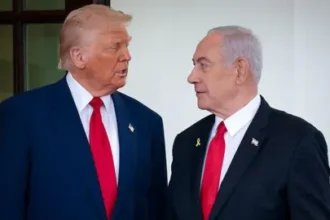
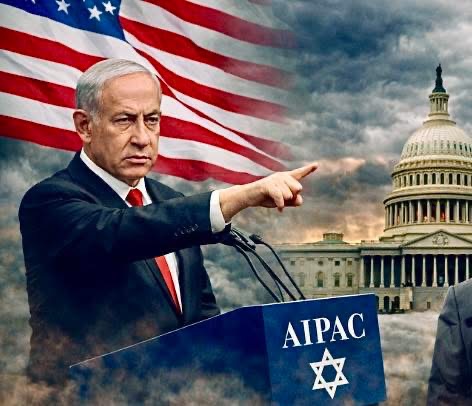
In contrast, the present United States–Israel–Iran war is broadening. Iran has been striking countries hosting U.S. bases—Qatar, Bahrain, Jordan, the UAE, and Kuwait—as well as U.S.-allied Oman and Saudi Arabia. Meanwhile, Israel and Hezbollah remain locked in fierce confrontation.
It is clear that the world has descended into chaos, driven by the shift from multilateralism to unipolarism. This transformation has rendered the United Nations increasingly ineffective, a mere paper tiger. What is urgently needed is a return to multilateralism, cooperation, and respect for international legality, as far as possible, to prevent the collapse of global order.
Conclusion: The absence of visionary leadership today contrasts sharply with the post–World War II era, when statesmen forged institutions and frameworks that stabilized the world. Unless a renewed spirit of cooperation emerges, the current conflagrations risk spiraling into a global catastrophe.