


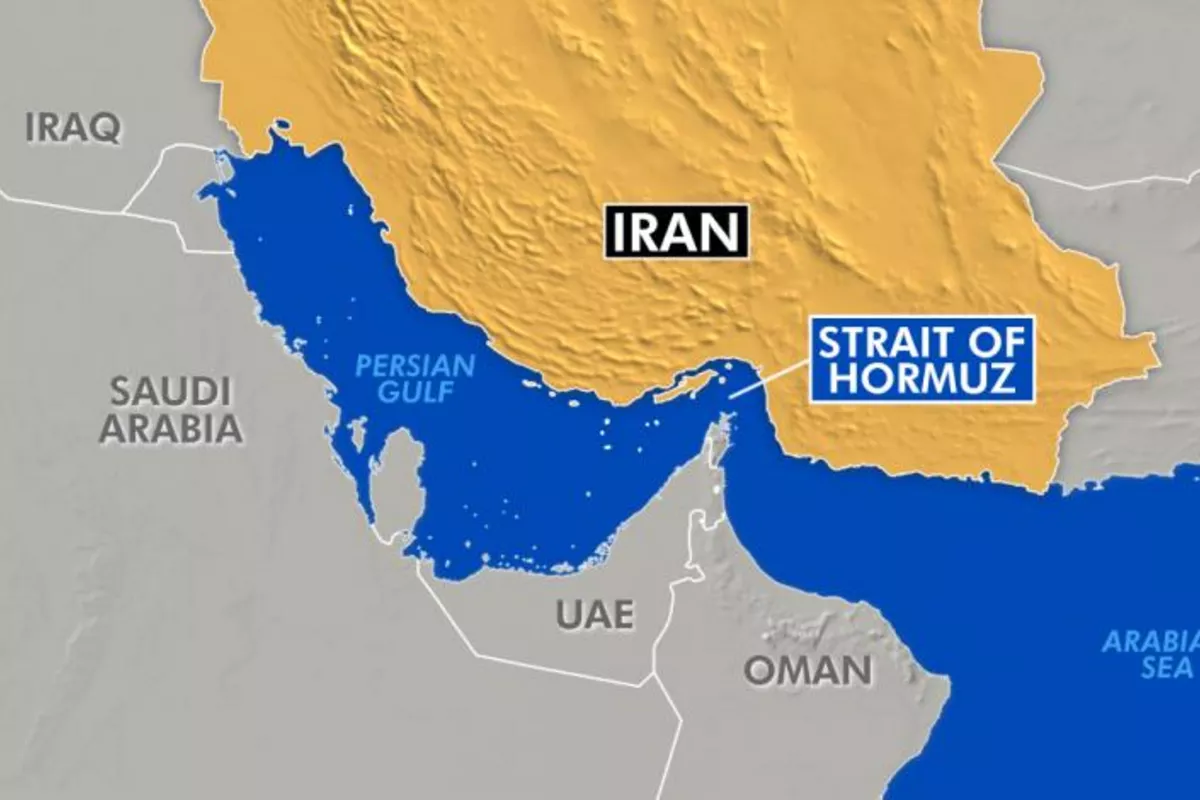
The Straits of Hormuz: The World’s Critical Energy Chokepoint
by Okoi Obono-Obla
As predicted, the conflict in the Middle East that erupted on 27 February 2026, following joint U.S.–Israeli military strikes on Iran culminating in the killing of the Supreme Leader of the Islamic Republic of Iran, Ayatollah Ali Khamenei, along with other top military and security chiefs, has caused crude oil and gas prices to plummet in the international market, with inevitable consequences for the global economy. Nobody can say when this conflict will end, but it is safe to assume that it is widening and intensifying. Iran has strategically expanded the confrontation from an Iranian–United States–Israeli conflict into one engulfing the entire region, launching missiles and projectiles at U.S. military bases located in Saudi Arabia, the United Arab Emirates, Oman, Bahrain, Jordan, and even Cyprus in Europe.
The United Kingdom, while claiming not to be directly involved, has conceded to a U.S. request to make its military bases in the Middle East available for strikes on Iranian missile sites. This decision has inadvertently widened the conflict and drawn the United Kingdom into it.
One of the most dialectical consequences of this war is the closure of the strategic Strait of Hormuz, an international shipping lane vital for global oil and gas exports. Iranian commanders have threatened to blow up any vessel that defies their directive closing the Strait to international shipping. Since the start of the conflict, five vessels have been attacked by Iranian naval forces, and one sailor has lost his life.
The Strait of Hormuz, at its narrowest point between the Omani Musandam Peninsula and Iran, connects the Persian Gulf to the Gulf of Oman. It is deep and relatively free of maritime hazards, with its greatest depth near the Musandam Peninsula tapering toward the Iranian shore. Ships crossing the Strait carry around one‑fifth of global oil supplies—about 20 million barrels per day. This makes it the most critical energy chokepoint in the world.
Iran has historically used the closure of the Strait of Hormuz as a military trump card whenever it is involved in regional conflicts or seeks to flex its muscles militarily and politically. Forty years ago, during the Iran–Iraq war, Iran closed the Strait, and just last year its proxy, the Houthi rebels of Yemen, attacked shipping there during the Gaza conflict.
The current crisis has also disrupted air traffic, affecting millions of travelers. The Middle East serves as a major international aviation hub between Europe, Asia, and other continents, and as the conflict intensifies, dire consequences loom for global trade, energy security, and international stability.
Conclusion:
The Strait of Hormuz is not merely a geographical passage but a linchpin of global energy security. Its closure underscores how regional conflicts can reverberate across the world economy, disrupting oil flows, trade routes, and aviation networks. As the conflict escalates, the world faces a precarious balance between geopolitical rivalry and economic survival.
@ Okoi Obono-Obla











Very apt.
The whole world is watching!
Thanks.