
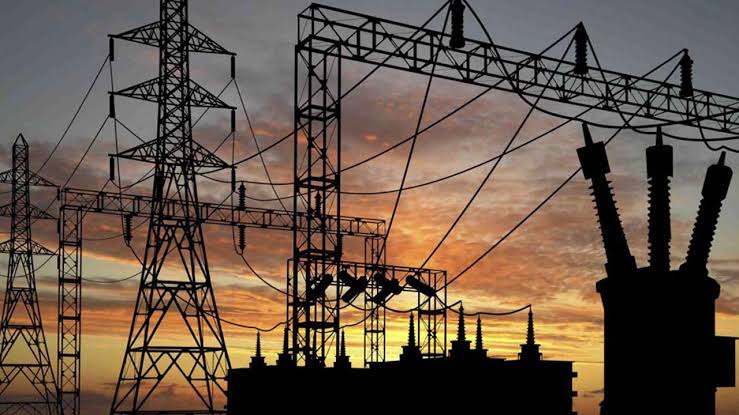

President Tinubu’s Throwing Humongous Amounts of N3.3 Trillion at Fixing the Nigeria’s Perennial Power Problems: It Isn’t a Panacea for Solving the Nigeria’s Historic Power Crisis
By Dr. Joel Ademisoye
Here, Nigeria goes again, President Bola Tinubu is throwing a N3.3 Trillion at solving the country’s irregular, epileptic power sector, primarily to pay off the long outstanding debts owed to the GenCos in Nigeria and to improve the electricity supply in the country (Sources: Statehouse Press Release, “President Tinubu Approves N3.3 Trillion Payment Plan to Restore Reliable Electricity,” Bayo Onanuga, Special Adviser to the President (Information and Strategy), April 5, 2026; Daily Shot, 06/04/2026).
Nigerians might recall that the power sector was bedeviled by the Obasanjo government’s inappropriate actions in the power, sector and allegations of fraudulent practices This writer raises the question why President Tinubu has chosen this trajectory, approach method and taken the action to erase the outstanding debts in the power sector?
It is this writer’s wild guess that President Tinubu, is politically motivated, conscious of the political benefits and driven against the backdrop of his political promise to the Nigerian people that if he failed to fix the country’s perennial electricity problems, that they shouldn’t reelect him to a second term.
So, President Tinubu is just waking up from his slumber to urgently fix the chronic problem of electricity shortage facing an oil producing and exporting country. How much time is left before the 2027 presidential election in Nigeria? In racing against time, the Tinubu administration has approved the whopping amount N3.3 Trillion to pay the outstanding debts owed to the electricity companies in order to wipe out the debts on the books and begin anew in the quest to improve the Nigeria’s electricity supply to the country’s citizens.
It appears that the Tinubu administration is introducing a paradigm shift, philosophy and strategy, practice in the Nigerian governance, involving the practice of socialism, whereby it will pay the electricity companies’ debts in order to make them whole, improving their financial capacity so that they can deliver the functions efficiently supply to the Nigerian people.
The Tinubu administration’s intervention in the Nigerian power sector, is a vivid reminder of the President Barack Obama’s bailing out the failing and collapsing banks in the United States under the Emergency Economic Stabilization Act of 2008. It would have been appropriate, if the Tinubu administration had declared a state of emergency in the Nigeria’s deplorable and collapsing power sector, especially considering the humongous amount of N3.3 Trillion that he has approved for the payments of the outstanding debts owed to the electricity companies and to improve the delivery of electricity to the Nigerian people. However, the disbursement of the government funds would be carried out in phases to ease the fiscal pressures and to ensure the payments sustainability. However, of interest to this writer, what are the in-built mechanisms and measures to prevent corruption and fraudulent practices in the spending of the government funds in the huge amount of N3.3Trillion in order to close the Sink Hole in reducing the financial loss and to eliminate the government’s financial wastes.
For this writer by President Tinubu throwing the humongous amount of N3.3 Trillion to fix the country’s problems in the power sector, it isn’t a panacea for solving the chronic, epidemic electricity shortage in the country. The power sector in Nigeria is hampered by other human factors such as corruption, the lack of transparency, accountability and integrity, which have serious implications for the President Tinubu’s government funds of N3.3 Trillion to the power sector. How much of these funds will actually be spent on solving the problems of the electricity sector in Nigeria, a country where there are many ‘Sink Holes,’ which allows for the loss and stealing of the government funds, instead of using the funds to implement the infrastructure development, the electricity projects, it is diverted to a private or personal use.
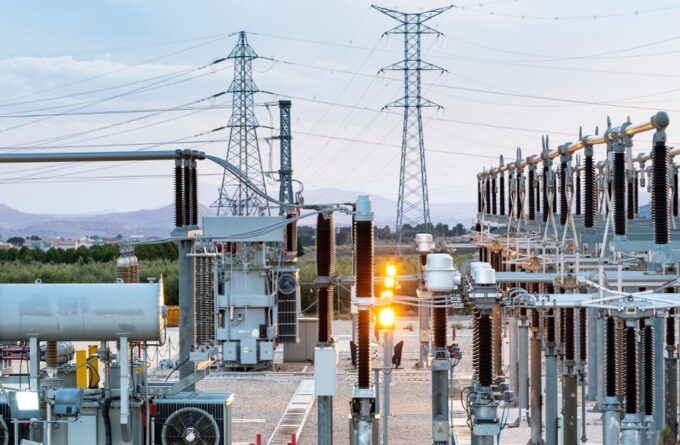
This takes this writer down the memory lane with the case of the former federal minister of Works and Housing in the Obasanjo administration, Chief Anthony Anenih, Olusegun Agagu, Fashola and currently the minister of power, in the Tinubu administration, Adelabu Adebayo. Imagine the humongous government funds that the Federal Government of Nigeria (FGN), has invested in the power sector with the claim of the carrying capacity of 13,000 megawatts but no appreciable output of the electricity generation in the country, which is current electricity supply or production of electricity hovering between 3,000 MW and 5,000 Megawatts for the Nigerian population of 220 million people. This is a low generating capacity and electricity supply in comparison to South Africa and Egypt, ranked as the leading countries in the electricity generation, whereas Nigeria is ranked 5th in the African continent. In Nigeria, the power sector is contending with many other problems, such as: 1. Structural, 2. Gas supply shortages (Note: Gas fired plants account for more than 70% of Nigeria’s electricity generation; meaning that any disruption to gas supply would have dire consequences for the electricity supply across the country.); 3. Transmission constraints- because of the old age of the transmission lines, lack of adequate maintenance and prohibitive cost of replacement, etc.) and 4. Plant maintenance issues.
Against this backdrop of the multiplicity of problems facing and affecting the Nigerian power sector, President Tinubu administration has given priority to and focus on the payment of the electricity companies’ outstanding debts of N3.3 Trillion in the country. For this writer, as the idiom says, which came first, the chicken or the egg?
Corruption in the Nigeria’s Power Sector
Oops! The former Federal Minister of Power and Steel, (2002 – 2003), Dr. Olu Agunloye, is accused of fraud in the controversial $6 billion Mambilla Hydroelectric Power Station project in Nigeria, for awarding the contract without an authorization by President Obasanjo and the National Executive Council (NEC). Question: Why did the FGN wait for 23 years, before it is being aggressively by the EFCC for the charges of fraud and non approval of the $6 billion hydroelectric power project in Nigeria by President Obasanjo and the country’s National Executive Council (NEC)? Like the saying goes that justice delayed , it is justice denied.
Imagine if the $6 billion Mambilla Hydroelectric Power Project had been successful implemented and completed since 2003, it might have reduced or solved the chronic electricity shortage in Nigeria. However, the bitter truth is, that the $6 billion Mambilla Hydroelectric Power project, is unaccounted for and no one, not even the minister in charge of and took responsible for the implementation of the hydroelectric power project, which underscored the culture of poor project planning and implementation, management, pattern of zero accountability for the huge government spendings in fixing the country’s electricity problems since President Obasanjo era in 1999-2007, which showed the lack of transparency, accountability and integrity on the part of the government officials. Today, this culture of corrupt and fraudulent practices among the members of the elected political elites and ruling class in Nigeria remains unabated, arguably it gotten worse.
It is obvious that President Tinubu is racing against time in fixing the Nigerian electricity, before the presidential election of 2027. Hence, the government is scrambling to and throwing money at in the huge amount of N3.3 Trillion, to hurriedly fix what the administration perceived to be the problems constraining the power sector or limiting the electricity supply to the Nigerian citizens.
Against this backdrop of poor leadership, irresponsible, incompetent and corrupt governance in the ineffective implementation and inefficient administration of the Nigeria’s power sector, imagine how much budget allocations or how much money that have been spent on or consumed by fixing the country’s electricity problems since the President Obasanjo administration in 1999. But, 23 years later, the country is still embracing and using the same old approach, strategy and methods of throwing money at the problems of the power sector in Nigeria, without any significant outcomes or any improvement to the chronic, perennial of the low electricity supply to the Nigerian citizens. I think that the web of corruption tendency, fraudulent practices of the political leadership, appointed government officials and the collaborating civil servants are problematic for the country’s power sector.
Many observers of the Nigerian power sector, posit the opinion that the President Tinubu administration needs a paradigm shift in taking the ‘Bull by the horns’ in fixing the historic problems of the Nigerian power sector.
One needs to know and understand that the President Obasanjo administration tried to fix the post colonial power problems and crisis in Nigeria, but with a colossal failure with the Vice President Abubakar Atiku, as chairman of the National Economic Council (1999- 2007), was appointed to be in charge of the implementing of the government reforms and the privatization policy and program of the Obasanjo government in the breakup of the national, monolithic electricity supply company in Nigeria. Many Nigerians saw the Atiku’s role as a flop, controversial, poor implementation, which is characterized by corruption, nepotism, the lack of transparency and accountability in the sale of the electricity companies to GenCos, Transmission and Distribution Companies), to his friends and cronies in the country.
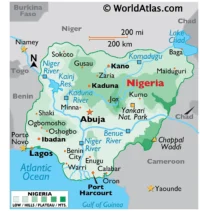
For example, the appointed political leadership of the ministry of power or the federal minister responsible for the country’s power sector, should demonstrate an impeccable character and public service record, proven strong, competent leadership, with a professional knowledge of the power problems facing the country’s 220 million people and capable of identifying the problems and proffering the appropriate solutions to them, effectively implementing and efficiently managing the power projects across Nigeria. Having being watching the Iran War on the Television set, I took interest in the location of or the geography and security factor of the infrastructure, such as the location of the power plants in the country.
In conclusion, President Tinubu administration has submitted an accumulated claims of N4.7 Trillion by the electricity companies, but through the negotiations and settlement, the debts have been reduced by 30% to N3.3 Trillion. But, my concern is, who belts the cat here? What is the Non Government Organization (NGO ), that has examined, reviewed and scrutinized the President Tinubu’s initiative for paying the outstanding debts of the electricity companies in order to improve the power supply in the country? In the Nigerian culture of political corruption, the government cannot be trusted. There is a need for a NGO to examine, review and prepare a report on the implementation of the program to pay off the debts of N3.3 Trillion owed to the electricity companies in Nigeria, which is an appropriate instrument for addressing the issues of transparency and accountability by the Tinubu administration in Nigeria.
Out of curiosity, pushing the envelope of transparency and accountability, the President Tinubu never carried along and involved the Nigerian citizens in the examination, analysis and discussion of a program, which is focus on the repayment of the outstanding debts of the electricity companies to the huge amount of N3.3 Trillion.
Similarly, President Tinubu, in his wisdom, unilateral action and decision, awarded the Lagos – Calabar Coastal Highway (750 KM, 6- Lane Highway), at a cost of the whopping amount of N14- 15.6 Trillion, (N7.5 billion per kilometer in construction cost), deemed the most important and costly infrastructure development in the Nigerian history, without the official bidding. Nonetheless, it is in the history books, but it has generated public outrage, controversy and allegations that President Tinubu shepherded and unilaterally awarded the contract to construct the Lagos -Calabar Coastal Highway, to his friend’s construction company named, Hightech Construction Company Limited.
However, the Federal Ministry of Environment stated that the project has been part of the National Integrated Infrastructure Master Plan (NIIMP), a 23-year plan, which aims to improve the country’s infrastructure. Also, the Federal Ministry of Environment indicated its approval of the project’s Environmental and Social Impacts (ESIAs). Nonetheless, many Town Planners in Nigeria expressed their concern about the Tinubu administration’s failure to show and present the Master Plan of the Lagos – Calabar Coastal Highway and its Environmental Impact Assessment (EIA), to a public hearing by giving the opportunity to the Nigerian citizens, to examine, review, discuss and make comments about the plan. Ditto, the government has failed to submit an Environmental Assessment Evaluation Report, before the beginning of the construction of the Lagos- Calabar Coastal Highway. It is a misery to many Nigerian citizens on how the Tinubu administration has used the power of Eminent Domain to acquire the family land or private property for the public use.
Without mincing words, the planning for, designing and implementing the Master Plan is indicative of the Tinubu government’s failure to carry along the Nigerian citizens, failure to comply with the Nigerian law and failure to follow the due process as required by the Nigerian Constitution. For example, the Tinubu administration has ‘put the cart before the horse,’ in its implementation construction of the Lagos-Calabar Coastal Highway in Nigeria.
Let us be careful and get it right, because President Tinubu administration has splashed huge amounts of money and is paying the outstanding electricity company debts of N207 billion out of N3.3 Trillion that is approved for the power sector, it isn’t Uhuru yet or is freedom, because it is premature to declare victory for the electricity supply in Nigeria.












Leave a comment