


by Jennyfer Radeino Ambe DrPH
Nigeria is currently facing a humanitarian challenge of unprecedented proportions. As the World Food Programme (WFP) November-December 2025 report details, an estimated 34.7 million people are projected to face crisis levels of food insecurity in 2026. For a nation that was once a regional breadbasket, the current reality, as reflected by Nigeria’s 115th place ranking in the 2025 Global Hunger Index, marks a profound shift from the country’s historical agricultural success.
The “Golden Age”: 1960s & 1970s
In the decades following independence, agriculture was the primary engine of the Nigerian economy. Historical economic data shows that the sector contributed between 70% and 80% of the GDP, allowing the nation to be largely self-sufficient.
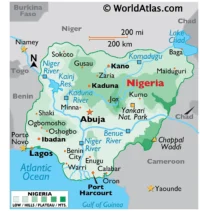
During this era, northern Nigeria was known for its global leadership as the world’s largest exporter of groundnuts. The famous “Groundnut Pyramids” in Kano served as a visual testament to a northern economy that produced over 1.6 million metric tonnes annually. Historical records of Nigeria’s textile industry show, a thriving cotton sector fueled widespread industrialization, particularly in the North. The “food basket, of the nation”, Benue, Plateau, and even Adamawa, could feed the nation. Specialization was highly effective, with states providing a consistent surplus of grains, yams, and pulses for the entire West African region.
2026: A Basket Under Siege
The transition from this era of abundance to the current crisis is largely driven by a lack of safety. As the WFP 2025/2026 situational updates emphasize, northern states that were once surplus production areas now grapple with a wide-scale humanitarian crisis.
Insecurity in the Fields: In states like Plateau, persistent conflict and the threat of killings have made farming a life-threatening profession. Reports from the Plateau State Peace Building Agency and humanitarian observers indicate that many farmers have abandoned their fields entirely, unable to access land for fear of violence or kidnapping.
Mass Displacement: The WFP reports that over 3.6 million people are currently displaced across the North. In the “Food Basket” regions, hundreds of thousands of Internally Displaced Persons (IDPs) are living in camps, physically separated from the fertile land they once cultivated.
Economic Strain: The WFP’s November 2025 price monitoring highlights a staggering economic burden: by late 2024, the average cost of a healthy diet in Nigeria had surged by 90 percent compared to the previous year, leaving roughly 40% of citizens below the poverty line and unable to afford basic nutrition.
Summary of the Transition
The shift from Nigeria’s agricultural “Golden Age” to the current crisis is defined by a complete reversal of the nation’s economic status. In the 1960s and 70s, as historical data shows, agriculture was the primary driver of the economy, positioning Nigeria as a global leader in exports and ensuring national self-sufficiency.
In contrast, the 2025 Global Hunger Index and 2026 WFP projections reveal a sector that has shrunk significantly in its GDP contribution while hunger levels have reached a “serious” designation. The primary shift lies in the nature of the challenges: while the earlier era was defined by market growth, today’s crisis is dictated by violent conflict and a 40.7% food inflation rate. Fertile lands sit fallow because, as current humanitarian data confirms, the risk of death or abduction has made farming nearly impossible in high-conflict zones like Plateau State.
The Biological Toll: How Food Insecurity Directly Affects Health
Beyond the economic metrics, food insecurity acts as a direct catalyst for a public health emergency. According to WFP 2025/2026 situational updates, when access to nutritious food is severed, it triggers a predictable cycle of disease:
The Malnutrition-Infection Cycle: A lack of essential micronutrients weakens the immune system, making individuals, particularly children, more susceptible to communicable diseases like malaria and pneumonia. These infections then hinder nutrient absorption, creating a lethal downward spiral.
Wasting and Stunting: With 5.44 million children in northern Nigeria currently facing acute malnutrition, the nation faces the dual threat of “wasting” (immediate risk of death) and “stunting” (irreversible cognitive and physical damage).
Maternal and Long-term Health: Food insecurity leads to maternal anemia and low birth weights. Paradoxically, the WFP notes that relying on cheap, nutrient-poor staples due to high inflation also increases the long-term risk of non-communicable diseases like hypertension.
A Holistic Path to Recovery
Restoring the “Food Basket” requires more than just economic investment; it requires a fundamental commitment to public health and human safety. While the World Food Programme is currently supporting initiatives like solar-powered irrigation and drought-resistant seeds, these technical innovations cannot reach their full potential until security is restored.
There is an inextricable link between the soil and the schoolhouse, between the farm and the clinic. Chronic food insecurity is the primary driver of the malnutrition crisis currently affecting millions of Nigerian children, leaving them vulnerable to a host of preventable diseases and lifelong developmental delays, in addition to delayed educational attainment. To move back toward the agricultural prosperity of the 1960s, the nation must adopt a strategy that views food security as health security. Nigeria must first secure the rural communities that represent the heart of its food system, ensuring that the “Food Basket” provides not just calories, but the nutritional foundation required for a healthy, disease-resistant, and prosperous generation.


















Leave a comment