


By Okoi Obono-Obla
Reimagining International Law: From Colonial Legacies to a New Global Order-
The admission by the United States of America that it finds it difficult to support the United Nations resolution declaring the Transatlantic Slave Trade as the greatest crime against humanity, and endorsing reparations for those who suffered its consequences, on the grounds that at the time it occurred it was not against international law, is deeply disappointing. This position reinforces the advocacy by many that new rules of international law must be formulated. Between the 15th century and the second half of the 20th century, most countries in Asia, Africa, and South America were under colonization, and therefore the peoples of these continents were unable to give their consent to the evolution of principles of international law that have now become the prevailing norms.
Even after these nations gained independence, following the wave of change and the recognition of the principle of self‑determination that emerged after the catastrophic Second World War, which necessitated a return to natural law condemning unspeakable crimes against humanity perpetrated by the Third Reich in Germany and the fascist regime in Japan, there remains a pressing need to transform the character and structure of international law to reflect a new order.
The judgment in the celebrated case between the Republic of Cameroon and the Federal Republic of Nigeria (with the Republic of Equatorial Guinea intervening) on the land and maritime boundary between Cameroon and Nigeria, delivered by the International Court of Justice in October 2002, declared that sovereignty over the Bakassi Peninsula lies with Cameroon rather than Nigeria. The Court relied heavily on the Anglo‑German Treaty drawn up in 1913 between the United Kingdom and Germany, the colonizing powers of the region at the time. This judgment is another instance underscoring the imperative for a new international law.
One of its consequences was that the Efik people of the Bakassi Peninsula were severed from their kith and kin in Nigeria and joined with Cameroon, without the slightest regard for their right to self‑determination. This outcome was based on a treaty made between two European colonizing powers when the people of the region were under suzerainty.
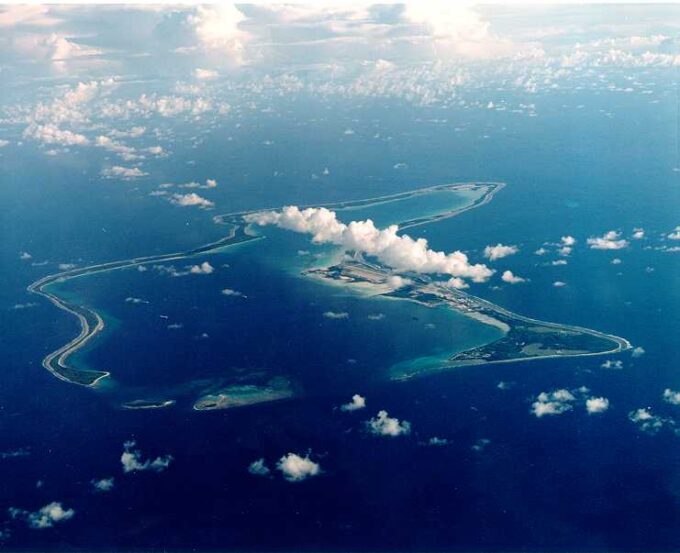
Undoubtedly, the present principles and norms of international law remain heavily skewed against the new countries that emerged between the 18th and 20th centuries. They have still not adequately addressed the issue of colonization, as some European powers continue to claim territories thousands of kilometers away from their own continents. For example, France still maintains so‑called overseas territories such as Mayotte in the heart of Africa and Guadeloupe in the Caribbean. Similarly, the United Kingdom continues to lay claim to St. Helena, located in Africa and thousands of kilometers from its homeland in Europe.
Conclusion:
These realities—from the refusal to recognize the Transatlantic Slave Trade as the greatest crime against humanity, to the Bakassi Peninsula judgment, and the persistence of colonial claims—highlight the urgent need to reform the character and structure of international law. A new framework must reflect the principles of self‑determination, equity, and justice, ensuring that the voices of formerly colonized peoples are fully recognized in shaping the norms that govern the global order. Only then can international law shed its colonial legacies and embody a truly universal system of justice.














Leave a comment