

By Okoi Obono-Obla
La Mulâtresse Solitude: A Heroine of Freedom:
On 26 March 2026, an historic resolution was passed by the United Nations General Assembly recognizing the Transatlantic Slave Trade as the greatest calamity to have befallen mankind.
The Transatlantic Slave Trade began in the 15th century and lasted for more than 400 years. The first group of enslaved Africans arrived in Virginia, in what would become the United States of America, in 1619.
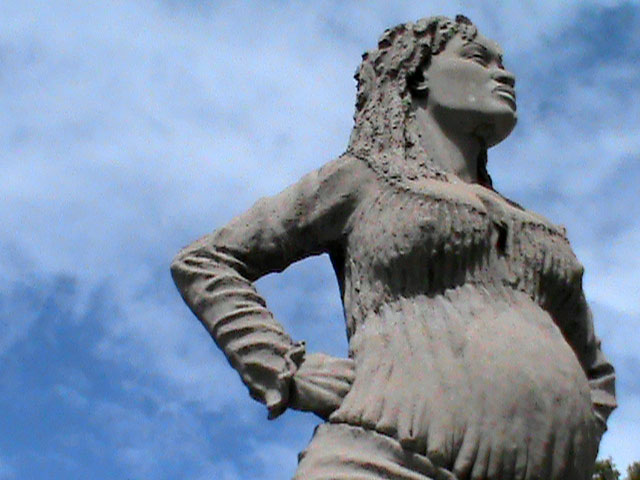
As the evil of the slave trade has now been officially acknowledged by the United Nations, we pay tribute to a remarkable woman: La Mulâtresse Solitude (circa 1772–1802). She was executed by the French Army in September 1802, just one day after giving birth to a son. Though convicted and sentenced to death, her execution was delayed because she was eight months pregnant at the time she took part in a rebellion of enslaved Africans against French authorities in Guadeloupe.
Solitude was the product of a relationship between a French sailor and an enslaved African woman during the Atlantic crossing after her mother had been captured and imprisoned. She became a historical figure and heroine in the fight against slavery in French Guadeloupe.
After slavery was abolished in Guadeloupe, Napoleon Bonaparte, having come to power in late 1799, decided to reinstate slavery. The Law of 20 May 1802 reintroduced slavery in the French colonies. The Guadeloupeans, having tasted freedom, resisted fiercely. Joseph Ignace, an officer who organized resistance in Pointe-à-Pitre, joined forces with Louis Delgrès, a free mulatto officer. Solitude rallied around Delgrès and fought by his side for freedom.
Her legacy has been honored in modern times. In 1999, a statue by Jacky Poulier was placed on Héros aux Abymes Boulevard in Guadeloupe in her memory. In 2007, another statue was erected in Hauts-de-Seine in Île-de-France, made of iroko wood, as the first memorial to all enslaved people who resisted. On 26 September 2020, Anne Hidalgo, Mayor of Paris, and Jacques Martial inaugurated the “Jardin Solitude” (Solitude Garden) in Paris, announcing plans to install her statue there. This would be the first statue of a Black woman in Paris, a city with over a thousand statues but only forty dedicated to historical women.
Guadeloupe, a French overseas archipelago in the Caribbean Sea shaped like a butterfly, consists of two main islands: mountainous Basse-Terre and flat Grande-Terre. Its population of about 378,100 is predominantly of African descent, with estimates indicating that 75% trace their heritage to enslaved Africans.
Conclusion:
The recognition of the Transatlantic Slave Trade as humanity’s greatest calamity underscores the importance of remembering figures like La Mulâtresse Solitude. Her courage, sacrifice, and resistance embody the indomitable spirit of freedom. Today, her memory stands as a beacon of resilience and a reminder that the fight against oppression is both historic and ongoing.











Leave a comment