


Tax reforms and Nigeria’s new social contract
By abiodun KOMOLAFE
_(Published in THE NATION, Saturday, March 7, 2026)_
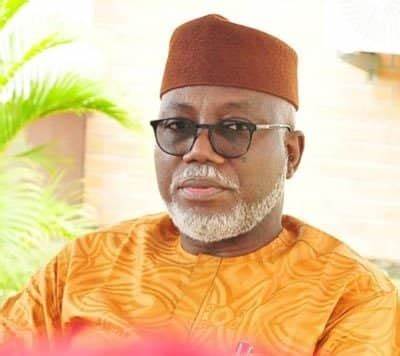
The recent 10-point statement by Zacch Adelabu Adedeji, Executive Chairman of the Nigeria Revenue Service (NRS), offers a glimpse into a forward-thinking roadmap for the agency. It represents a fundamental pivot from aggressive enforcement to strategic “taxing of prosperity, not poverty.”
At its core, the mandate collapses the old, fragmented system into a single “system integrator” for all federal intake – from oil royalties to solid minerals. Most importantly, it shields small businesses with turnovers under ₦50 million from the tax net entirely, protecting the backbone of our economy. By leveraging data-driven tools like the National e-Invoicing system and phasing corporate tax rates down to 25%, the NRS aims to realize its ₦40.7 trillion target. This will be achieved not by adding new burdens, but by broadening the base and eliminating the nightmare of multiple taxation. The goal is simple: to ensure Nigeria’s fiscal architecture supports investment rather than stifling it.
Ever since Rousseau first framed the ‘social contract’ back in 1762, it has remained the ultimate deal between the state and the street: a trade-off where we surrender absolute freedom for the collective safety of the law. It creates the only moral mandate for taxation. The people bankroll the state, and the state, in return, underwrites a civilized existence. Without this pact, no democracy can hold its ground; the system simply lurches from turbulence into total chaos.
Basically, the goal of political activity is to redefine the debate. Whatever reservations some may hold, these tax reforms – now increasingly accepted as conventional wisdom – represent a significant leap forward. Undoubtedly, this initiative reinstates a social contract long truncated by consistent interruptions to our democratic process and the rise of the ‘Gun Hegemony.’
President Bola Ahmed Tinubu has secured his place as a key figure in Nigeria’s post-independence history; he has fundamentally shifted the territory of the national discourse. He has taken significant risks, embodying the spirit of the British Special Air Service (SAS) motto: ‘Who Dares Wins.’ By daring to remould public opinion, the president has already secured his victory.
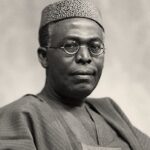
I have argued elsewhere about a more edifying past: the fact that over six decades ago, Nigeria possessed a social contract that served as the state’s operating ethos. Recalling this history is vital because, as Cicero famously warned, to be ignorant of what occurred before you were born is to remain forever a child. The Western Region of the 1950s provides a striking example of the social contract in action. To fund its ambitious programmes, Chief Obafemi Awolowo’s Action Group (AG) government levied taxes that many adults in the region viewed as punitive. The political cost was immediate and severe: the regional government was routed in successive local and federal elections.
It is to the credit of that government that it looked beyond the next election – a truly statesmanlike approach. History would eventually vindicate Awolowo and the AG government before their ‘korokoro’ eyes. By 1961, tax riots erupted across the Western Region, leading to the arrest of 386 people for disorderly conduct. Even by today’s standards, nearly four hundred arrests in a single day is a staggering figure.
The political sophistication displayed in Western Nigeria in 1961 remains virtually unmatched, even by today’s so-called advanced democracies. It is a history we should hold with pride. These citizens were not demonstrating against the imposition of taxes; rather, they were protesting the government’s attempt to cut taxes simply to curry favour with the electorate. Such a high level of civic awareness remains extraordinary, even decades later.
The people of the Western Region in 1961 were sophisticated enough to realize that tax cuts would inevitably erode health, education and social services; they didn’t need degrees in Applied Economics to foresee the consequences. When the regional government was forced to back down, it illustrated a profound acceptance of the civic awareness and social contract as the essential glue between the state and its people. Today, Tinubu has successfully reinstated this contract without testing the tempers of the riots of the past. It is a masterstroke of tactical governance that will likely be studied in political science departments for years to come.
At the president’s direction, what Adedeji’s team has pulled off isn’t just tax reform, it’s a total reimagining of the social contract. It has moved so fast that taxation, once a guaranteed flashpoint, will probably be a non-factor in the next election. It was a close call, though. Without this tactical pivot, the ruling All Progressives Congress (APC) would have handed the opposition a loaded weapon – and we can be sure they wouldn’t have hesitated to pull the trigger.
Global history offers clear proof that the social contract is the bedrock of shared prosperity. In the United Kingdom, the post-war welfare state – built on the principle of collective contribution – helped eradicate poverty, wipe out illiteracy, and establish homeownership as a pillar of democracy. Similarly, in Scandinavia, successive social democratic governments since the 1920s have used tax contributions to build stable, equitable societies that represent perhaps the most successful models of state stability in modern history.
Beyond Europe, the rapid modernization of Singapore under Lee Kuan Yew and the poverty-reduction programmes of Brazil under Luiz Inácio Lula da Silva offer further evidence of this universal truth.
In the United Kingdom, they’ve actually figured out a way for regular people to own their homes through ‘rent-to-buy.’ It’s a ladder – a real, tangible way to build wealth that outlasts the individual. Compare that to our reality here. You can spend sixty years working yourself to the bone and still have nothing to show for it but a handful of rent receipts. It’s a quiet tragedy that, in this part of the world, the only inheritance we bequeath to our children is a hollow, ‘e-go-better’ sense of hope.
The absence of a functional social contract is precisely why the majority of us remain stagnant – toiling so hard for life, yet receiving so little in return for our industry. It is this broken contract that leaves Nigerians in their 70s still contending with the contours of struggle in the midst of plenty. That should not be! In sane democracies, where the social contract actually works, anyone over sixty-five is retired from the frontlines of active service, transitioning perhaps only into an advisory or consultancy role.
Make no mistake: the ruling classes who enforced the social contract oftentimes did so out of naked self-preservation. In Britain, for example, homeownership became the bedrock of the contract because a man with a mortgage – or one making monthly contributions towards owning a home – is unlikely to join a mob or support an unconstitutional change of government. He understands the stakes! But as the saying goes: a hungry man is an angry man, and an angry man is a violent one. In a word, a man with nothing to live for may have no reason to fear death. It is as simple as that!
A social contract is the only way to build a society’s productive base, and a pension system reflects its level of civility. Again, look at our own pension system! For God’s sake, how can Kenya maintain a solid, inflation-adjusted pension system while Nigeria’s remains barbaric – a total disgrace? The answer is simple: we lack a social contract! It is the reason a retired police commissioner in Nigeria earns as little as ₦70,000 in monthly pension, while his gratuity doesn’t even total ₦5 million.
May the Lamb of God, who takes away the sin of the world, grant us peace in Nigeria!
Mail: ijebujesa@yahoo.co.uk.
Mobile: 08033614419 SMS only.
The Nation Newspaper Ltd. All rights reserved – 2026.












Leave a comment