

By Okoi Obono-Obla
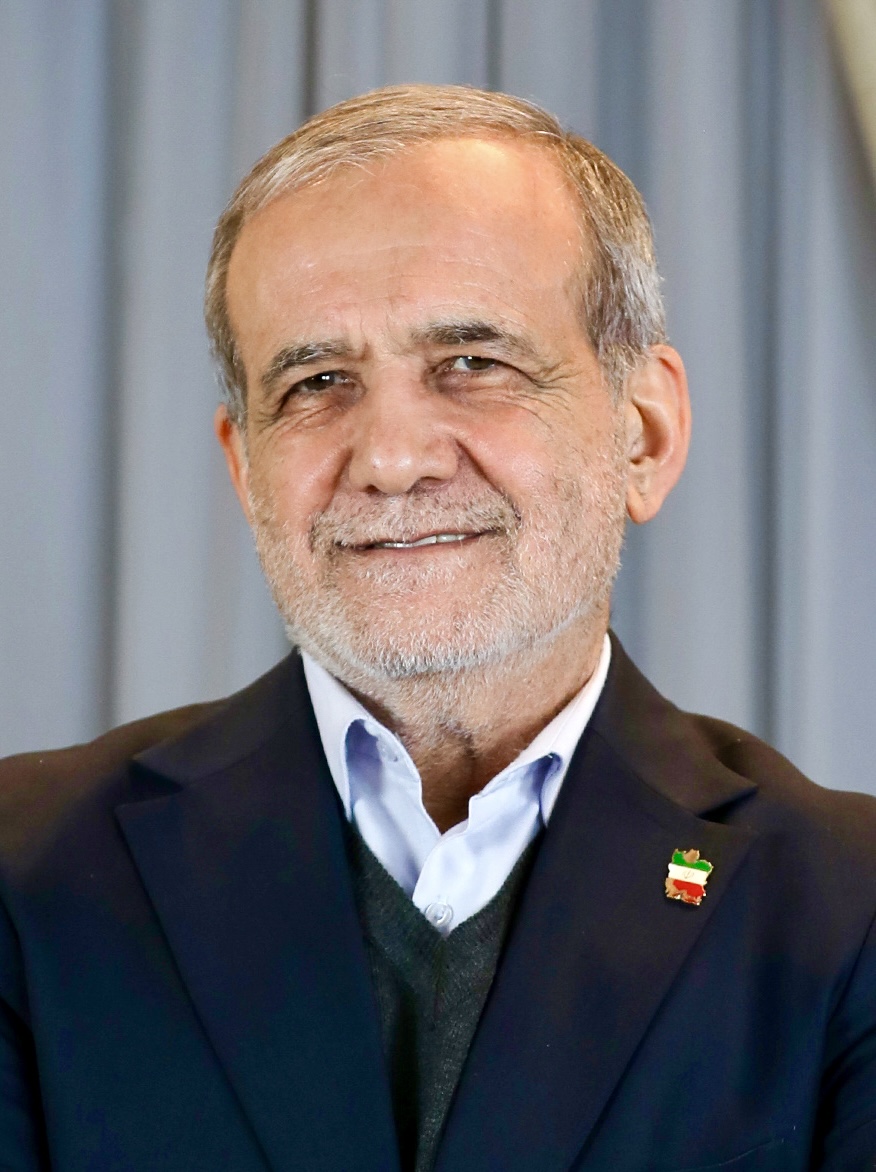
Massoud Pezeshkhian is the 9th President of the Islamic Republic of Iran, elected in 2024 after a distinguished political career. He previously held several important positions, including Deputy Health Minister, Health Minister, Deputy Speaker of the Iranian Parliament, and long-serving parliamentarian. A medical practitioner specializing in heart surgery, he also served in the Islamic Revolutionary Guards Corps during the Iran–Iraq War (1980–1988).
Following his military service, he entered politics and steadily rose through the hierarchy of the Iranian political establishment, where he is regarded as a moderate. President Pezeshkhian belongs to Iran’s Azeri minority from the Azerbaijan province, sharing ethnic ties with the people of the neighboring Republic of Azerbaijan, a small Eurasian country situated between Iran, Iraq, Turkey, and Georgia. He is also partly of Iranian Khuzestani origin, a group with an uneasy relationship with the central leadership due to separatist tendencies.
On 7 March 2026, President Pezeshkhian issued an apology to several Middle Eastern countries—Saudi Arabia, Oman, Qatar, Bahrain, and Kuwait—that have suffered repeated missile attacks from Iran since 28 February 2026, when the Israeli–United States war with Iran began. These nations have been targeted on the grounds that they host U.S. military bases used as launching pads against Iran.
Despite his apology, Iranian assaults on these countries have continued unabated. Some observers view his gesture as an opportunistic attempt to present himself to the United States as a moderate and pragmatic leader capable of negotiating a truce.
However, the apology did not sit well with the radical faction of the Iranian leadership, which interpreted it as grovelling and capitulation. President Donald Trump quickly seized on the moment to demand Iran’s total surrender. Meanwhile, unverified reports emerged last week alleging U.S. collaboration with Kurdish separatists to open another front inside Iran, thereby exerting additional pressure on the ground, distinct from the ongoing air warfare.
Conclusion:
President Pezeshkhian’s apology underscores the tension between his moderate image and the uncompromising stance of Iran’s radical leadership. While his words may signal a desire for diplomatic repositioning, the persistence of military assaults and external pressures suggests that the path to de-escalation remains fraught with uncertainty.







Leave a comment