


A State of Applause, Not a State of the Union.
by LaBode Obanor
President Trump’s 2026 State of the Union address was less a constitutional report and more a symphony of standing ovations, a performance staged for the cameras, where substance was often drowned out by orchestrated applause and carefully chosen guests. As the President declared from the podium, “America is winning like never before,” the night became a ceremonial showcase, long on theatrics, but critically thin on meaningful governance.
The Constitution charges the President to “give to the Congress Information of the State of the Union and recommend to their Consideration such Measures as he shall judge necessary and expedient” (Article II, Section 3). Nowhere does it mandate a parade of standing ovations. Yet on February 24, 2026, President Trump wielded the address as a meticulously choreographed event, summoning Olympic gold medalists, decorated soldiers, and grieving families—all spotlighted at calculated moments. Meanwhile, the real architecture of policy faded into the background. The chamber rang with applause not just for their heroism, but for the President’s ability to evoke emotion on cue.
Instead of a blueprint for America’s future, the speech unfolded as a succession of staged tributes and ceremonial gestures. The President introduced the hockey team, awarded the Congressional Medal of Honor to veterans, and recognized the family of a fallen officer. These Americans are undeniably worthy of recognition. But in this setting, the tributes felt less about genuine civic gratitude and more about distracting from the absence of substantive answers to the nation’s challenges.
The real issue was substitution, replacing legislative clarity with spectacle. Each standing ovation became a curtain that dropped over policy detail.
A State of the Union is meant to diagnose the condition of the republic and prescribe a legislative path forward, but over the years, it has devolved into a spectacle. However, this one, delivered by President Trump last night, perfected the tactic: summon heroism, evoke emotion, trigger bipartisan applause, and harvest standing ovations. In doing so, the speech insulated itself from scrutiny. Who dares withhold applause from gold medalists or wounded veterans? It was classic civic theater at its most efficient.
The problem was not the people introduced, but the critical moment of substitution, when applause replaces answers and ovations replace objectives.

When the applause faded and policy briefly surfaced, the scaffolding was missing. Trade was defended in slogans. Immigration was described in emotional shorthand. The economy was praised in sweeping declarations absent hard architecture. The Supreme Court was criticized for its tariff ruling, but without engaging in its constitutional reasoning.
More troubling than the staging itself was the standard being enforced. The President devoted significant time to castigating Democrats for remaining seated. He called them “crazy” and suggested they should be ashamed of themselves for failing to applaud. In that moment, applause was elevated from a courtesy to a civic obligation, becoming a measure of patriotism. In a republic built on the right to resist, even remaining seated began to look like rebellion, and the line between disagreement and disloyalty was deliberately blurred
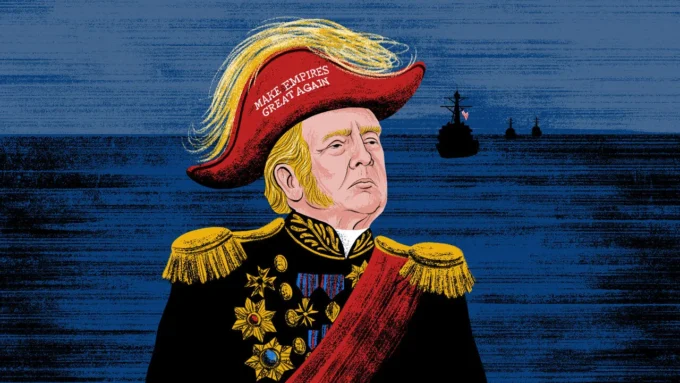
Let this sink in. The expectation that lawmakers must perform loyalty on cue reduces the chamber to a court audience and the opposition to unwilling courtiers. Someone should remind our amiable president that Congress is not an applause studio, but a coequal branch of government. The framers did not build Congress to serve as a cheering section for the executive; rather, they built it to resist him when necessary. The separation of powers presumes friction. It presumes disagreement. It presumes that one branch may, at times, refuse to rise on cue.
The American Revolution was fought, in part, over the rejection of rule by decree. The colonists objected not only to taxation but to the concentration of unaccountable authority. The founding fathers responded to monarchical rule by diffusing power, particularly placing the power of the purse in Congress, separating the executive from the legislature, and insulating the judiciary. The genius of the design was not to foster unity between the branches, but to inflame tension, so that, in rare times when the branches do agree, it is for the betterment of the republic. For example, during the Watergate scandal, the tension between Congress and the executive branch played a crucial role in upholding democratic principles.
A State of the Union address is meant to inhabit that tension. The President delivers his remarks, and Congress listens. Somemembers offer applause, while others remain seated. That visual disagreement is not a failure of the system; rather, it demonstrates that our constitutional framework is operating as designed. The expectation that all legislators must visibly demonstrate loyalty misunderstands the nature of the presidency. The President of the United States is not a sovereign ruler, but a temporary officeholder, bound by constitutional limitations and checks. The diversity of reactions within Congress underscores the separation of powers and the healthy friction necessary for democracy to thrive.
A true State of the Union should illuminate the path forward, confront hard realities, and propose concrete solutions. It should be honest about division, not treat dissent as treachery. The American people deserve more than slogans and standing ovations; they deserve numbers, deadlines, bills, and trade-offs.
This address did none of these things. The country faces inflation at a 40-year high, trade instability that has cost over 150,000 manufacturing jobs since 2024, renewed global tensions from Ukraine to Iran, and the South China Sea, and deepening domestic division. These challenges are not solved by applause, but they demand leadership, facts, and legislative clarity.
A State of the Union is not a campaign rally or an awards show with constitutional trappings. It is supposed to be the nation’s halftime report, an honest reckoning delivered aloud. This republic cannot run on applause alone. It requires argument, accountability, and the stubborn right of its legislators to remain seated, even and especially when the music swells.


















Nicely put, Cheers
Source:
– http://ekopromkonsalt.ru/index.php?subaction=userinfo&user=usejivev
Quite impressive a lot noteworthy information