

When Democracy Loses Its Voters
By Umar Ardo, Ph.D
Yesterday’s voter turnout of 7.2 per cent in the Federal Capital Territory council elections is the lowest electoral participation recorded in Nigeria since independence. It is not merely a statistic; it is an indictment on our political class and should alarm anyone who still pretends that our democracy is functioning as intended. Democracies do not die only through coups, decrees or when ballots are stolen; they also die when citizens conclude that voting is pointless and quietly withdraw their participation. This is what we have seen yesterday in the nation’s capital!
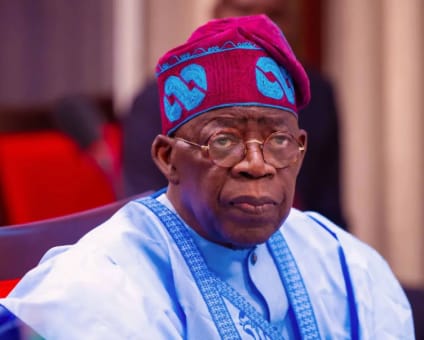
2. This historic voter apathy in the FCT is not accidental, nor is it surprising. It is the predictable outcome of prolonged elite betrayal, institutional decay and the steady erosion of trust between the Nigerian state and its citizens. The hardship currently ravaging the country under the administration of President Bola Ahmed Tinubu has reached excruciating levels. Inflation has hollowed out incomes, food and energy prices, suffocating taxes have become punitive and basic survival has turned into a daily struggle for hundreds of millions.
3. Yet, in obscene contrast, members of the ruling elite, beginning from the president himself, governors, ministers, legislators, political appointees, to Local Government chairmen and councilors are seen living in wealth and flamboyant affluence, insulated from the pain they themselves have imposed upon society. This grotesque disparity has convinced many Nigerians that their elected government is no longer a public trust but a private racket. They are being asked to sacrifice, but those who call for these sacrifices are not seen sacrificing themselves. The electorate have naturally become despondent.
4. Section 14(2)(b) of the Constitution states that “the security and welfare of the people shall be the primary purpose of government”. On both counts, the state has failed the electorate. Insecurity persists, livelihoods are destroyed and social protections are absent. Meanwhile, those elected to serve grow wealthier by the month. Such a system cannot command trust or turnout. Worse still is the open contempt for constitutionalism displayed by those entrusted to defend it. Undertaken mainly by the Presidency and the leadership of the National Assembly, unconstitutional practices have become normalized. The rule of law is treated as a nuisance rather than a restraint. Executive overreach goes unchecked. Legislative oversight has collapsed into complicity. Institutions that should protect democracy are the ones now seen destroying it.
5. This collapse of civic participation violates the spirit – if not the letter – of the 1999 Constitution. Section 14(2)(a) “declares unequivocally that sovereignty belongs to the people of Nigeria from whom government derives all its powers and authority”. When over 92 per cent of eligible voters stay away from the polls, then that sovereignty has effectively been withdrawn. Perhaps nothing illustrates this decay more clearly than the casual destruction of the ballot’s meaning. That politicians routinely abandon political parties on whose platforms they were elected, defecting without consequence or moral hesitation, is now standardized. Thus, party affiliation has been rendered meaningless, voter choice mocked and ideological accountability erased. When electoral mandates can be casually transferred like personal property without compunction, citizens are justified in asking: Why vote at all?
6. Campaign promises have become ritualistic lies. Oaths of office and allegiance are recited, then violated without shame. Insecurity persists unabated, with communities left to fend for themselves while officials issue hollow statements from fortified residences. Nigerians grow poorer by the day; their elected representatives grow astronomically wealthier. This is not governance – it is extraction!
7. Oversight failure is central. The National Assembly, constitutionally empowered to check the executive, has largely abdicated that role. Executive excess persists without consequence, violating the separation of powers that undergirds constitutional democracy. Most alarming, especially to international constitutional lawyers, is the authorization of foreign military action and basing without constitutional process. That on Christmas Day last December, the United States forces have conducted kinetic operations on Nigerian territory and lately established military bases in Maiduguri and Bauchi raise grave constitutional questions. Nigeria’s Constitution is explicit in protecting our sovereignty. It stipulates that military treaties and international agreements require legislative domestication (Section 12); the armed forces are established to defend Nigeria from external aggression and are subject to legislative regulation (Sections 217–218); executive power under Section 5 is bounded by the Constitution; and Section 1(1) proclaims constitutional supremacy. Authorizing foreign bombing or basing without National Assembly approval would be ultra vires – an affront to sovereignty and democratic control of the use of force!
8. The ruling All Progressives Congress must bear a heavy share of responsibility. Having campaigned on reform, discipline and change, it now presides over economic misery, institutional vandalism and moral exhaustion. Instead of rebuilding public confidence, the party has perfected political arrogance by openly shielding incompetence, rewarding loyalty over performance and dismissing popular suffering as collateral damage. The Presidency, for its part, appears either unwilling or unable to recognize the gravity of the moment. Democratic legitimacy does not reside in court validations alone; it rests on the consent and participation of the governed. When fewer than one in ten eligible voters bother to show up in the nation’s capital, legitimacy itself is in question.
9. The implications for 2027 are stark. Elections require belief – belief that votes matter, mandates endure and power is constrained by law. That belief is fast evaporating under the Tinubu style of leadership. Persisting on this path risks converting the 2027 general elections into procedural rituals devoid of democratic substance in which ballots are cast, results are declared, but legitimacy is absent. The danger ahead is indeed profound, in that a system sustained by apathy rather than consent cannot endure.
10. History offers a sobering lesson: when citizens disengage en masse, the vacuum is rarely filled by reformers. It is often occupied by extremism, authoritarianism or chaos. Nigeria stands at that threshold. This moment demands urgent introspection from those in power. Democracy cannot survive on propaganda, repression or elite consensus alone. It survives only when citizens believe their voice matters, their vote counts and their suffering is acknowledged.
11. The 7.2 per cent turnout in the FCT is not a failure of voters. It is a verdict on Nigeria’s political class. If that verdict continues to be ignored, the next casualty will not be an election; it will be our democracy itself.












Leave a comment