
By Okoi Obono-obla
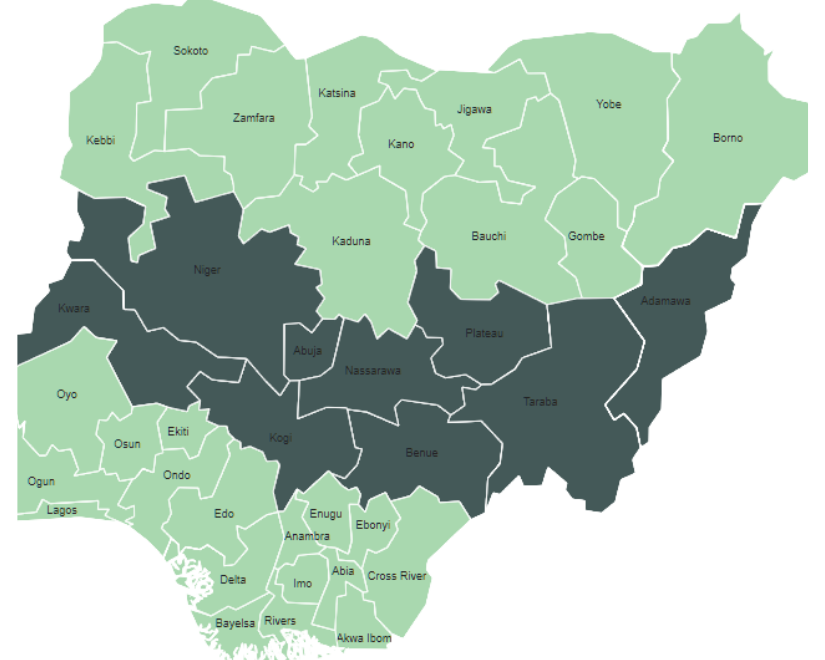
Nasarawa State was created on 1 October 1996 during the military regime of General Sani Abacha. Abacha was ethnically Kanuri, but of Kano origin: he was born and brought up in Kano to a Kanuri family originally from present-day Borno State.
The Kanuri of the North-East are ancestrally connected with the Kanuri community in Nasarawa State, notably at Lafiyan Barebari. Nasarawa is, in that sense, an epitome of Nigeria in miniature, with all its mosaic complexity and the constant interplay of centripetal and centrifugal forces expected in a diverse society, where human biology and behavioural science intersect with the social sciences, especially politics.
Politics, in that setting, is a fierce struggle over the authoritative allocation of resources: who gets what, when, and how.
The politics of Nasarawa State is therefore complicated. During election seasons, these tendencies play out significantly. They manifested glaringly in 2023, when there was no central political figure in the state capable of uniting these polarising forces. The crisis fractured the All Progressives Congress (APC) and culminated in a relatively little-known politician in a fringe party, the Social Democratic Party (SDP), defeating the APC in the Nasarawa West Senatorial District.
Some pundits attributed that upset to internal sabotage, arising from the unease between the incumbent governor and his predecessor, who was then a serving senator seeking re-election.
That schism of 2023 has reared its head again ahead of 2027, and it may produce upsets in the governorship and State and National Assembly elections. It remains to be seen how the division in the APC, arising from the controversies that surrounded the nomination of its governorship candidate, will play out.
That candidate was, forebodingly, the same dark horse who defeated the APC senatorial candidate in Nasarawa West in 2023. Is it a coincidence that the same man emerged in 2026 as the APC governorship candidate for the 2027 election?
In 2023, Peter Obi, the presidential candidate of the Labour Party, exploited the division in the APC, resentment of the APC’s Muslim-Muslim presidential ticket, and the hardship caused by the redesign of the naira and shortages of petroleum products, to snatch victory in Nasarawa State. The result stunned pundits and APC leaders alike.
Can he repeat that feat in 2027? A great deal of water has passed under the bridge, both at state and national levels, and the political dynamics of the state have changed in ways that may influence the electorate.
The Al-Makura Question and the Suspicion of Sabotage
It is widely believed that the incumbent Governor, Abdullahi Sule, did not mobilise the APC’s solid political structure to work hard in support of Senator Umaru Tanko Al-Makura. Suspicion of internal sabotage persists to this day.
That strained relationship manifested again in the 2026 governorship nomination exercise, when the Governor threw his weight behind the aspiration of the man who caused the upset in Nasarawa West in 2023, Ahmed Aliyu Wadada, who emerged as the APC candidate.
Wadada defeated the more popular Mohammed Abubakar Adamu, the former Inspector-General of Police, who is perceived to be close to Senator Al-Makura. Many of Al-Makura’s key allies and loyalists had aligned with Adamu before the primary.
Adamu subsequently resigned from the APC, joined the SDP, and became its governorship candidate. His emergence triggered a wave of defections among members of Al-Makura’s political inner circle.
Indigene and Non-Indigene: A Decisive Fault Line
There is also the question of indigene and non-indigene in Nasarawa State. Whether some governorship candidates are perceived as indigenes or non-indigenes is a major factor in the 2027 governorship race.
The question has been raised most pointedly against Wadada. His supporters describe him as a bona fide indigene of Nasarawa State, born and raised in Keffi, with deep roots and traditional titles in the Keffi Emirate. His critics point to his maternal Agatu links and question whether that background makes him a true indigene in the political sense.
The controversy itself, rather than any settled legal answer, is what matters politically: in Nasarawa, perception of indigeneity can mobilise ethnic blocs, shape endorsements, and influence how voters interpret a candidate’s legitimacy.
The Opposition in 2027: A Fractured Field
In 2023, the PDP was very strong in Nasarawa State. That strength manifested in its candidate, Atiku Abubakar, garnering many votes in the state.
Those votes might otherwise have gone to President Bola Ahmed Tinubu and swayed the result in his favour. But in 2027, Atiku Abubakar is not the presidential candidate of the PDP; he is the presidential candidate of the ADC.
The PDP has imploded and splintered into several implacable factions. The ADC has also moved into the centre of the opposition, but it is seriously mired in messy litigation, which has cast a pall over whether Atiku Abubakar and other candidates of the party belonging to the Senator David Mark faction will stand.
That uncertainty followed a judgment of the Federal High Court, Abuja, in a suit brought by Nafiu Bala Gombe on 5 November 2026, which declared all acts performed by the Senator David Mark faction null and void and restrained INEC from accepting them.
The judgment was, however, challenged on appeal, and INEC’s published list still showed Atiku as the ADC candidate days later. The litigation therefore created uncertainty rather than a final settlement.
All these factors will impact Nasarawa State. Those votes Atiku Abubakar got in 2023 may not be there in 2027, or they may be divided.
Al-Makura, Tinubu, and the Two Chairmanship Bids
It is also widely believed among supporters of Al-Makura that Governor Sule’s machinations in 2022 and 2025 cost Al-Makura his bid to become National Chairman of the APC.
Yet Al-Makura remains one of the fiercest supporters of President Bola Ahmed Tinubu in the North-Central geopolitical zone. The fact that Mohammed Abubakar Adamu defected to the SDP, despite his closeness to him, has not altered his relationship with the APC. He is an adviser to the Presidential Campaign Council of President Bola Ahmed Tinubu.
This is the central paradox of Al-Makura’s position in 2027. He is simultaneously the aggrieved elder whose supporters blame Sule for two lost chairmanship bids, the patron whose allies have defected to the SDP, and a loyal Tinubu campaign adviser inside the APC. He has not followed Adamu out of the party, and he has not openly broken with Sule.
How all these factors play out will be seen on 16 January and 6 February 2027.
Projection: What Is Likely to Happen in 2027?
Presidential: Tinubu, narrowly. The opposition is more divided in 2027 than in 2023. Obi has moved to the NDC, Atiku to the ADC, and the PDP is factionalised. That fragmentation, plus incumbency, gives Tinubu a narrow edge in Nasarawa. Obi remains the main threat and can repeat 2023 if the anti-APC vote re-consolidates around him. Atiku is projected third.
Governorship: Wadada (APC), narrowly. Wadada has the governor’s backing, the APC structure, and a proven record as a vote-winner. Adamu (SDP) has the Al-Makura network, grassroots resonance, and the SDP’s protest-vote precedent, and is the most credible upset candidate. Ombugadu (PDP) is projected third, but his Eggon base could deny Wadada a comfortable win.
Senate: APC 2, Opposition 1. Sule is favoured in Nasarawa North; Shuaib leans APC in Nasarawa West; Nalaraba faces a toss-up in Nasarawa South. This would be a recovery for the APC after losing all three Senate seats in 2023, but not a sweep.
House of Representatives: APC 3, Opposition 2. The APC is favoured in Keffi/Karu/Kokona and Nasarawa/Toto; the SDP/PDP are competitive in the other constituencies, with one seat a pure toss-up.
State House of Assembly: APC majority, reduced. The governorship race will drive Assembly turnout. The APC is projected to retain control, but with a more fragmented Assembly, a stronger SDP opposition bloc, and a PDP remnant in Eggon and Alago areas.
In short, 2027 in Nasarawa is projected to be an APC recovery, not an APC coronation: a narrow presidential win, a narrow governorship win, and a National Assembly that is more competitive than the APC would wish.
Conclusion
Nasarawa in 2027 will not be decided by party labels alone. It will be decided by old wounds, unresolved rivalries, questions of identity, and the ability of each camp to hold its coalition together under pressure.
The APC enters the election with the advantage of incumbency, the governor’s backing for its candidate, and the loyalty of figures like Al-Makura to the Tinubu campaign. But it also enters with a visible crack: a popular former Inspector-General of Police now leading the SDP, and a network of Al-Makura loyalists who have left with him.
The opposition enters with grievance, energy, and a credible protest tradition, but it is divided across the SDP, PDP, ADC, and NDC, and weakened by litigation and factional disputes at the national level.
That is why 16 January and 6 February 2027 matter so much. The presidential vote will test whether Nasarawa still rewards protest, or whether incumbency and fragmentation will return it to the ruling party. The governorship vote will test whether the APC can survive its own internal division, or whether the SDP can turn 2023 from an upset into a takeover.
Whatever the outcome, one lesson from 2023 remains: in Nasarawa, no victory should be taken for granted, and no defeat should be treated as final.