By Okoi Obono-Obla
Ibadan, The Heart of the West, and The Man Who Built a Region Into a Nation
To understand Oyo 2027, you must understand Ibadan.
Ibadan was not just a city. It was the capital of the Old Western Region of Nigeria under Chief Obafemi Awolowo – the first television station in Africa (WNTV 1959), the first skyscraper (Cocoa House), free education, the political laboratory of Yoruba progressivism. Oyo State today is still seen as the heartland of the South West geopolitical zone, and its capital Ibadan is the spiritual headquarters of South-West politics.

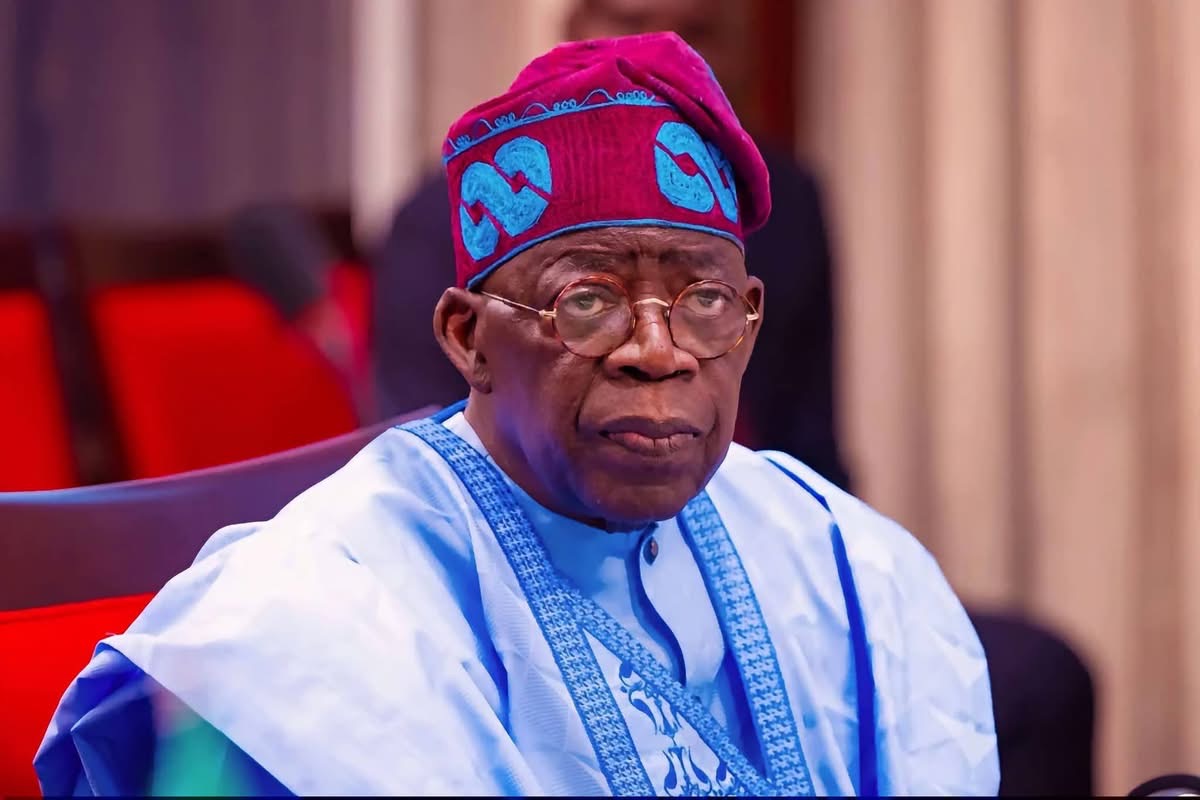
That history is why President Bola Ahmed Tinubu’s journey matters here.
After leaving as Governor of Lagos in 2007, Tinubu did not build a national party. He built a regional fortress. He founded and nurtured the Action Congress of Nigeria (ACN) as a South-West regional party – deliberately rooted in the old Western Region ideology of Awolowo. From Lagos, he recaptured Ogun, Oyo, Osun, Ekiti, Edo. That South-West base became his bargaining chip.
In February 2013, he used that chip to forge a historic merger with the late President Muhammadu Buhari’s Congress for Progressive Change (CPC), ANPP and a faction of APGA. That merger gave birth to the All Progressives Congress (APC). Without ACN’s South-West structure, there would have been no APC, and without APC, no Buhari presidency in 2015 and no Tinubu presidency in 2023.
In 2023, Tinubu proved that base still works. Even when the naira redesign policy of early 2023 – introduced by elements in the Buhari government many believed were not with him – caused hardship and alienated APC voters, Tinubu still won Oyo State with 449,884 votes against Atiku’s 182,977 and Obi’s 99,110, winning all 33 LGAs.
2023 is not 2027. In 2023 he was a candidate fighting his own federal government. In 2027, he holds the knife and the yam as incumbent.
The Three Fragmentations of 2027
1. PDP Implodes, Atiku to ADC:
In 2023 PDP was strong enough to give Atiku second place in Oyo. In 2027 PDP has imploded. Atiku left PDP for the African Democratic Congress (ADC) – a party founded in 2005, older than APC founded in 2013, but which has never found traction. The coalition that joined ADC in July 2025 – Atiku, Obi, El-Rufai, Amaechi – rather than strengthening it, plunged it into factionalization between the David Mark-led interim leadership and Nafiu Bala Gombe faction, with messy litigation and INEC suspending recognition. Atiku’s 2023 votes were PDP structure votes. They cannot be replicated in ADC without governors, LGA executives and polling agents.
2. Makinde to APM and the Bala Mohammed Contradiction:
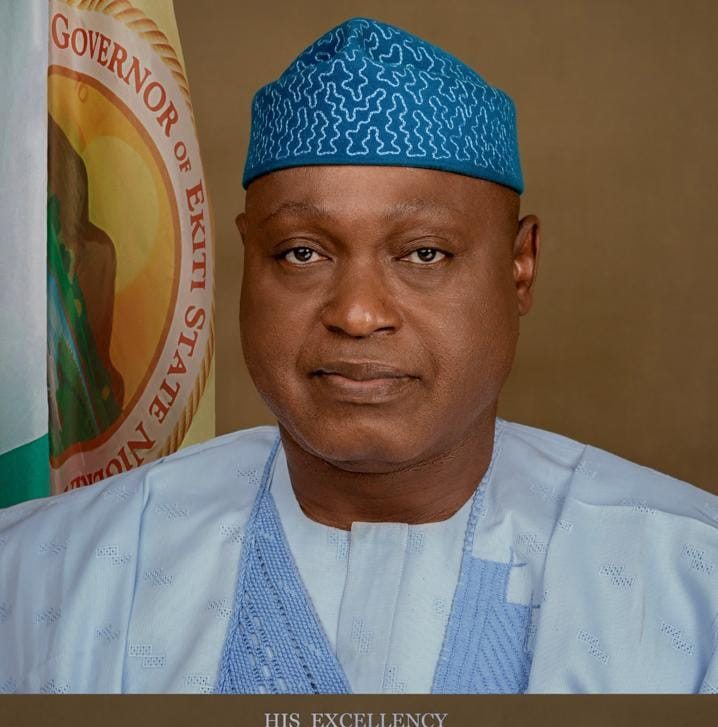
Governor Seyi Makinde, elected twice on PDP platform, has now emerged as presidential candidate of the Allied Peoples Movement (APM) under a PDP/APM alliance declared at Mapo Hall, Ibadan in May 2026. He pledges a 4-year single term.
His party’s National Leader is now listed as Governor Bala Mohammed of Bauchi, who also serves as coordination leader for the APM campaign. Yet the same Bala Mohammed recently praised President Tinubu for his “bold, courageous and transformative reform agenda.”
For pundits in Oyo, the message is confusing: if the National Leader of APM loves Tinubu’s reforms, is Makinde really running against Tinubu, or is APM a waiting room to join Tinubu? That weakens Makinde’s anti-incumbency pitch in Ibadan, the old capital where political sophistication is high.
3. Peter Obi from Labour to NDC – Ideology Lost:
This is the biggest contrast.
In 2023 Peter Obi ran on Labour Party – a party with a discernible ideological base: pro-people, pro-workers, NLC/TUC affiliation, youth Obidient movement with progressive message on production, not consumption. That ideology gave him 99,110 votes in Oyo, strong in University of Ibadan, Polytechnic Ibadan, and urban professional clusters.
In 2027 INEC’s final list shows Peter Obi as candidate of the Nigeria Democratic Congress (NDC) unveiled on 30 May 2026 by Seriake Dickson, with Kwankwaso also joining. NDC has no worker ideology, no trade union base. Its dominant message in the street is that “it is the turn of the Igbo people of Nigeria to produce a president.”
That message may mobilize South-East, but in Oyo – the heartland of the South-West where Awolowo’s ideology was about governance, not turn-taking – it has little resonance. Without Labour’s ideological umbrella, Obi cannot replicate his 2023 progressive coalition in Ibadan.
Projection: What Happens on 16 January and 6 February 2027?
16 January 2027 – Presidential & National Assembly:
Oyo, the old Western capital, will face a son of Oyo vs the Asiwaju of Yorubaland.
APC / Tinubu – Wins Oyo (48-52%). His ACN/APC fortress plus incumbency holds. The historical claim as builder of South-West regional party still counts in Oyo villages.
APM / Makinde – Second (25-30%). Strong in Ibadan South-West/North and Oyo town where his infrastructure record lives, but cannot transfer full governorship popularity to a new party with a National Leader praising his opponent.
NDC / Obi – Falls to 8-12%. From Labour’s ideological movement to NDC’s ethnic turn narrative, he loses the progressive Yoruba youth vote that gave him 12.2% in 2023.
ADC / Atiku – Collapses to 5-8%. 182,977 PDP votes of 2023 do not travel to a litigious ADC.
National Assembly same day: APC 2 Senate, APM 1 Senate; House: APC 8, APM 5, NDC 1.
6 February 2027 – Governorship & State Assembly:
Because Makinde vacated the governorship to run for President, Oyo governorship is open for first time since 2019. The historical weight of Ibadan as a city that decides South-West direction will be decisive.
APC slight favorite to retake Oyo governorship (45% chance) – riding presidential win 3 weeks earlier.
APM/PDP alliance 35% – needs Makinde to return from presidential campaign to campaign for successor.
State Assembly: Hung – APC 18, APM 10, PDP 3, NDC 1.
In short: Tinubu’s regional party built in 2006 still defends the old Western capital in 2027, not because 2023 currency hardship is forgotten, but because his opponents fragmented the 2023 anti-APC vote into ADC, APM and NDC – none with the structure the old ACN had when it merged with Buhari in 2013 to create APC.