


By Ibrahim Bunu
Email: ibrahimbunu2520@gmail.com
Introduction: Is Nigeria’s Political Architecture Producing the Same Outcomes?
Every generation of Nigerians asks the same question in different words.
Why do the same regions appear to dominate the military?
Why do the same political networks repeatedly occupy strategic institutions?
Why do constitutional promises of inclusion coexist with persistent perceptions of exclusion?
Why does every administration promise national unity while accusations of imbalance continue to grow?
These questions have animated Nigerian politics since independence.
Some argue these outcomes are inevitable because the North is demographically larger and therefore naturally more influential in a democratic federation.
Others argue they reflect decades of institutional evolution, military history, constitutional incentives, and elite bargaining that consistently concentrate power in particular networks.
This paper examines the evidence—not to inflame ethnic tensions, but to understand whether Nigeria’s political architecture unintentionally produces unequal outcomes and what reforms might strengthen national cohesion.
Chapter One: Nigeria Was Not Designed as It Exists Today
Nigeria did not emerge through a social contract among its peoples.
The British amalgamated the Northern and Southern Protectorates in 1914 primarily for administrative and fiscal reasons. The arrangement joined regions with different political systems, educational trajectories, economies, and colonial experiences.
From the outset, representation and administration developed unevenly.
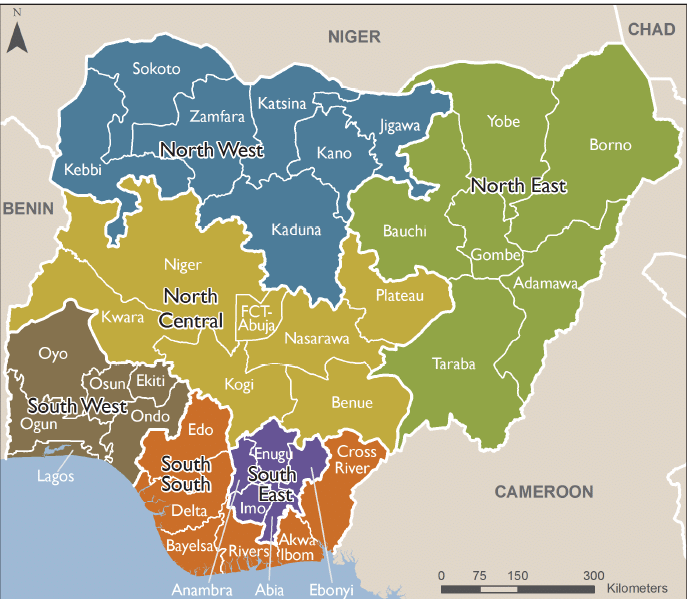
Northern Nigeria had a larger geographic area and later came to be regarded as having a larger population, which translated into greater representation in federal institutions after independence.
Supporters of the current arrangement argue that representation should broadly reflect the population.
Critics argue that population-based politics, when combined with centralized federal power, creates enduring structural advantages that go beyond democratic representation.
Chapter Two: The Military and the Legacy of 1966
Few events shaped Nigeria’s political structure more profoundly than the coups of 1966.
The January coup, led largely by young officers—many of whom were Igbo—was perceived in the North as regionally and ethnically selective, even though officers from multiple backgrounds participated.
The July counter-coup fundamentally altered the balance of military power.
From that point onward, Northern officers came to occupy a dominant share of senior military leadership over successive decades.
Military institutions are unique because they create leadership pipelines.
Senior officers mentor junior officers, influence promotions, shape doctrine, and build enduring professional networks.
When one region dominates those pipelines for extended periods, that influence can persist long after formal military rule ends.
This does not imply a conspiracy.
It reflects the institutional reality that organizations often reproduce their own leadership patterns over time.
Chapter Three: Democracy Returned, but Did the Power Structure Change?
Nigeria’s return to civilian rule in 1999 marked an important democratic transition.
The presidency rotated between North and South under informal political understandings, particularly within major parties.
However, observers have frequently noted that while elected offices changed hands, many strategic institutions—particularly in the security sector—continued to exhibit recurring regional patterns.
Examples often cited include appointments to:
* Chief of Army Staff;
* National Security Adviser;
* Director-General of the Department of State Services;
* Inspector-General of Police;
* senior intelligence positions;
* major state-owned enterprises, including the Nigerian National Petroleum Company (NNPC).
Importantly, these patterns have not been identical under every administration, and appointments have varied over time. Nevertheless, the recurring perception of regional concentration has become a persistent feature of Nigerian political debate.
Perception itself matters. In a diverse federation, even appointments based solely on merit may generate distrust if citizens consistently perceive imbalance.
Chapter Four: Federal Character—Promise and Practice
Section 14(3) of the 1999 Constitution introduces the Federal Character principle, requiring the composition of government to reflect Nigeria’s diversity and to prevent domination by persons from a few states or ethnic groups.
Its objective is clear:
* promote inclusion;
* reduce fear of marginalization;
* strengthen national unity.
Yet implementation has long been controversial.
Supporters contend that the principle has expanded opportunities for historically underrepresented states.
Critics argue that it is applied inconsistently, especially in appointments to the most strategically important institutions.
Others argue that Federal Character sometimes prioritizes geographic balancing over competence, creating different governance challenges.
The debate therefore is not whether the principle exists—it clearly does—but whether it has consistently achieved its constitutional purpose.
Chapter Five: Security Institutions and Political Power
In every modern state, the institutions that exercise coercive power are among the most consequential.
These include:
* the armed forces;
* intelligence services;
* police;
* internal security agencies.
Control over these institutions shapes national stability, crisis response, and public confidence.
Where appointments appear concentrated within particular networks over long periods, citizens may question whether institutional trust is being eroded.
At the same time, governments often defend appointments on grounds of experience, operational continuity, and perceived competence.
Distinguishing between legitimate security considerations and perceptions of political favoritism remains one of Nigeria’s most difficult governance challenges.
Chapter Six: Fiscal Federalism and the Politics of Centralization
Another recurring source of tension is Nigeria’s fiscal structure.
Most major revenues flow first to the federal government before being distributed among states through constitutional allocation formulas.
Supporters argue that this arrangement promotes national solidarity by redistributing wealth across regions.
Critics argue that excessive centralization encourages political competition for control of Abuja rather than economic development at the state level.
The debate over resource control, derivation, and fiscal federalism reflects deeper questions:
* Should states retain a larger share of locally generated revenues?
* How should oil-producing regions be compensated?
* How should population, equality of states, and developmental needs be balanced in revenue allocation?
These questions remain unresolved and lie at the heart of many calls for restructuring.
Chapter Seven: Elite Capture Versus Regional Identity
One of the greatest analytical mistakes is to equate political elites with ordinary citizens.
A small network of influential politicians, military officers, business figures, and bureaucrats often benefits disproportionately from access to federal power.
This phenomenon—commonly described as elite capture—exists across Nigeria’s regions.
While elite networks may have different regional bases, ordinary citizens in both North and South continue to experience poverty, insecurity, unemployment, and inadequate public services.
Consequently, the central issue may be less about one ethnic group dominating another and more about entrenched political elites benefiting from institutions that lack sufficient accountability.
This perspective shifts the debate from ethnic blame to institutional reform.
Chapter Eight: International Actors and Stability
International partners—including foreign governments, multinational corporations, and development institutions—often prioritize stability when engaging Nigeria.
Nigeria is Africa’s most populous country, one of its largest economies, and a major oil producer.
External actors therefore have strong incentives to support continuity and avoid instability.
Critics argue that this emphasis on stability sometimes results in insufficient pressure for deeper institutional reforms.
Supporters respond that constitutional change must be driven by Nigerians rather than imposed externally.
Both arguments contain elements of truth.
Chapter Nine: Competing Explanations
Three broad explanations dominate this debate.
The first argues that appointment patterns largely reflect historical military pipelines, demographic realities, and political pragmatism rather than deliberate exclusion.
The second contends that institutional incentives have gradually evolved in ways that consistently favour certain regional political networks, regardless of which party governs.
The third suggests that the more significant divide is not North versus South but elite versus ordinary citizens, with regional narratives often masking broader failures of governance and accountability.
These explanations are not mutually exclusive.
Nigeria’s political reality may involve elements of all three.
Chapter Ten: Pathways to Reform
If the objective is a stronger federation rather than a weaker one, reforms should focus on institutions rather than identities.
Potential reforms include:
* strengthening merit-based appointments while transparently applying Federal Character principles;
* reviewing aspects of fiscal federalism to encourage greater state-level economic responsibility;
* improving legislative oversight of security institutions;
* considering carefully designed state policing with robust safeguards against abuse;
* increasing transparency in appointments to strategic agencies;
* advancing constitutional reforms through broad national dialogue rather than sectional demands.
Such reforms would not guarantee perfect equity, but they could reduce perceptions of exclusion and strengthen confidence in national institutions.
Conclusion: The Architecture Matters
Nations are shaped not only by the intentions of their leaders but also by the incentives built into their institutions.
Nigeria’s recurring debates over appointments, security leadership, fiscal arrangements, and constitutional balance suggest that many citizens believe the current architecture does not consistently deliver fairness.
Whether these outcomes arise from deliberate design, historical path dependence, demographic realities, or elite bargaining remains open to legitimate debate.
What is beyond dispute is that institutions influence behaviour.
If Nigerians wish to build a federation that commands confidence across all regions, the focus should be less on ethnic competition and more on institutional design, accountability, transparency, and equal opportunity.
The enduring challenge is not simply who occupies power today.
It is whether the rules governing power inspire trust among all Nigerians.
Only by strengthening those rules can Nigeria move from a federation held together by political bargains to one sustained by shared confidence, constitutional fairness, and democratic legitimacy.