by Emmanuel Kaboshio-Bagudu
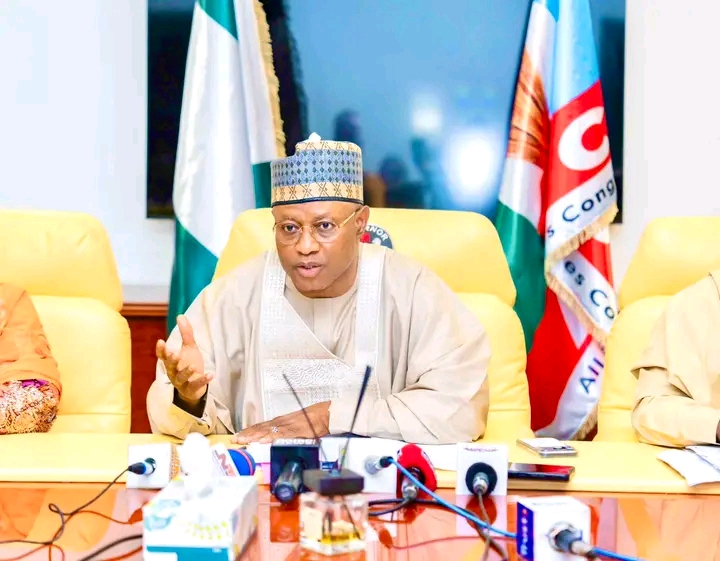
In Southern Kaduna, Nigeria’s Middle-belt, where history has tested the bonds between communities, the throne of the Atyap people has become a place of calm in the storm. At its center is His Royal Highness Sir Dominic Gambo Yahaya, the Agwatyap III and paramount ruler of the Atyap nation worldwide, whose leadership has steadily shaped a narrative of unity, resilience, and accessible governance.
Since ascending the throne, the Agwatyap III has positioned himself as a bridge between his people and the wider Kaduna State, intervening in political and communal matters not to deepen divisions, but to restore dialogue. Traditional rulers and community leaders across the region often point to his willingness to step into difficult conversations when others hold back.
In a land marked by diversity, he has become a custodian of peace, using the moral weight of the throne to encourage dialogue over confrontation. That role is rooted in personal experience.

Born in Taligan (Magamiya), Atyapland, on 10th January 1950, His Royal Highness, Sir Dominic carries the memory of a people who have had to fight for recognition and justice. His own trial came in May 1992, when he was among 21 indigenous Atyap sons detained without charge after the Zangon Kataf civil disturbances. Held as a “Special Class” prisoner alongside leaders like the late Bala Ade Dauke and Maj. Gen. Zamani Lekwot he endured a period that could have hardened him toward the state. Instead, it deepened his resolve to serve within legitimate institutions and to ensure that his people never again felt voiceless.
Before his reign, he spent over three decades in public service, bringing technical depth to governance. Educated at St. Pius’ Primary School Taligan (Magamiya), St. Mary’s Secondary School Fadan Kaje, Barewa College Zaria, and Ahmadu Bello University, where he earned both a Bachelor of Science and Masters of Science degrees in Geography and Urban & Regional Planning. He rose through the Kaduna State civil service from Town Planning Officer II in 1977 to Permanent Secretary in the Ministries of Water Resources and Works & Transportation. He also served as Caretaker Chairman of Kaduna North Local Government Area and General Manager of the Kaduna State Urban Planning and Development Authority.
That background matters. As a Fellow of the Nigerian Institute of Town Planners and a recipient of the National Productivity Merit Award in 1991, he has consistently linked cultural identity to development.
“For the Agwatyap III, preserving Atyap heritage is not about looking backward, but about ensuring that progress is rooted in who the people are”.
What residents mention most, however, is his accessibility. Unlike many traditional rulers who govern from a distance, the Agwatyap III is known for honouring invitations without complaint, no matter the distance or the occasion. He asks why he was not informed of sad events in his domain and often accepts responsibility to ensure that no community feels abandoned. It is this closeness that has earned him the reputation of being nearer to his subjects than any other traditional ruler in the state. He balances that weight of duty with a human touch.
As an avid golfer, he is as comfortable on the greens as he is in the palace, a reminder that leadership requires both gravitas and balance. At home, he remains devoted to his wife, Justina, whom he married on 30th November 1979, and to the family and community that anchor him.
In a time when public trust in institutions is fragile, the Agwatyap III offers a model of leadership that is steady rather than loud, present rather than distant. For the Atyap people of Zangon Kataf, Kaura, and Jema’a, he is more than a monarch. He is a father figure, a statesman, and a peacemaker whose stewardship continues to reinforce the idea that traditional leadership, when rooted in service, still has a place at the heart of modern Nigeria.
Emmanuel Kaboshio-Bagudu is a Kaduna-based Multimedia Journalist and Communications Expert.