by Khaleed Yazeed
Before the first Fulani horseman appeared on the horizon, before the siege engines were assembled, before the flames consumed the libraries, Katsina was not merely a city. It was a universe. It was the beating heart of Hausaland, the commercial capital of the Western Sudan, the intellectual center that had surpassed Timbuktu itself. This is the story of how that civilization fell, not in a single battle, but through a seven-year siege, systematic erasure, and a conquest that continues to shape the lives of Hausa people to this day. This is the fall of Katsina.
According to tradition, the kingdom of Katsina, one of the Hausa Bakwai or “Seven True Hausa States,” was founded in the 10th or 11th century. For centuries before the Fulani jihad, this kingdom flourished as an independent Hausa power, its kings tracing their lineage through generations of rulers who owed no allegiance to any foreign master. The original walls around Katsina town, the kingdom’s capital, were built in the mid-16th century, stretching an astonishing 13.5 miles (22 kilometers) in circumference. These were not simple barriers. They were monuments to Hausa engineering, fortifications that protected a thriving metropolis and symbolized the power of a people who had mastered their environment.
The 17th and 18th centuries marked the golden age of Katsina. Historical records indicate that during this period, it appears to have been the largest town in the Hausa countries, and its inhabitants at that time numbered some 100,000 people. To put this in perspective, London at the same period had approximately 200,000 residents. Katsina was not a village. It was a city that rivaled the great urban centers of Europe and the Islamic world. The trans-Saharan trade made Katsina wealthy beyond measure. Camel caravans crossed the burning sands from Ghadames, Tripoli, and Tunis, bringing salt, horses, paper, and steel blades southward. They returned northward with gold, ivory, hides, and the famous indigo-dyed cloth that clothed entire populations from Senegal to Lake Chad. Katsina was not merely a participant in this trade. It was the chief trans-Saharan caravan center of all the Hausa states. The wealth that flowed through its markets funded the construction of palaces, mosques, and schools that made it a beacon of civilization in the Western Sudan.

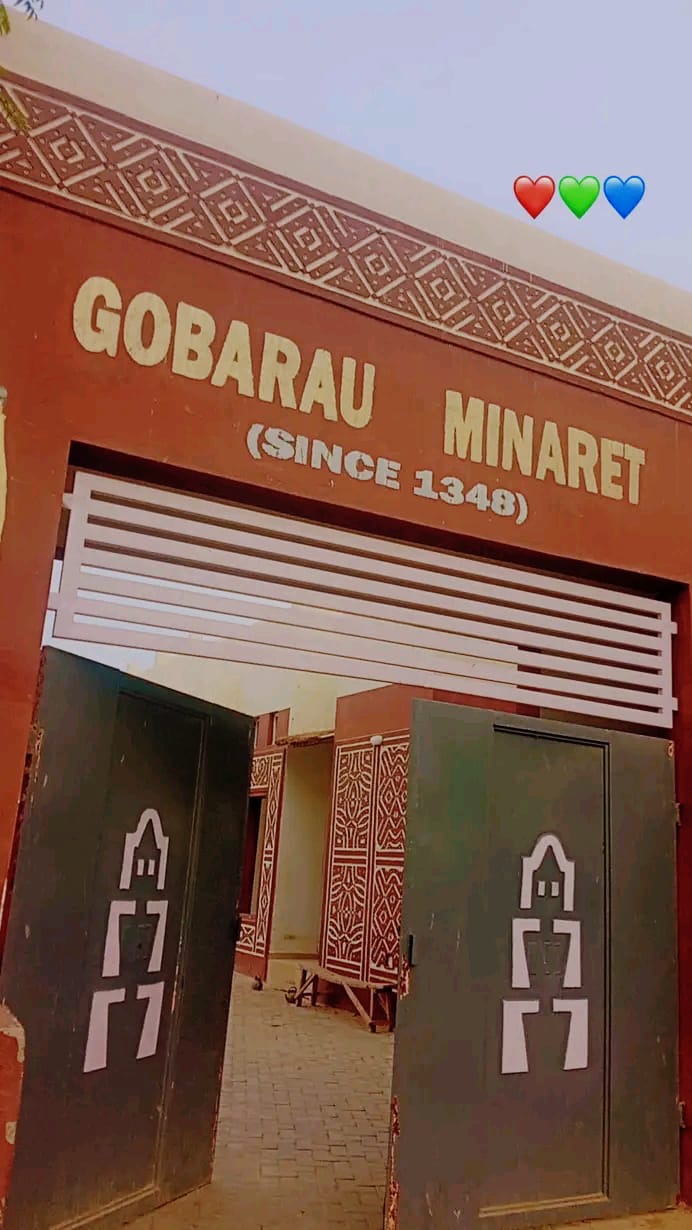
But commerce was only part of Katsina’s greatness. In the early 18th century, Katsina entered its greatest period of prosperity, and beyond being the leading Hausa commercial state, it replaced Timbuktu itself as the chief West African centre of Islamic studies. Timbuktu, the name that had become synonymous with African scholarship and wisdom was surpassed by this Hausa city. Scholars from Egypt, Tunis, and Morocco flocked to Katsina to teach and study. The city became a magnet for intellectuals across the Islamic world, a place where the brightest minds gathered to debate theology, law, and philosophy. The center of this intellectual ferment was the Gobarau Mosque and its famous minaret. The Gobarau Minaret, a 50-foot (15-meter) tower made of mud and palm branches, is believed to have been completed during the reign of Sarkin Katsina (King) Muhammadu Korau (1398-1408 AD), the first Muslim regent of Katsina. Other sources date the structure to the 16th through 18th centuries, with a major reconstruction in the early 20th century. Regardless of the exact date of its construction, the minaret became a symbol of Katsina’s spiritual and intellectual aspirations. It is said to be the first multi-storey building in West Africa. For centuries, it was the tallest structure in the city, used not only for the call to prayer but also for sighting invading armies during the inter-communal wars. The Gobarau mosque grew into a famed institution of higher Islamic education, affiliated with the Sankore University in Timbuktu. Islamic scholars from Timbuktu visited Katsina and taught Islamic education at this mosque, creating a trans-Saharan network of learning that connected Hausaland to the wider Islamic world. The mosque continued to serve as Katsina’s central place of worship until the beginning of the 19th century AD, when Sarkin Katsina Ummarun Dallaji (1805-1835) the very Fulani commander who would conquer the city, built a new mosque. The irony is staggering, the conqueror who destroyed Katsina’s independence would later build a mosque on its ruins, claiming spiritual authority over the people he had subjugated. The kings of Katsina, though nominally vassals of the Bornu Empire after 1591, were practically independent and ruled with authority. They offered protection to their people, justice in their courts, and leadership in their wars. The royal palace, Gidan Korau, built by Muhammadu Korau himself around 1348, stands as one of the oldest and among the first generation palaces in Hausaland. The Gidan Korau palace remains a masterpiece of Hausa architecture, a silent witness to the kings who once ruled from its chambers. This was Katsina before the jihad. A commercial powerhouse. A center of learning that surpassed Timbuktu. A city of 100,000 souls protected by 13 miles of walls. A kingdom where Hausa kings ruled Hausa people without bowing to any foreign master. This is what the Fulani came to destroy.
The Fulani herdsmen had settled in Katsina as early as the 15th century, long before the jihad. For generations, there was coexistence between the Hausa farmers and traders and the Fulani pastoralists who moved through the region with their cattle. This coexistence, however, was not equality. The Fulani who would later lead the jihad were not the settled herders who had lived alongside Hausa communities for centuries. They were the clerics and warriors who had absorbed the revolutionary message of Usman dan Fodio, a Fulani scholar from Gobir who began preaching a purified form of Islam in the late 18th century. By the late 18th century, wars with Gobir, a Hausa state to the northwest of Katsina, had begun to weaken the kingdom. These conflicts drained resources, created instability, and disrupted the trade routes that had made Katsina wealthy. The population of the city began to decline from its peak of 100,000. The walls that had once protected a thriving metropolis now enclosed a city that could not fill its own space. The stage was being set for conquest.
The jihad began in Gobir in 1804, when Usman dan Fodio led a revolt against the Hausa overlords. The revolt was presented as a religious reformation, a holy war to purify Islam from the syncretic practices of the Hausa kings. But it was also a war of conquest. The Fulani did not come to reform. They came to replace. And Katsina was squarely in their sights. It is important to note that the jihad was not a spontaneous uprising of oppressed Muslims. It was a military campaign led by Fulani commanders who were given flags by Usman dan Fodio and told to conquer the Hausa states. According to historical records, while Zazzau (Zaria) received one flag, Katsina received three flags. Three flags meant three Fulani commanders were tasked with bringing this great Hausa city to its knees. The names of these commanders are recorded: Malam Na Alhaji, Umarun Dunyawa, and Umarun Dallaje. It was Umarun Dallaje (also recorded as Ummarun Dallaji or Ummaru Dallaji) who would ultimately capture Katsina town in 1806 and be named the first Fulani emir of Katsina.
The fall of Katsina was not a swift defeat. It was not a single battle lost on a single day. It was a slow, agonizing death, a siege that lasted seven years, from 1807 to 1814. The Hausa king of Katsina did not surrender when the Fulani forces surrounded his city. He chose resistance. He chose to fight. And for seven years, the people of Katsina endured horrors that are almost unimaginable. The siege brought a frightful famine. The Fulani forces cut off supply routes, preventing food from reaching the city. As the months dragged into years, the people of Katsina began to starve. Carrion birds, lizards, and snakes were sold at exorbitant prices. People ate what they would never have touched in normal times. Mothers watched their children waste away. Fathers left the walls to search for food and never returned. The dead were buried in shallow graves, or not buried at all. But still, the people of Katsina did not break. The walls that had protected the city for three centuries now served as the only barrier between the inhabitants and the Fulani forces that circled them like vultures. The Hausa warriors fought with courage, but they were surrounded, outnumbered, and eventually starved. The Gobarau Minaret, which had once been used to sight invading armies, now watched helplessly as the invaders slowly tightened their grip on the city. The fall of Katsina is documented in multiple historical sources. The 1911 Encyclopedia Britannica records that at the beginning of the 19th century, the town fell into the hands of the Fula, but only after a protracted and heroic defence. The geographer Élisée Reclus, writing in the late 19th century, described how the kings of Katsina offered a heroic resistance to the Fulahs, with the siege of the capital lasting from 1807 to 1814, accompanied by a frightful famine during which carrion birds, lizards, and snakes were sold at exorbitant prices. When the city finally fell in 1814 (or 1806 according to some accounts, with the full subjugation taking until 1814), the Fulani showed no mercy to the inhabitants. The heroic resistance that had lasted seven years was answered not with magnanimity but with slaughter. The Hausa who survived the siege now faced the sword of the conqueror.
Conquest was not enough for the Fulani. They did not simply want to defeat Katsina. They wanted to erase Katsina. They wanted the Hausa people of Katsina to forget that they had ever been free. They wanted future generations to believe that their history began with the arrival of the Fulani emirs. The Fulani commanders ordered the burning of Katsina’s historical records. Centuries of chronicles, legal documents, scholarly works, and poetic compositions were reduced to ash. The same policy of manuscript burning that destroyed Hausa libraries across Kano and other cities was applied with particular ferocity in Katsina. Why? Because Katsina was the center of Hausa scholarship. Burning its records was like burning the brain of Hausaland. The Fulani understood that a people who cannot read their own history cannot resist their own oppression. The Fulani also razed to the ground the town of Dankama, located about 25 miles (40 kilometers) northeast of Katsina, where the Hausa king had taken refuge after the siege. They did not want any remnant of Hausa resistance to remain. They did not want any physical structure that could serve as a symbol of defiance. Dankama was destroyed so completely that its very memory was nearly erased. The 1911 Encyclopedia Britannica notes that many of the Hausa nobility and people fled to Dankama and to Tassawa (Tessaoua) and Maradi in Niger, where they proclaimed a Hausa Katsina chiefdom. But the town of Dankama itself, the physical location where the Hausa king sought refuge was razed to the ground. The king of Katsina was deposed. According to Britannica, the Fulani leader Umaru Dallaji captured Katsina town in 1806 and was named the first Katsina emir with Katsina as his seat. The emirate was governed by the representative of the sultan of Sokoto (a town 160 miles, or 258 kilometers, west) as well as the local emir. The Hausa king who had ruled for generations was replaced by a Fulani governor who answered to Sokoto, not to the people of Katsina. But the Hausa did not simply accept this fate. Many of the Hausa nobility and people fled to Dankama and to Maradi in present-day Niger Republic, where they proclaimed a Hausa Katsina chiefdom that existed throughout the 19th century. Their raids throughout the 19th century weakened the Fulani emir and Katsina town, which was surpassed by Kano. This Hausa resistance in exile is a testament to the unbroken spirit of a people who refused to bow, even when driven from their homeland. The Gobarau Minaret continued to stand, but it was no longer the center of a great university. It was not repaired from the time of the jihad until the early 20th century. For over a century, this symbol of Katsina’s golden age was left to decay, a physical reflection of what the Fulani had done to the city’s spirit. The minaret survived, but it survived as a ruin, a monument not to Katsina’s greatness but to its fall.
Here are the name of Fulani commanders who carried out this atrocity. Let us fix their names in our memory, because they tried to erase ours. Umarun Dallaje (also recorded as Ummarun Dallaji, Ummaru Dallaji, or Ummaru Dallaje) was the first Fulani emir of Katsina, who led the siege and capture of the city. He was the son of Malam Abdulmumini, a Fulata-Borno of the Naturbawa clan. After capturing Katsina, he governed as the representative of the Sultan of Sokoto, who was 160 miles to the west. He ruled from approximately 1805 to 1835. It was Umarun Dallaje who, after capturing the city, built a new mosque to replace the historic Gobarau mosque. The conqueror became the spiritual authority, claiming religious legitimacy for his political domination. Malam Na Alhaji was one of the three flag-bearers assigned to conquer Katsina. He commanded Fulani forces in the campaign against the Hausa kingdom, leading raids that weakened the city’s defenses and cut off supply routes. Umarun Dunyawa was another of the three flag-bearers. His role in the conquest is less documented, but his name is recorded in the historical accounts of the jihad as one of the commanders who brought Katsina under Fulani rule. These three commanders were not acting alone. They were part of a larger network of Fulani warriors and clerics who had sworn allegiance to Usman dan Fodio and his son, Sultan Muhammad Bello. They were carrying out a coordinated campaign of conquest that stretched across Hausaland, from Kano to Zazzau to Gobir to Katsina. They were the agents of a system that would subject the Hausa people to two centuries of subjugation.
After the fall, Katsina was reduced to a shadow of its former glory. The city that had once been the largest in Hausaland, the commercial capital of the region, the center of Islamic scholarship that surpassed Timbuktu, was now a subsidiary of nearby Kano. The 1911 Encyclopedia Britannica notes that the conquest of the Habe (Hausa) of Katsina by the Fula about the beginning of the 19th century made little difference to the country in terms of customs and system of government, as the more cultivated Habe were already Mahommedan and the new rulers adopted the existing customs. But this observation misses the essential point. The forms of government may have remained, but the rulers had changed. Hausa kings had been replaced by Fulani emirs. The people who once ruled themselves now ruled themselves no longer. The Fulani installed Umarun Dallaje as the first emir of Katsina, and he governed as the representative of the Sultan of Sokoto. The political structure of the emirate was based on Sharia and Islamic administration as interpreted by the Fulani conquerors. The Hausa nobility who survived either fled or were reduced to subjects in their own land. The people who had once filled the markets of Katsina, who had once filled the classrooms of Gobarau, who had once filled the palaces of the Hausa kings, were now subjects of a Fulani emir who answered to a Fulani sultan. The population of Katsina declined precipitously. The 1911 Encyclopedia Britannica notes that the walls of Katsina have a circuit of between 13 and 14 miles, but only a small part of the enclosed space is inhabited. The city that had once housed 100,000 people could not fill its own walls. The population had fled, been killed, or been enslaved. The markets that had once teemed with merchants from across the Sahara were quiet. The schools that had once attracted scholars from Egypt and Tunis were empty. But the Hausa spirit did not die. Many of the Hausa nobility and people fled to Dankama and to Maradi in present-day Niger, where they proclaimed a Hausa Katsina chiefdom. Their raids throughout the 19th century weakened the Fulani emir and Katsina town. This Hausa resistance in exile is a testament to the unbroken spirit of a people who refused to bow, even when driven from their homeland. The Hausa Katsina chiefdom in Maradi continued to exist throughout the 19th century, launching raids that reminded the Fulani emir that he sat on a stolen throne. The Gobarau Minaret continued to stand, but it was no longer the center of a great university. It was not repaired from the time of the jihad until the early 20th century. For over a century, this symbol of Katsina’s golden age was left to decay, a physical reflection of what the Fulani had done to the city’s spirit. The minaret survived, but it survived as a ruin, a monument not to Katsina’s greatness but to its fall. In March 1903, Sir Frederick Lugard visited Katsina on his way from Sokoto, and the emir and chiefs accepted British suzerainty without fighting. The British did not restore Hausa rule. They preserved the Fulani emirate system as an instrument of indirect rule. The Fulani remained the ruling class. The Hausa remained the subjects. The British simply became the new masters of the same old system. The emir was unfaithful to his oath of allegiance to the British crown and was deposed in 1904. His successor was installed and took the oath of allegiance in December of the same year. The throne remained in Fulani hands.
Today, the Gobarau Minaret still stands in the center of Katsina. It is a national monument, declared by the Federal Government in 1959. Tourists and academics come to see it. They take photographs. They read the plaques. They learn about the “ancient city of Katsina.” The minaret has been renovated by subsequent emirs, including Sarkin Katsina Muhammadu Kabir Usman (1981–2008), and also renovated by the current government of Dikko Umar Radda. But these renovations cannot erase what the minaret witnessed. The minaret saw the caravans arriving from Tripoli and Tunis. It saw the scholars from Timbuktu teaching in the mosque. It saw the walls being built and the markets thriving. And then it saw the Fulani horsemen surrounding the city. It saw the famine. It saw the burning of the records. It saw the king fleeing. It saw the new emir taking the throne. It saw the Hausa people learning to bow. The minaret does not speak. But it remembers. And so must we. The fall of Katsina is not just a historical event. It is a living wound. The emir who sits in Katsina today is not a Hausa king. He is a Fulani emir, descended from the conquerors who besieged the city for seven years and burned its records. The Hausa people of Katsina still live in that city, but they live as subjects in the land of their ancestors. They speak Hausa, but they bow to Fulani rulers. They pray in mosques built by Fulani emirs. They teach their children a history that begins with the jihad, not with the Bagauda Dynasty. But the minaret still stands. And the people are beginning to look up. The same machinery of domination that burned the records of Katsina now burns the hopes of Hausa people across Nigeria. But the same spirit that led the Hausa nobility to flee to Maradi and establish a resistance chiefdom still burns in the hearts of Hausa youth who refuse to bow. We remember Katsina. We remember the seven-year siege. We remember the famine. We remember the burning of the records. We remember the razing of Dankama. We remember the names of the conquerors: Umarun Dallaje, Malam Na Alhaji, Umarun Dunyawa. And we remember the name of the city that fell: Katsina.
Remember Katsina. Remember what was lost. And remember that what was lost can be reclaimed.
Khaleed Yazeed
Founder, Wakilin Yamma Youth Development Network
Katsina State, Nigeria