


by Adeyemi Ademowo Ph.d
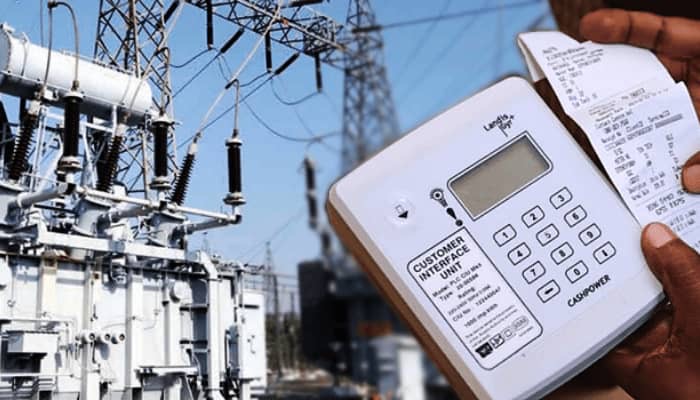
There is something familiar, somewhat almost ritualistic, about the recent Nigerian state, the Federal Government, announcing yet another intervention in the power sector. This time, it is the ₦3.3 trillion legacy debt repayment plan approved by Bola Ahmed Tinubu. One is tempted to shout “hurray!” because the language is reassuring: restoring confidence, stabilising generation, improving reliability.
But Nigerians have heard this tone before. And they have remained in darkness. By the way, am concerned about 24 hours, 7 days a week electricity provision because I know it is possible; if not, why not? I don’t want to settle for less. Anyway, let’s return to my worries about the “legacy debt” payment.
Let us be clear: settling debt is not the same as solving dysfunction. It is, at best, clearing the throat before speaking. The real question now should be whether government, acting alone, has either the capacity or the institutional temperament to deliver something as technically demanding and economically complex as 24/7 electricity. Ṣe dem fit? (Can Federal Government do it somewhat alone?).

If history is any guide, the answer is uncomfortable.
Consider the petroleum sector. For decades, the Nigerian state, through the Nigerian National Petroleum Company, sat atop vast oil wealth yet struggled to guarantee something as basic as fuel availability. Refineries became monuments to decay. Subsidy regimes became theatres of opacity. Scarcity became routine. It took the disruptive entrance of private capital, symbolised most dramatically by the Dangote Refinery, to even begin a conversation about self-sufficiency in refining.
State control did not secure efficiency; it postponed it.
If oil, with all its strategic importance and revenue potential, could not be efficiently managed under a state-dominated framework, what then makes electricity which is a far more complex, real-time, and capital-intensive system, any different?
Now contrast this with telecommunications. There was a time when acquiring a telephone line in Nigeria required patience, influence, and sometimes divine intervention. The old NITEL embodied the lethargy of state monopoly: slow, unresponsive, and exclusionary. Then came liberalisation.
With the entry of private operators like Econet, MTN and Globacom, the sector experienced a revolution. Lines became available. Competition drove innovation. Prices, though initially high, gradually reflected market dynamics. Today, mobile connectivity is so embedded in everyday Nigerian life that it is easy to forget how recent (and how radical) that transformation was.
To be sure, privatization did not perform magic; It simply introduced discipline embedded in competition, efficiency and consequence.
Electricity, however, sits in a more complicated space. Nigeria did attempt privatization with the unbundling of the power sector in 2013. Yet the outcome has been underwhelming. Distribution companies struggle. Transmission remains firmly under government control. Tariff structures are politically sensitive and economically inconsistent. Investors complain of regulatory uncertainty, while consumers complain of estimated billing and erratic supply.
This is where the conversation often becomes lazy. The failure of Nigeria’s power sector is too quickly attributed to “privatization,” as though the mere transfer of assets to private hands guarantees efficiency. It does not. What Nigeria implemented was not a fully disciplined market system but a hybrid; one in which private actors operate without full market signals, and government retains critical control without corresponding accountability.
In such a system, inefficiency is not eliminated; it is redistributed.
So, let us return to the “one dollar question”: can government alone deliver 24/7 electricity in Nigerian homes? The evidence, both local and comparative, suggests otherwise.
Electricity systems require continuous investment, technical expertise, cost-reflective pricing and operational autonomy. These are not natural strengths of bureaucratic structures shaped by political cycles and patronage considerations. Yet, to argue for privatization without qualification would be equally flawed. *I am strongly of the view that what Nigeria needs is not blind privatization but competent privatization*, one anchored in transparency, strong regulation and technical capacity.
First, tariffs must reflect reality. Electricity cannot be sustainably produced below cost. The current hesitation to fully align pricing with service creates a system where everyone owes everyone and no one invests.
Second, regulation must be credible. Investors will not commit capital where rules shift with political winds. Consumers, too, need protection from exploitative practices. A regulator that is both independent and effective is not optional; it is foundational.
Third, transmission which is the stubborn backbone of the sector must be reformed. As long as it remains a state-controlled bottleneck, gains in generation and distribution will continue to leak into systemic inefficiency.
Fourth, decentralisation must be taken seriously. Nigeria is too vast and too diverse for a single, centralised grid to function optimally. Embedded generation, mini-grids, and state-level electricity markets are not luxuries; they are necessities.
What, then, will the ₦3.3 trillion debt settlement achieve?
Simple: it buys time. It restores a measure of confidence. It may even improve generation in the short term. But it does not, on its own, alter the structural logic of the sector. Without deeper reforms, it risks becoming another cycle in Nigeria’s long history of intervention without transformation.
Premised on my submissions, it is obvious that Nigeria’s electricity challenge is not merely financial; it is institutional. Until that truth is confronted honestly, courageously, and without ideological shortcuts, the promise of 24/7 power will remain what it has long been: a flicker, not a flame.
Mo wi t’emi o.
Ire o.
*Adéyẹmí Adeyinka Ademọwọ is professor in the department of Sociology, Afe Babalola University, Ado-Ekiti yemiademowo@gmail.com*











Your point about legacy debt vs. actual functionality really hits home—Nigerians have grown tired of promises that don’t translate into real change. The government’s focus on repaying old debts is necessary but not sufficient; what’s needed is a strategic overhaul of how power generation and distribution are managed. If the goal is 24/7 electricity, then we must look beyond short-term fixes and toward long-term institutional reforms that ensure reliability and accountability.
Prof. Ademowo’s distinction between ‘clearing the throat’ via debt repayment and actually fixing the sector’s dysfunction is a crucial insight that cuts through the usual political noise. I completely agree that since 24/7 power is technically achievable, the government should explore direct public management models or robust state-owned utilities rather than treating privatization as a mandatory fix for legacy issues.