

Political Party Registration in Nigeria: Technological Approaches and Ideological Differences:
by Okoi Obono-Obla
On 4th February 2026, I was a guest on Trust TV Abuja to discuss “Political Party Registration: Analysis on Technological Approach and Ideological Differences.”
I began with a chronological history of Nigeria’s political party system. From independence in 1960 until January 15, 1966, when the military violently intruded into governance and imposed a dictatorship, political parties played a dominant role in shaping the country’s democracy. The major parties during this period included the Northern Peoples Congress (NPC), Action Group (AG), National Convention for Nigerian Citizens (NCNC), Northern Elements Progressive Union (NEPU), and the United Middle Belt Congress (UMBC), among others. Each party’s constitution clearly outlined membership criteria.

In 1979, after more than 13 years of military rule, power was returned to a democratically elected government. The 1979 Constitution, which served as the country’s basic law, required membership in a political party as a condition for contesting offices such as President, Vice President, National Assembly, Governor, Deputy Governor, and State Assembly.
Democracy was again truncated on 31 December 1983, when the military toppled the civilian government. The military remained in power until 29 May 1999, when it finally returned to the barracks and handed over to civilians. During its transition programs, the military established two political parties by decree, requiring anyone aspiring to contest elections to join them. Although the transition initially failed, when party politics was reintroduced in 1998, the constitutional decree again made party membership compulsory.
The 1999 Constitution, which remains in force today, also contains provisions making political party membership mandatory for anyone seeking elective office. Similarly, all political parties in Nigeria today include membership criteria in their constitutions.
Section 77 of the Electoral Act 2026
Section 77 of the Electoral Act 2026 places strong emphasis on political parties maintaining a digital (electronic) register of members.
– Section 77(2): Parties must submit a digital membership register to INEC at least 21 days before any primary or convention.
– Data Requirements: Registers must include electronic data such as National Identification Numbers (NIN) and photographs.
– Deadlines & Eligibility (Sections 77(4), (5), & (7)): Registers must be submitted by April 2, 2026, and only registered members are eligible to participate in party primaries.
These requirements aim to increase transparency and prevent electoral fraud.
Technological Approaches to Party Registration
Recent reforms have reshaped how Nigerian political parties manage membership:
– Digital Membership Registers
INEC now mandates comprehensive electronic registers to improve transparency and internal democracy. Parties are racing to digitize databases ahead of deadlines, signaling a shift toward data-driven mobilization.
– Online & Electronic Registration Systems
Parties such as the APC have adopted technology-driven portals, enhancing transparency, reducing fraud, and strengthening grassroots mobilization.
– Integration with NIN
Linking registration to Nigeria’s NIN system helps verify identities and prevent duplicate memberships. However, this raises privacy concerns under the Nigeria Data Protection Act 2023, sparking debates about coerced data collection and citizens’ rights.
Ideological Differences Among Nigerian Parties
Although Nigeria’s political landscape is often described as personality-driven, parties do exhibit ideological tendencies:
| Party | Ideological Leanings | Notes |
|——-|———————-|——-|
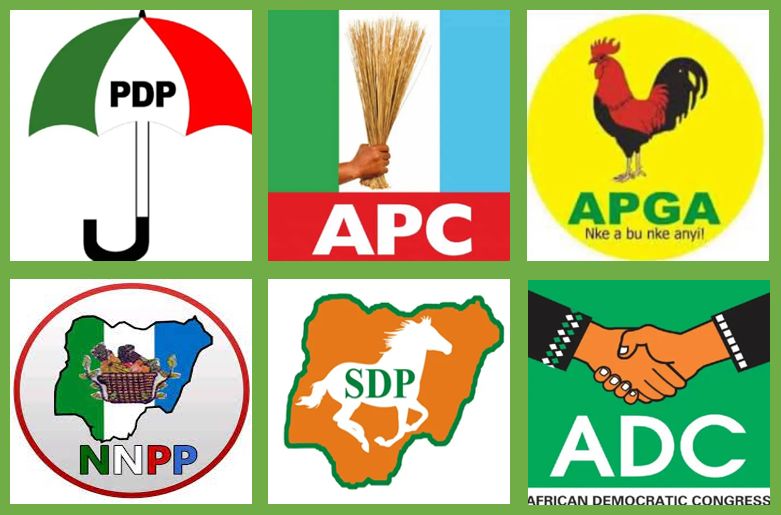
| APC (All Progressives Congress) | Center-right, progressive conservatism | Emphasizes anti-corruption, economic liberalization, and national security. Uses tech-driven registration for mobilization. |
| PDP (People’s Democratic Party) | Center-left, social democracy | Advocates welfare policies, inclusivity, and broader state involvement in the economy. Traditionally relies on grassroots networks. |
| Labour Party | Left-leaning, social justice | Focuses on workers’ rights, youth empowerment, and equity. Its rise in the 2023–24 elections highlighted its appeal to younger voters. |
| ADC (African Democratic Congress) | Pan-Africanism, grassroots democracy | Founded in 2006, positions itself as a “third force” against APC/PDP dominance, emphasizing accountability, youth empowerment, and ethical leadership. |
| Smaller/Regional Parties | Ethnic/regional priorities | Often emphasize federal restructuring, resource control, or regional autonomy. |
Key Challenges & Debates:
– Data Privacy vs. Efficiency: Balancing streamlined digital systems with citizens’ rights under data protection laws.
– Ideological Fluidity: Parties often shift positions depending on alliances, making distinctions less rigid than in Western democracies.
– Digital Divide: Rural areas may struggle with access to online registration, limiting inclusivity.
– Transparency & Trust: While technology promises cleaner registers, skepticism remains about manipulation and enforcement.
Conclusion:
Nigeria’s political party registration is increasingly technology-driven, with INEC pushing digitization to enhance credibility and transparency. At the same time, ideological differences—though sometimes blurred—continue to shape party identities, particularly between larger national parties and smaller regional movements. The challenge ahead lies in balancing efficiency with inclusivity, and innovation with respect for citizens’ rights.
By Okoi Obono-Obla