Somalia: From Biblical Punt to Modern Turmoil:
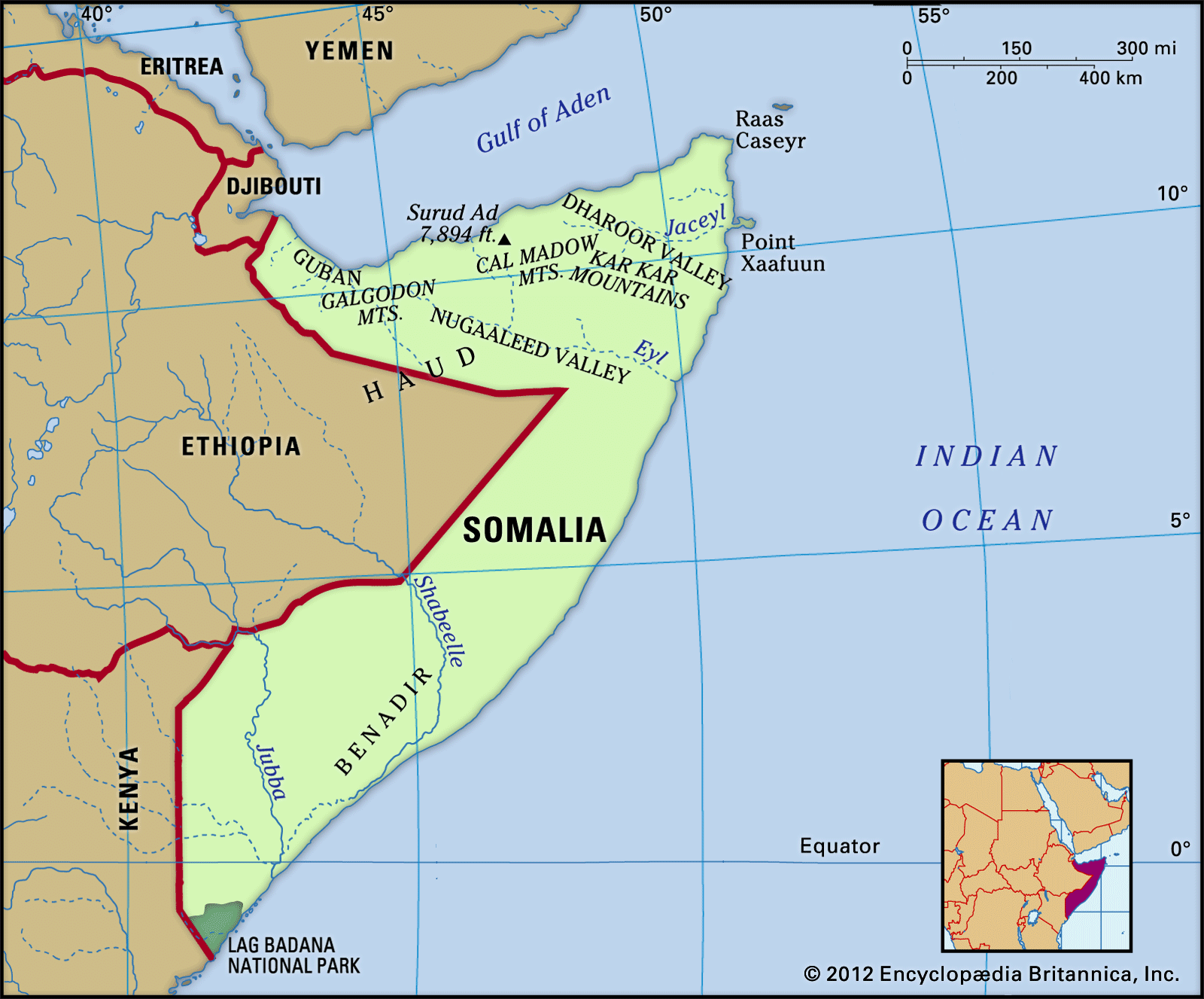
Somalia is a country in East Africa, historically linked to one of the ancient peoples of Africa mentioned in the Bible. Many scholars identify the biblical Land of Punt—a region known for its trade in frankincense, myrrh, and precious goods—as corresponding to parts of present‑day Somalia. This connection underscores Somalia’s deep antiquity and its place in sacred history.
During colonialism, two European powers—Italy and the United Kingdom—exercised sovereignty over Somali territories. The north became the British Somaliland Protectorate, while the south was Italian Somaliland. After World War II, Italian Somaliland was placed under a United Nations trusteeship administered by Italy until independence. On July 1, 1960, both territories united to form the Somali Republic, marking the birth of modern Somalia.
Shortly after independence, Somalia experienced political instability. In 1969, following the assassination of President Abdirashid Ali Shermarke, General Mohamed Siad Barre seized power in a military coup. Barre ruled with an iron grip for over two decades, until he was toppled in January 1991. He fled into exile, eventually settling in Lagos, Nigeria, where he died in 1995.

After Barre’s fall, Somalia descended into chaos. Islamist groups and warlords vied for control, plunging the nation into civil war. The United States intervened in the early 1990s to restore order, but the mission ended disastrously, most famously with the Battle of Mogadishu in 1993, which left American forces bloodied and humiliated.
During this period, the former British protectorate declared itself independent as Somaliland. Despite maintaining relative stability and democratic institutions, Somaliland has remained largely unrecognized by the international community, though recent reports suggest Israel has extended recognition.
Somalia itself became destabilized, falling under the sway of extremists and religious fundamentalists who used terror to dominate a beleaguered population. Amid this turmoil, the Somali diaspora grew. The United States granted Temporary Protected Status (TPS) to Somalis during the height of the conflict, allowing many to migrate. Yet, in recent years, President Donald Trump moved to end TPS for Somalis, throwing thousands of diaspora families into uncertainty and despair.
I recall the celebrated Somali novelist Nuruddin Farah, who visited the University of Jos in the 1980s. As students, we thronged his lecture halls just to glimpse him. His striking presence and eloquence left lasting impressions. Farah is widely regarded as one of Africa’s greatest contemporary writers and has been a frequent nominee for the Nobel Prize in Literature.
Conclusion
From the biblical Land of Punt to colonial subjugation, independence, dictatorship, civil war, and diaspora struggles, Somalia’s story is one of resilience amid adversity. Its people, scattered across the globe, continue to embody both the ancient heritage of Punt and the modern quest for peace and recognition.
@ Okoi Obono-Obla