Malami’s Billions and Nigeria’s Constitutional Test:
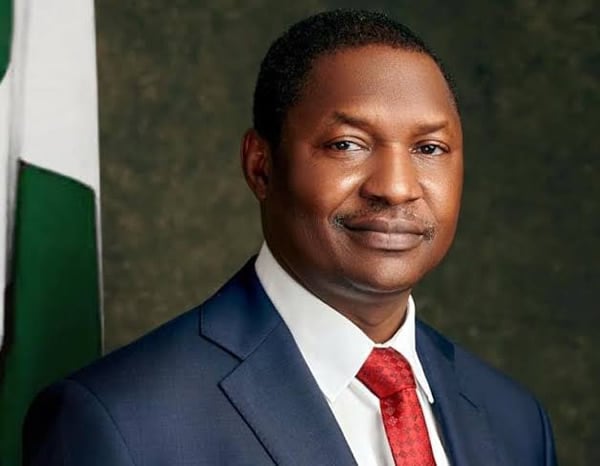
When former Attorney General of the Federation, Abubakar Malami (SAN), defended himself against the EFCC’s forfeiture suit, he claimed his wealth was lawfully acquired: ₦374 million from salaries and severance, ₦574 million from asset disposal, ₦958 million from gifts, and a staggering ₦10.17 billion from his companies’ earnings. In total, he asserted more than ₦12 billion in legitimate income.
The EFCC, however, alleged that 57 properties worth ₦213.2 billion were unlawfully acquired.
This defence—anchored on gifts and business profits—must be weighed against the Code of Conduct for Public Officers in the 1999 Constitution (Fifth Schedule, Part I), which forbids public officers from engaging in private business (except farming), prohibits acceptance of gifts tied to official duties, and requires declaration of ceremonial gifts.

Lessons from Past Cases:
Saraki’s Asset Declaration Trial (2015–2018)
Former Senate President Bukola Saraki faced trial at the Code of Conduct Tribunal (CCT) for alleged false asset declarations. His defence hinged on technicalities and procedural flaws.
The Tribunal and appellate courts emphasized that unexplained wealth and undeclared assets undermine constitutional accountability. Saraki’s case showed that even the highest-ranking officials are not immune from scrutiny.
Orubebe’s False Declaration Case (2015)
Former Minister of Niger Delta Affairs, Godsday Orubebe, was charged with failing to declare assets. The Tribunal held that concealment of property violated the Code of Conduct, reinforcing the principle that transparency is non-negotiable for public officers.
Dariye’s Supreme Court Conviction (2018)
Former Plateau State Governor, Joshua Dariye, was convicted for diverting public funds. The Supreme Court stressed that public office is a trust, and enrichment through office is a breach of that trust.
Malami’s Defense in Context:
Malami’s claim of ₦10.17 billion in company earnings collides directly with Paragraph 2 of the Fifth Schedule, which forbids public officers from engaging in private business. His claim of ₦958 million in gifts is equally untenable unless transparently declared to the Code of Conduct Bureau.
Unlike Saraki, who relied on procedural defenses, Malami openly admits to business and gift earnings while in office—an admission that constitutionally undermines his position. Compared to Orubebe, Malami’s scale of alleged enrichment is far greater, raising deeper questions of integrity. And like Dariye, his case tests whether Nigeria’s institutions can hold powerful figures accountable.
The Bigger Picture:
Malami’s case is not just about one man’s billions. It is about whether Nigeria’s constitutional safeguards against corruption can withstand the test of power and privilege. If the Tribunal accepts his defense, it risks hollowing out the Code of Conduct and legitimizing private enrichment in public office.
The precedents of Saraki, Orubebe, and Dariye show that Nigerian jurisprudence has consistently rejected defenses based on concealment, technicalities, or enrichment through office. Malami’s defense, therefore, is not only weak—it is constitutionally indefensible.
In the end, Malami’s billions are a constitutional test. Nigeria must decide whether its laws are stronger than its politics.