Nigeria and the Impossibility of a One-Party State:
There is no law imposing a one-party state in Nigeria. It is not even possible for anybody to impose such a system except the Constitution is altered or amended. The process for amending the Constitution is rigorous, cumbersome, and generally difficult. The Senate must pass the amendment by a two-thirds majority. Conversely, the House of Representatives must also approve it by a two-thirds majority. Then, 24 State Houses of Assembly, each by a two-thirds majority, must accept the request for the amendment.
The framers of the Constitution deliberately made the amendment of any section difficult and cumbersome so that one section or half of the country could not wake up one day and amend the Constitution without securing the support of other sections or without the requisite consensus. At no time in the history of the country has it drifted into a one-party dictatorship.
In the First Republic, the Northern Peoples Congress could not achieve that even though it was the largest party in Parliament. It had to forge a coalition with the NCNC, which was short-lived. In the Second Republic, the defunct National Party of Nigeria won a landslide election in 1979 but could not establish a one-party dictatorship. The PDP won elections overwhelmingly in 2003, 2007, and 2011, both at the national and state levels. Some of its ideologues and apparatchiks even broached the possibility of PDP staying in power for sixty years, but that dream collapsed as the party crumbled and was eventually heavily defeated.

Nigeria’s mosaic complexity, which some see as a weakness or source of instability, is in fact the very structure that holds the country together and prevents extremism such as one-party dictatorship or the domination of the nation by one group imposing its whims and caprices.
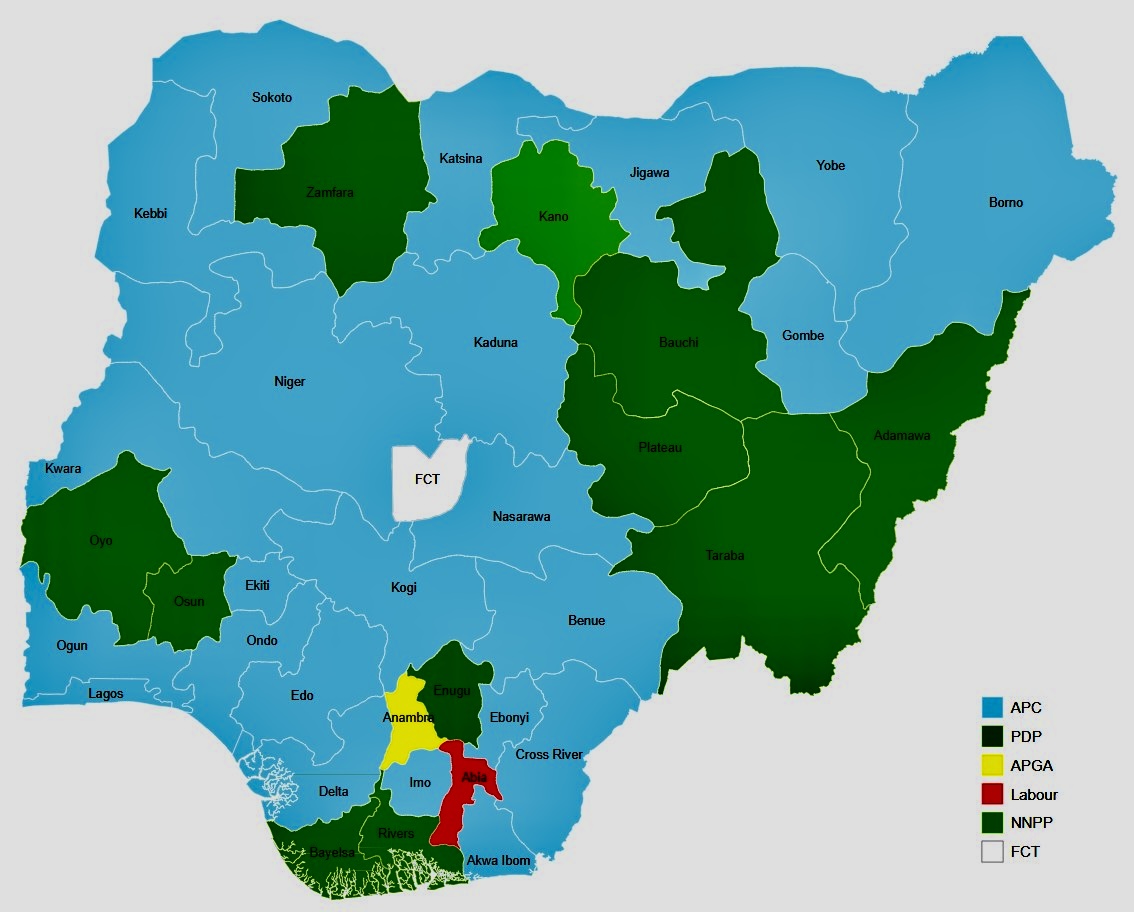
What some people interpret as the country drifting into a one-party dictatorship is simply a political tendency that forms part of Nigeria’s political evolution toward maturity and stability. It is the manifestation of what may be described as “osomotism”—a blend of biological science and human behavioral patterns, demonstrating the intersection of biology and social science in a typical human society. Molecules in the body migrate from one part to another in search of better prospects for survival. Likewise, human beings migrate from one part of the world to another in search of better living standards and economic opportunities.
In politics, politicians behave like molecules, moving from one political platform to another where there are better prospects. The opposition political parties in Nigeria are unstable, disorderly, and fragmented. Politicians, sensing that they may become casualties of this fragmentation and disorderliness, simply move of their own volition to a party that offers better prospects. Over time, things settle, and politicians begin to aggregate on the basis of ideology.
Conclusion: There is no cause for alarm. Nigeria’s constitutional safeguards, historical experience, and political diversity make the imposition of a one-party dictatorship virtually impossible. What is unfolding is not a descent into authoritarianism but rather a natural phase in the country’s democratic evolution.
@ Okoi Obono-Obla