

by Prof Bolaji Aluko
Solar Power
——————-
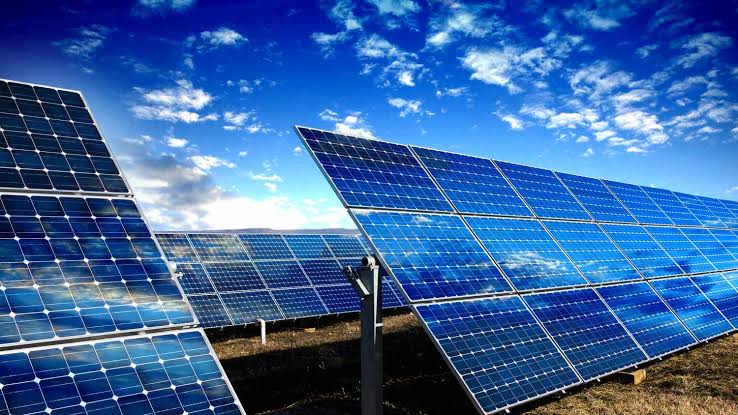
Depending on local insolation, this requires anywhere from 0.5 to 2 hectares of land per MW. Solar panels are typically 2 meters by 1 meter, and each rated 200-600 watts. They must be completed by controllers, inverters, batteries and even fuel generstors/hydropower in hybrid fashion
Gas Power
—————–
IMW for 1 day is 24,000KWh. For CNG, Power efficiency is ~4KWh/cubic meter, or 1MW CNG requires ~6000 cubic meters of gas per day – or roughly 1 skid (or tanker) per day.
Hydrodam power
—————————
The equation for converting hydropower to electrical power is:
P = η × ρ × g × Q × H
Where:
– P = electrical power output (W)
– η = overall efficiency (dimensionless)
– ρ = water density (kg/m³) = 1000
– g = acceleration due to gravity (m/s²) = 9.81
– Q = flow rate (m³/s)
– H = head (m)
Mechanical power (Pm) is given by:
Pm = ρ × g × Q × H
Then, electrical power (Pe) is:
Pe = η × Pm
For hydroelectric power plants, η typically ranges from 0.8 to 0.9.
For a medium to large hydropower plant (say 100-500 MW), typical head values range from 50-300 meters. But it varies widely:
– Low head: < 50m
– Medium head: 50-500m
– High head: > 500m
Depends on the site and design.
Let’s take a 25 meter head dam; for
Pe = 0.8 x 1000 x 9.81 x Q x 25.
For Pe = 1MW = 1,000,000KW
Q = 5 cubic meters per second = 18000 meters per hour = 18 million liters per hour
Organic Waste to Wealth
————————-‘
The amount of organic waste needed to generate 1MW of electricity varies depending on the type of waste, technology used, and moisture content.
Rough estimate:
– 1 MW of electricity from biogas (food waste, agricultural waste): 50-100 tons/day
– 1 MW of electricity from biomass (wood chips, crop residues): 20-50 tons/day
If used tires are added to organic waste, it can reduce their amount. Adding used tires to organic waste can boost electricity production in a few ways:
– *Increased energy density*: Tires have a high calorific value (around 30-35 MJ/kg), which can enhance the overall energy output. (Burnning 1 ton/day of tires could be equivalent to getting 0.1MW of electricity)
– *Co-digestion benefits*: The carbon-rich tires can balance the nitrogen-rich organic waste, improving biogas production and stability.
– *Improved gas yield*: Some studies show that adding tires can increase biogas yield by up to 20-30% due to the synergistic effects.
ongoing.
Tarriffs and Contracts
——————————–
Cost reflective tariffs are typically N150 – 250 per KWh depending on mix of grants, debt and equity, and lengths of contracts are typically 10 to 20 years
Govt and Development Partiies can provide limited grants, and will not typically do more than 20% equity participation.
Bolaji Aluko
April 2026
PS: Any errors noticed or comments are welcome














Leave a comment