

By Okoi Obono-Obla
Eburutu and the African Roots of Ancient Israel: Reclaiming History Beyond Eurocentric Narratives-
Abstract:
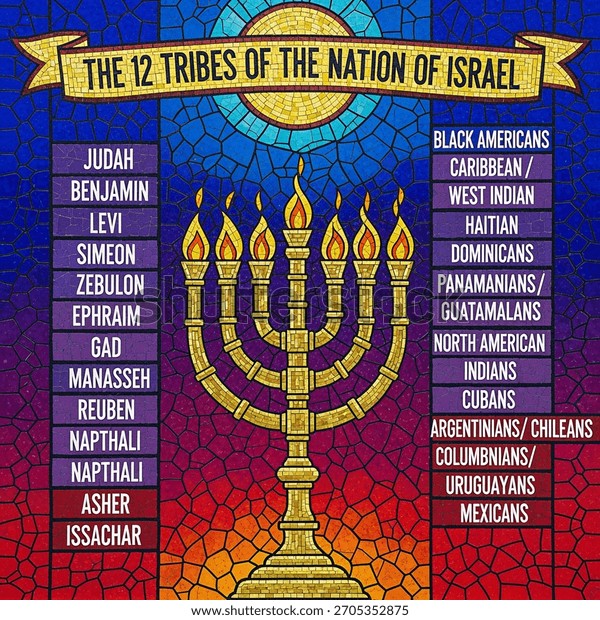
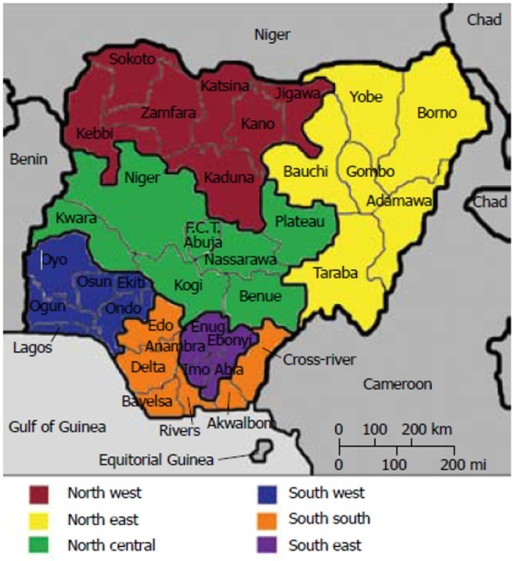
This paper explores the concept of Eburutu—a term believed to be a corrupted form of “Hebrew”—and its claimed connection to ancient Israel. Several ethnic groups in the Cross River Basin of Nigeria, including the Efik, Oron, Arochukwu, Yakurr, Ohafia, Abribia, Bahumuno, Biase, and Olulumo (Ikom), assert descent from one of the lost tribes of Israel. This perspective challenges conventional Eurocentric narratives by situating ancient Israel within Africa, particularly in relation to the Sinai Peninsula and its historical ties to Kemet (Ancient Egypt). The paper also examines historical assertions by Tacitus, Godfrey Higgins, and Anu M’Bantu that biblical figures were Black, thereby reinforcing the African-centered interpretation of ancient Israel.
Introduction:
The question of African connections to ancient Israel has long intrigued scholars and communities alike. Among the peoples of the Cross River Basin, the belief that they are descendants of the lost tribes of Israel is expressed through the concept of Eburutu. This claim situates Biblical figures such as Moses, Jacob, Abraham, and Solomon within an African context, suggesting that they were Black people and that Israel itself was historically part of Africa.
Historical Background:
The Sinai Peninsula, often described today as part of Asia, is geographically a land bridge between Africa and Asia. Historically, however, Sinai was ruled by Kemet (Ancient Egypt), whose name means “the land of Black people.” From the First Dynasty (c. 3100 BC), Sinai was considered part of Kemet and was known as Mafkat (“Country of Turquoise”), where Egyptians mined turquoise at multiple sites. This demonstrates that the region traditionally associated with Israel was deeply connected to Africa.
Eurocentric Constructs and the “Middle East”:
The modern concept of the “Middle East” is a colonial invention. The term was first used by officials of the British Indian Administration and later popularized in 1902 by American naval strategist Alfred Thayer Mahan to describe the area between Arabia and India. This Eurocentric framing has distorted historical geography, separating Israel from Africa and placing it in a fabricated “Middle East.” In reality, the lands of ancient Israel were part of Africa’s northeastern region and under the influence of Kemetian civilization.
Analysis:
The claims of Eburutu descent highlight the importance of reconstructing African history from within, rather than relying on external narratives shaped by colonial and hegemonic interests. Several historians have reinforced this perspective:
– The Roman historian Tacitus (AD 56–c.126) noted traditions that connected the Hebrews with Ethiopia, implying African origins.
– The British historian Godfrey Higgins (1772–1833), in his monumental work Anacalypsis, argued that biblical figures such as Moses, Solomon, Jacob, and David were Ethiopians—Black and dark-skinned people.
– More recently, Anu M’Bantu and Gert Muller, in Ancient Black Hebrews and Arabs, contend that biblical evidence describes the Hebrews as Afro-haired and Black. According to their research, Abraham, Jacob, David, and Solomon were all Black.
These assertions, though controversial, resonate with African oral traditions and the claims of the Cross River Basin peoples. They collectively challenge the dominant Eurocentric paradigm and support the idea that ancient Israel was not only geographically African but also culturally and ethnically tied to Black identity.
Conclusion:
The concept of Eburutu and its claimed connection to ancient Israel underscores the need to resist Eurocentric distortions and reclaim African agency in historical interpretation. The perspectives of Tacitus, Higgins, and Anu M’Bantu provide scholarly reinforcement to African traditions that situate Israel within Africa and describe its figures as Black. Whether one accepts these claims literally or symbolically, they serve as a powerful reminder that history must be told from multiple perspectives. Reconstructing African history is not only about correcting distortions but also about affirming identity and cultural heritage.
References:
– Higgins, G. (1836). Anacalypsis: An Attempt to Draw Aside the Veil of the Saitic Isis; or, An Inquiry into the Origin of Languages, Nations, and Religions. London: Longman.
– M’Bantu, A., & Muller, G. (2009). Ancient Black Hebrews and Arabs. Houston: Sankofa Publications.
– Tacitus. (c. 110). Histories. (Various translations).












Leave a comment