

President Donald Trump’s Gunboat Diplomacy, Rattling and Producing a Global Disorder
By Dr. Joel Ademisoye, United States
Having read the Iranian author’s article, whose personal identity remains unknown to the readers as well. The piece by the Iranian man, I think he has spoken genuinely and candidly about the Iranian people, and their historic, fugal internal forces, problems and the external enemies and conflicts facing the country, which have constrained the Iranian people’s lack of trust in the imperialist, Super Power of America as their freedom fighter and liberator as well. The author cited the historic records of and the information about the U. S.’s intervention and its colossal failures in Iraqi, Libiya, Afghanistan, etc. Hence, the Iranian people have the pessimism, skepticism and doubt about the U. S.’s genuine interest in, commitment to and support for the democracy, freedom and the independence of the Iranian people. The recent experience of the United States’ abandonment and sudden withdrawal from some countries like Afghanistan, Libiya, Iraqi, resonates across the world, especially with the President Trump’s political ideology of Trumpism, Nationalism and Conservatism, which are translated into and reflected in the Trump administration’s national policy of “America First.” The principles of Nationalism and America First are arguably, the underlying factor and the driving force behind the President Trump’s Global Emergency Tariffs policy, which has led to the unilateral imposition of 10 to 15 or in some cases a 50% tariffs on some perceived enemy countries like Brazil and India, even worse, 145% on certain Chinese imports and goods. Without mincing words, President Trump’s global tariffs policy has led to the tariffs war, reciprocal tariffs and dislocational effects on the global trade. It is also observed that the tariffs are weaponized as a political and economic tool against certain countries like Brazil, India and China as well.
Similarly, in the U. S. Foreign Affairs arena, under the President Trump administration, the political ideology of Nationalism and America First, is playing an important role in the decision, selection and targeting of countries in the administration’s foreign policy. For example, the Trump administration took the unorthodox approach to expunge or eliminate the U. S. Agency for International Development (USAID), which provides the humanitarian assistance and foreign aid to the developing and poor countries around the world, in the areas of health care and supply of vaccines to fight the diseases and infections among the world’s children.
In addition, the world has woken to a radical shift in the U. S. Foreign Affairs policy arena, in the President Trump’s second coming to The White House, with his introduction and use of the Gun-boat- Diplomacy, which is very uncharacteristic of the American government that is considered, perceived and seen as the leader of the democratic governments and free world, as reflected by the President Joe Biden administration in the United States. I vividly recall that the Biden administration hosted the U. S. – African Leaders Summit in the nation’s capital Washington, D. C., in order to discuss ties, strengthen trade, investment, democracy and good governance in the African continent in December 13 -15, 2022. The Biden administration approach to the U. S. foreign policy, is diametrically opposite of the Trump’s strategy of the Gunboat Diplomacy, which is characterized by the use of the military force.
However, there is a paradigm shift in the U. S. foreign policy arena, President Trump’s pattern of the Gunboat Diplomacy has emerged, as the primary tool for the pursuit of the foreign policy goals and it has been widely used under various circumstances in political and economic issues such as his effort to forcibly acquire or annexation of the Country of Greenland as part of the United States, to ensure the country’s national security. Greenland, an autonomous territory, with its elected political leaders, but under the control of Denmark, both vehemently opposed to and rejected the President Trump’s idea and offer of making a deal to purchase the Country of Greenland, with a population of 56,542 people (2025). Interestingly, I found out that Greenland is a member of the European Union (EU) and the North Atlantic Treaty Organization (NATO), which the United States is also a member. Question: Why is President Trump’s motive in threatening to use military force to acquire and annex the Country of Greenland, an idea that other members of the NATO, strongly opposed to and rejected as well.
Furthermore, the world has been exposed to and witnessed increasingly so, the President Trump administration’s use of the Gunboat Diplomacy in the weak, developing countries of Venezuela, Nigeria and Iran, Ukraine, etc. What is Gunboat Diplomacy? It is a method used in the pursuit of foreign policy objectives through the conspicuous display of naval power, constituting direct threat of warfare should terms not be agreeable to the superior force (Source: Wikipedia.). For example, the Trump administration has built up a U. S. naval force along the coastlines of Venezuela and Iran, before the military invasion to capture President Nicolas Maduro and launching military strikes against the Iran nuclear facilities in the country. I found something interesting about President Trump’s Gunboat Diplomacy and its strategy, he no longer calls the U. S. Department Defense, which he renamed the Department of War, without the U. S. Congress’s authority and approval.
In the case of Venezuela, an oil producing country with a population of 28.41 million people (as of 2024), President Trump unilaterally ordered the military invasion of the country, arrested and brought President Nicolas Maduro in chains, to the New York City in the United States to face the multiple charges of “narco-terrorism, conspiracy to import cocaine, and possession of machine guns and destructive devices.” This is not first of its kind for the president of a foreign country, Venezuela to be arrested and brought in the chains to stand trial in the New York City. I vividly recall in 1989, President of Panama Manuel Noriega, similarly arrested by the U. S. forces and brought to the United States to face the charges of drug trafficking and racketeering and tried in the Florida court. Noriega was convicted and sentenced to prison, where he spent 17 years. It seems that the use of Gunboat Diplomacy is a common thread, that woven together the Republican Party administrations of George H. W. Bush in Panama, George Bush in Iraq and President Donald Trump in Nigeria, Venezuela and Iran.
In the case of Nigeria, President Trump, expressed his anger and disappointment over the genocide against the Nigerian Christians by the Islamic jihadists and terrorists in the Northern Region of the country. Many members of the MAGA Republican Party in the U. S. Congress vehemently and openly opposed to the genocide against the Nigerian Christians, served as a political pressure group and a driving force for compelling the President Trump administration ordered a military strike against the ISIS terrorists in the Sokoto State in the Northern Nigeria on Christmas Day, December 25, 2025.
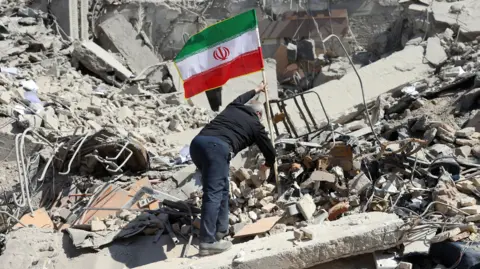
The use of the Gunboat Diplomacy by the President Trump administration is apparent, but came to a head in the case of the U. S. – Israeli joint military strikes against the Islamic Republic of Iran on Saturday, February 28, 2026, which led to the death of the Supreme Leader, Ayatollah Ali Khamenei.
It is worth mentioning that Iran like Venezuela, is a major oil producer and exporter of oil, with a population of 92.4 million people (UN projections for 2025.). According to President Trump, his main goal is about the “freedom” of the Iranian people (Source: Natalie Allison and Tara Copp, “Trump: No Letup Until Mission Done,” The Washington Post, March 1, 2026, PA1 and PA10.). However, what is claimed to be a military strikes against Iran for its lack of coming to the negotiating table to discuss its stoppage of the nuclear program.
Let me share some background information on Iran with my readers, improve their knowledge and understanding of the country’s domestic features and ethnic composition, complexity and conflict. Contrary to the image that the Iranian government provides to the world regarding its ethnic unity and solidarity, it isn’t a monolithic country, rather a diverse, multi-ethnic and multicultural country, which consists of: Persian- 60%, Azeris-15- 20%, Kurds- 5-10%, Baluchis – 2-3% and Arabs-2-3%. In a multi ethnic country like Iran, there is bound to be ethnic rivalry and competition among the diverse ethnic groups for the country’s resources and oil revenues as well. Thus, there are questions of ethnic favoritism and discrimination in the distribution of the national resources, oil wealth and as the minority groups are crying out of and complaining about the marginalization of their population. Without no doubt, the ethnic composition of Iran, has implications for the country’s politics, the holder of political offices, who gets elected to the legislature and the office of the presidency, etc. I, therefore, see the management of ethnic diversity, divisions and conflicts as a preoccupation of the Iranian government. Also, the Iranian government is facing the problems of the lack of ethnic cohesion and integration, which could be taken advantage of and exploited by the country’s external political and military enemies like the United States and Israeli governments in the ongoing war.
Iran has long been under microscope lens of the United States and Israeli, because primarily of its nuclear development program. The honest truth is, that the U. S. – Israeli don’t want a nuclear Iran in the Middle East, for many reasons, which I can’t discuss here, for the sake of brevity. But, the President Trump administration has accused the Iran leadership of negotiating in bad faith.
But, over the years, the U. S. Government, depending on the political party (Democratic or Republican Party) in The White House, it has been monitoring, supervising and managing the Iranian Nuclear Development Program via the gathering of intelligence and the report from the International Atomic Energy Agency (IAEA), whether Iran is exceeding its capped uranium stockpiles of 2015. The U. S enforcement mechanism for the Iran nuclear program in terms of the compliance with the agreement, including the imposition of economic sanctions, use of satellite imagery, threat of military strikes, etc. You might recall that the Trump administration last carried out a military strikes against the Iran nuclear facilities in June 2025.
On Saturday, February 28, 2026, the Middle East and the world at large woke up to the news of the U. S. – Israeli military strikes against the Iran nuclear facilities, with no end in sight. It is alleged that Iran failed to come to the negotiating table in order to discuss and make a deal with the Trump government about its nuclear program. Guess what? The world is already feeling the effects of and experiencing the negative economic impacts of the U. S. – Israeli and Iran War, as the oil prices jumped through the roof globally to the highest level in recent times. If the Strait of Hormuz, a 23-mile passage with a 2-mile open for ships to navigate and movement of oil, which is about 20% of the world’s supply, is closed as often threatened by Iran, it would compound the problems of the world’s trade and the oil supply chains.














Leave a comment