
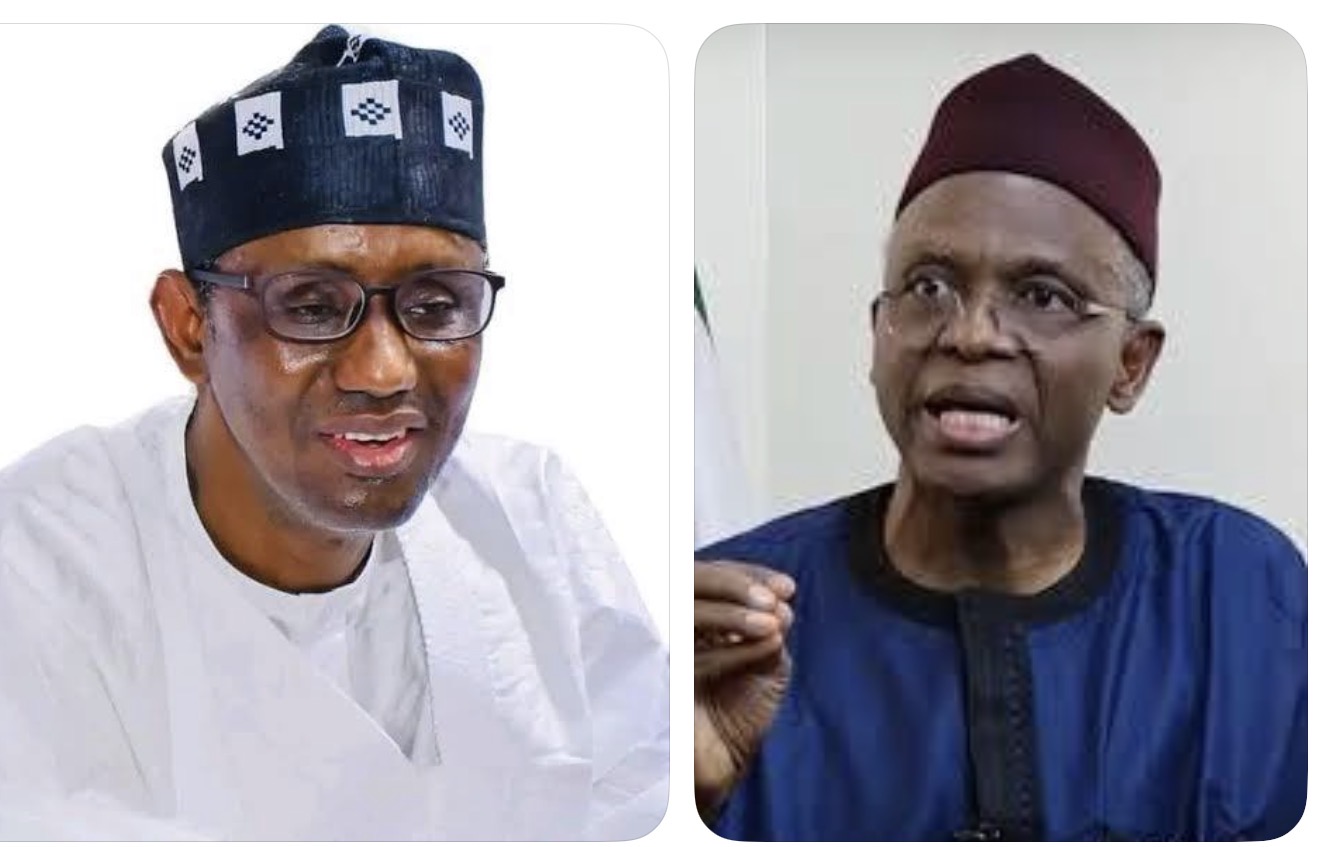

Nasir Agbógungbórò el-Rufai
By Suyi Ayodele
(Published in the Nigerian Tribune on Tuesday, February 17, 2026)
https://tribuneonlineng.com/nasir-agbogungboro-el-rufai/
He was meant to be second-in-command to the Owa Obokun of Ijesaland; in reality, he was the town’s de facto ruler.
Ògèdèngbé Agbógungbórò (he who goes to war bearing his deity along) was the great 19th-century Ijesha warrior whose steel had been tempered in the furnace of the Yoruba wars. A hard man in a hard age, he first bore the fierce praise-name A-ké-ré-ko-rò-abì-jà-wà-rà (small, sharp-tempered, and explosively spontaneous).
Properly counted among the Ijesha kingmakers, he was more powerful than the king and all of the other kingmakers combined. His huge frame confirmed his immense authority. He was a law unto himself; even the king could not question him.
When he died in 1910, it was said that the reigning Owa Obokun danced in relief and proclaimed himself king in truth at last. For all along, the monarch had known where power truly resided —not in the palace, but in Ògèdèngbé.
His appellation “Ògèdèngbé” captured his combustible readiness to confront any challenge with raw, unfiltered anger. On the battlefield, his steadfastness earned him the praise-title Atìponponlójúogun (the one who never blinks before war). His huge stature, quick temper, and lightning responses fused into that richly onomatopoeic epithet, Abì-jà-wà-rà bi Ekun (explosively spontaneous like the Tiger). His given name was Orisarayibi Ogundamola. But history remembers deeds, not baptismal names. And so it remembers Ògèdèngbé.
In today’s Nigeria, amid the turbulence of contemporary politics, one is tempted to see a reincarnation of that warrior spirit in the Kaduna-born politician, Nasir Ahmad el-Rufai. The former governor shares with the legendary Ijesha strongman not a similar build, but a volatile temperament, and a reputation for bold, even audacious confrontation. He, too, might answer to A-ké-ré-ko-rò-abì-jà-wà-rà.
Yet there is a divergence. Unlike Ògèdèngbé, el-Rufai is diminutive, but like him, he is quick to the fray, his interventions often sudden and unsparing. But where the warrior’s fury was forged in the clangour of existential battles, the modern politician’s combat sometimes carries an added edge — an unmistakable bitterness that sharpens his hubris and defines his style.
Nasir el-Rufai is a middle-aged man. But he is not in any way wise like Ògèdèngbé. I say this without any intention of insulting the ex-minister, ex-governor and now one of the leaders of the opposition African Democratic Congress (ADC). Or maybe I should say he is a man that is not well grounded in the philosophy of the ages. Who do we blame for that?
My countryside orientation tells me that kingmakers are usually not the favourites of the Throne. Those who made kings what they are don’t usually benefit from the milk and honey that flows from the Crown. In ancient days, we were told, growing up, that two sets of people don’t stay in the same town with the king after his coronation.
The first set is those who are childhood playmates of the king. Once the king is crowned, his age mates are expected to leave the town. Why? Because they share the same childhood experiences with the king. The belief is that those chaps are not likely to show the Throne the respect it deserves. That attitude, in modern-day parlance is known as see-finish. Familiarity, the saying goes, breeds contempt. Monarchs are absolute, they are death (Ikú), they are disease (Àrùn); kings are misfortune (Òfò), and they are great-loss (Àdánù). To avoid contempt from the King’s contemporaries, his age mates vacate the town after his coronation. Staying in the same town with one’s playmate as the king portends danger. The men of old were wise.
The second set of people is those who influenced the ascension of the king. Here, there is a difference between the traditional kingmakers whose responsibility is to select and crown the king and those who influenced the ascension. In Yorubaland, those ones are known as Afobaje. In most Yoruba towns and villages, the Afobajes are usually six in number. That is why they are called Ìwàrèfà.
But there is another set of kingmakers who are not occupying the position traditionally. These ones are the powers-behind-the-throne; the influential members of the community who make things happen. They provide the logistics and ensure that their favourite gets to the throne. In doing that, they deploy everything they have to enthrone their preferred candidate as king.
Every king knows who enthroned him. Every king equally knows that he who assists the Tortoise in climbing the tall tree also has the capacity to bring it down (Eni tó gbé Alábahun gun igi lè gbe wá’lè). So, kings always resolve to cut every power-behind-the-throne to size. A Yoruba philosophy speaks to that: Afobaje ni oba maa únkókó pa (the king kills first the one instrumental to his enthronement).
What does a wise unofficial Afobaje, a power-behind-the-throne, do immediately a king is crowned? Native intelligence says he either leaves town or lives as if he is not in town. He stays off the palace. He talks to no one about the king and his conduct on the throne. He, like the proverbial Benin three wise monkeys, sees no evil, says no evil and hears no evil about the Crown. That is the only way a power-behind-the-throne can live in the same town with the king he helped in enthroning and still keep his life. All the Afobajes who challenge the Throne don’t live to tell the tales. Examples abound.
This is the wisdom that is lost on el-Rufai. I don’t know how his recent confrontation with the government of the day will end. Only God knows tomorrow. But I know that the former governor of Kaduna State is on a bloody battlefield. He had been in government before. He knows well enough that he is up against something bigger than the proverbial game caught in Nte’s trap.
Nasir el-Rufai is a bitter man. Yes! He is bitter because the government he played a major role in bringing to power has not been fair to him. I hope nobody is denying the fact that the Kaduna big man was a major factor in bringing the Bola Ahmed Tinubu Presidency to a reality. He, the records have it, galvanised the North to support Tinubu in 2023. From the All Progressives Congress (APC) presidential primaries to the general election, el-Rufai stood behind Tinubu like the mountains surrounding Jerusalem. Every labourer deserves his rewards. The Holy Writ supports that. el-Rufai should not be an exception. The same way the head of the monkey was moulded is the same way that of the baboon was shaped!
If he asked for a chunk of the big elephant meat that the Presidency is, he is adequately justified. Politics, a not-too-nice friend of mine, says is workchop – where one works and chops (eats). Having supplied the bullets that killed the elephant, it is totally wrong for those in power today to have shut out el-Rufai from the dining room. The man is justifiably bitter over that.
It is even worse for the former Minister of the Federal Capital Territory (FCT) to have been disgracefully shut out of the dining room when he had already washed his hands preparatory to the sumptuous dinner, the way Godswill Akpabio-led senate screened him out of the ministerial nomination. Truth be told: if indeed President Tinubu had wanted el-Rufai in his cabinet, a thousand and one Akpabios could not have denied him that slot!
So, el-Rufai has every right to be bitter about the shabby treatment he got from Tinubu after he ‘worked’ like an uncircumcised donkey to ensure the Lagos man became president. This bitterness led to anger and at the moment, the man from Kaduna has reached the end of his tether. He is ready to go down, and he will drag anyone along with him. Again, this is where the lack of wisdom on his part comes in.
God bless those formative years I spent in the countryside. In my cradle, I learnt that power is like the venison of Àgbìgbò (hoopoe). It is the sweetest of all venison. You may wish to confirm this fact from the next native hunter to you. No hunter, no matter how generous he may be, wants to share the meat of the hoopoe. When hunted down, the hunter hides it in the inner pouch of the hunting bag! This is why, when the legendary Tortoise got one and his friends came when he was about to devour it, he had to climb a tree, feigned a fight with his wife and refused to climb down until the wife cleared the pot of soup.
That is the native intelligence that is lost on el-Rufai, when he thought that Tinubu would share the power of the Presidency with him after winning the 2023 general election. How el-Rufai failed to realise, with his acclaimed intelligence, that Tinubu would not bring him close to the seat of power, knowing his (el-Rufai’s) ambition and the ambivalence surrounding his personality, interrogates the man’s acuity.
And true to type, el-Rufai did not allow the dust of his humiliation by the senate to settle when he assumed the position of opposition leader to the Tinubu Presidency. Think of a man who is ambulant in his thoughts and decisions, get a picture of el-Rufai! That character instability justifies, more than anything else, the decision of Tinubu to send el-Rufai on a wild goose chase to the Senate by nominating him as a minister only to pull the rug off his feet at the confirmation session! An accountant friend once volunteered that whenever he gets an approval from the company’s owner to pay a voucher, he checks the back of the paper to see what the real instruction is. That was what happened to el-Rufai. Akpabio checked the back of the nomination paper to read the President’s real instructions! Politics? It is neither a game for the simple nor sport for the lily-livered. Too bad; too sad!
What we are seeing today in el-Rufai is a man who felt cheated, humiliated, used and dumped and he is now bitter and angry. What makes him more dangerous to himself than the Nigerian society is the agglutination of the bitterness and anger in him. There is nothing wrong in a man being angry, especially when he feels cheated. But when one allows anger to produce bitterness, the carrier of those two vices is both a danger to himself and the society he lives in.
The last one week has really brought out the beast in the Kaduna politician. It started with the silly move by the Department of State Security (DSS) to arrest him on his arrival from a trip outside Nigeria. How a supposed intelligence agency could behave the way the DSS did in its failed airport arrest of el-Rufai tells more about the inefficiency of the ones we commit our security to! How on earth the agency felt that it could achieve that with a king of drama like el-Rufai beats my imagination.
And I must confess: I love the calm way the man lectured the errand boys on procedures. His “not even the President can tell me what to do” response ‘sweet my belle’! That was a cretinous move that the bovine head of the agency should be ashamed of! Who does that, especially with a connate demagogue like el-Rufai? When I saw the video footage of that airport encounter, something told me that Nigerians would be treated to an unending drama in the days to come. Now, the theatre of the absurd has begun.
Hours after the DSS flop, el-Rufai took the drama to its scene two. In an interview on Arise TV last Friday, he announced, to the embarrassment of the entire nation’s security architecture, that he had the information that the National Security Adviser (NSA), Mallam Nuhu Ribadu, ordered his arrest. Asked how he got to know that, the ‘bold’ man (so his friends called him) said that someone “tapped” the telephone line of the NSA, listened to his conversation and informed him that it was Ribadu who orchestrated the airport melodrama with the DSS!
Whoever might have watched that interview could not have missed the seriousness of el-Rufai while admitting that the telephone line of the NSA had been compromised! I take a bet: el-Rufai was not playing drama! He said what I sincerely believe is the naked truth! This is Nigeria. Anything happens here! This is a country where bandits threatened to shoot down the presidential aircraft and the Presidency was said to have paid a huge sum of money to buy off the grenade-launcher from the bandits!
While we were still trying to unravel what could have happened such that our NSA has become so vulnerable that his telecommunication conversations are no longer secure, el-Rufai dropped another bomb. The NSA, this time around, he wrote, had imported a 10-kilogramme of Thallium Sulphate to Nigeria. This is more than a serious allegation given the potency of the poison Thallium Sulphate is.
The United States National Institute of Health’s National Library of Medicine (NIH/NLM), in a piece published in PubMed Central (PMC), the “free full-text archive of biomedical and life sciences journal literature”, says: “Acute thallium poisoning is a severe condition that typically leads to death within 5 to 7 days, although fatal outcomes can occur anywhere from 40 hours to over 2 months depending on the dose. Rapid ingestion of high doses (several times the lethal 8–12 mg/kg) often results in death within 2–4 days.”
In essence, el-Rufai, in his January 30, 2026 letter to the NSA, which was received on February 11, 2026, is asking Ribadu to explain why he imported Thallium Sulphate, which the PMC article adds: “While 5–7 days is a common timeline for severe cases, some fatalities have been reported as early as 40–48 hours. …The first phase involves acute gastrointestinal distress, including vomiting, diarrhea, and abdominal pain”, leading to a neurological phase of two to five days with “Significant neurological symptoms (coma, seizures, paralysis) appear as the metal affects the central nervous system, often leading to respiratory failure.” Even if the “victim survives the initial days”, the article says the effect of Thallium Sulphate can lead to “Alopecia” (partial or complete hair loss) within “two to three weeks post-exposure.”
This, no doubt, is a grave allegation that the NSA and the Presidency must not treat like the usual unfounded outcry from the opposition. Like el-Rufai said in his letter to the NSA, the alleged importation of this deadly substance raises genuine concerns about public safety. More importantly, the fear of Nigeria sliding to a one-party State and the possibility of the President becoming an unrestrained tyrant, makes it exigent for the government to get to the bottom of the allegation.
The response from the office of the NSA, as endorsed by Brigadier-General O.M. Adesuyi, denies the allegation of procurement and states that “…the allegation has been formally referred to the Department of State Services for a comprehensive investigation. Your Excellency and other parties involved, who may possess relevant information relating to this claim will be duly invited by the Service to provide any evidence that may assist in an in-depth investigation, establishing the facts and ensuring due diligence.” This, to me, is not sufficient!
I subscribe to the democratic principle that in any democracy, the opposition must be allowed its due voice. Most valuable, I, at the same time, strongly endorse the fact that morality places a burden on the opposition to be reasonable, responsible and be conscious of public peace. Being in an opposition is not a liberty to raise an asinine alarm that can trigger an upheaval! This is why, no matter the sentiment anyone may wish to advance, I am of the strong opinion that el-Rufai must be taken in to prove ‘beyond reasonable doubt’, this grave allegation that the NSA had procured poison from Poland to Nigeria!
The NSA owes it a duty to all of us that his office is not another “nest of killers”. He must demonstrate to us that we can go into the 2027 general election without any fear that a killer substance is lurking in a corner to snuff life out of us. He will only discharge this all-important responsibility by ensuring that this allegation is not swept under the carpet; but one that is professionally, thoroughly and transparently investigated.
No blackmail should derail this onerous responsibility; no political sentiment should persuade the NSA from the resolve to solve the riddle. Ribadu and the entire security architecture must save us the agony of the mental torture of ascribing any death to an imaginary inhalation of a deadly substance released to the atmosphere by the government. Nigerians’ problems should not be compounded by an addition of imaginary ‘chemical warfare’ in the hands of those employed to protect them!
And for el-Rufai and the other members of “the political opposition leadership” who have the information about the importation of the poisonous substance, I pray they have enough evidence to prove that the allegation is true! I hope el-Rufai realises that by the allegation, he has raised the perturbation among the citizenry to an all-time crazy level! I pray, and fervently too, that this is a claim that can be substantiated! Oloungbo!, I fervently pray and hope this is proven beyond any iota of doubt.










Leave a comment