
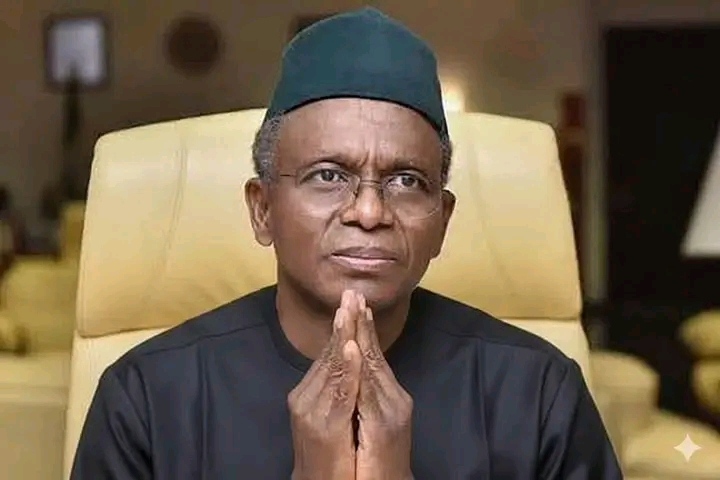

BEYOND EL-RUFA’I: WHEN PERSONAL RECKLESSNESS MEETS NORTHERN TRIBAL LOYALTIES – A DANGEROUS COCKTAIL FOR NIGERIA’S DEMOCRACY
– By Khaleed Yazeed
Here is a truth that must be spoken without apology: a former governor publicly admitted to tapping the phone of a sitting National Security Adviser. He made unsubstantiated claims about the state importing lethal chemicals. And instead of asking “what did he know and when did he know it?” a significant portion of the North has rallied around him, not because he is innocent, but because he is “one of us.” This is not about El-Rufai anymore. This is about a culture of tribal immunity that threatens to swallow whatever remains of Nigeria’s fragile justice system.
Let us remove emotions from the equation and focus on facts. El-Rufai himself confessed to intercepting the NSA’s communications. He alleged the importation of Thallium Sulphate, a toxic chemical, without providing a shred of evidence. The NSA denied the claim, and the matter is now with the DSS for investigation. In any country with functioning institutions, these alone would warrant serious scrutiny. But in Nigeria, they have sparked something else entirely: a solidarity movement wrapped in tribal colours, where the accused becomes the victim simply because of his surname.
This is the Northern dilemma that must be confronted. When one of our own is accused, regardless of the evidence, the instinct is often not to ask “what did he do?” but “who is after him?” This is not loyalty; it is tribal capture of justice. It is the same mindset that allows corruption to fester, that shields the powerful, and that ultimately leaves ordinary Northerners suffering under the weight of bad leadership while defending the very people who failed them. El-Rufai served as DG BPE, FCT Minister, and two-term Governor of Kaduna State. He has held enough public office to fill the resumes of ten men. Yet when questions arise about his conduct, the reflex is to rally behind him, not because the questions have been answered, but because he carries a Northern identity.
Some have framed El-Rufai’s invitation by the EFCC as harassment. But let us be honest: a man who publicly admits to tapping a National Security Adviser’s phone cannot expect to walk away without questions. In the United States, the United Kingdom, or even Ghana, that admission alone would trigger an investigation. It would not matter if you were a former governor or a former president. So why is it different in Nigeria? Why does an invitation become “persecution” simply because the person involved is a Northern Muslim politician? This is the double standard that must end. If El-Rufai is innocent, let the investigation prove it. If he is guilty, let him face the consequences. But shielding him because of tribal loyalty does not protect the North, it protects impunity.
El-Rufai is not a naive politician. He knows the game better than most. He understands that by framing his invitation as a political attack, he can activate the tribal and religious sentiments of his supporters. He knows that in the North, when one of our own is “attacked,” the instinct is to close ranks. And it is working. Across social media, the narrative is shifting. What should be a conversation about a former governor’s admission to phone tapping has become a conversation about “Tinubu targeting Northerners.” What should be a demand for evidence has become a defence of a man based on his surname. El-Rufai is counting on this. And tragically, many Northerners are delivering exactly what he expects.
This is not just about El-Rufai. This is about the future of accountability in Nigeria. If every investigation becomes a tribal or religious contest, then no powerful person will ever be held accountable. Corruption will thrive. Security breaches will go unpunished. And ordinary Nigerians, the ones who cannot afford to rally tribal support will continue to suffer while the powerful shield each other. The North must ask itself a difficult question: do we want justice, or do we want protection for our own, regardless of what they have done? If the answer is the latter, then we have no right to complain when other regions do the same. We become participants in the very system we claim to oppose.
To my fellow Northerners, I say this with love and concern: El-Rufai is not on trial because he is Northern. He is under scrutiny because of what he said and did. If he has evidence, let him present it. If he is innocent, let the system clear him. But let us not make the mistake of defending him simply because he shares our language or our faith. That kind of loyalty is not strength, it is weakness. It is the kind of thinking that allows leaders to fail us repeatedly, knowing that when trouble comes, we will rally behind them regardless of their actions. We must demand better. We must demand that our leaders be accountable to us, to the law, and to the nation.
El-Rufai’s case is far from concluded. Investigations are ongoing. Evidence may yet emerge. But one thing is already clear: how we respond to this case will define what kind of society we want to be. Will we be a society where power protects itself through tribal loyalty? Or will we be a society where accountability applies to everyone including former governors who admit to tapping security phones? The choice is not El-Rufai’s to make. It is ours. And the North, my North must choose wisely.
–Khaleed Yazeed
A Northern son, born from the ashes of silence, rising to confront the lies that chained his people.







Leave a comment