
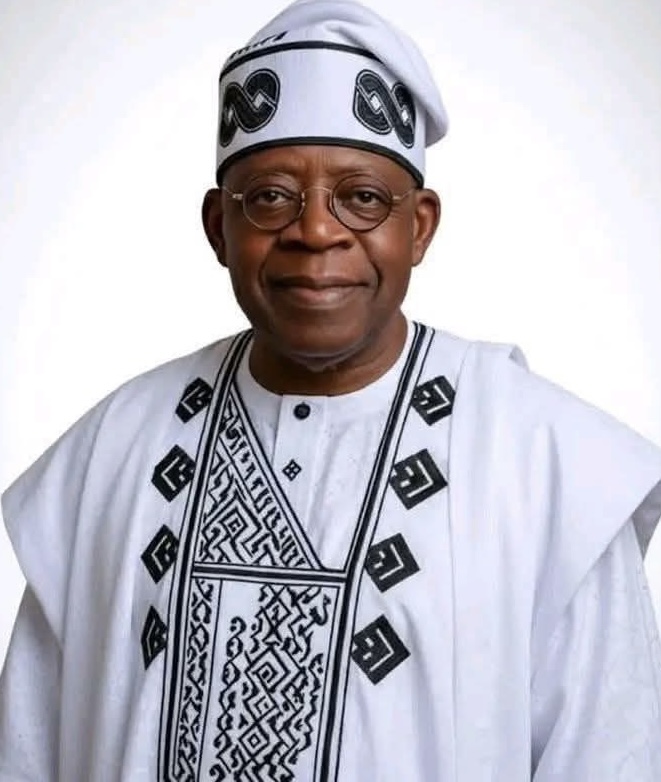

The Facts President Tinubu’s Critics Won’t Discuss
By Idowu Ephraim Faleye
From the very first day President Tinubu took office, certain groups decided that nothing good could ever come out of his government. Political rivalry, primordial sentiments, deep-seated bitterness, and envy shaped their judgment from the start. There was no patience. No balance. No fairness. Just noise, anger, and daily abuse. For these professional haters of President Tinubu, Nigeria began on May 29. Everything before that date was conveniently erased, and every broken system suddenly became his personal creation.
That is the dishonest game being played, and sadly, many people are buying into it. What they deliberately refuse to mention is the Nigeria we all lived in before now. A Nigeria where suffering was systemic. A country where failure was normalized and recycled as policy, and where citizens succumbed to endure instead of demand.
If you are 50 years old or younger, you know this truth. Fuel scarcity was routine. Fuel queues were part of your childhood and adulthood. People slept at filling stations like displaced persons in their own country. Cars became bedrooms. Productive hours were wasted chasing petrol. When fuel eventually came, it was either hoarded or sold at black market prices that insulted common sense. This went on for decades, yet today, this same set of haters acts as if it never existed.
They will not tell you how fuel importation became a cartel business. How an oil-producing country had no functional refineries (public or private), yet spent billions importing fuel. They will not tell you how subsidy became a criminal enterprise that fed a few while bleeding the nation dry. They will not tell you how scarcity was engineered and recycled because some people made fortunes from it. Instead, they shout “hardship” today, as if hardship is new to Nigerians.
They will also not tell you about education. Endless ASUU strikes were our normal. A five-year course became seven or eight years, not because students failed, but because the system kept collapsing. Lives were paused. Dreams were delayed. Many never returned to complete their university education. Before NELFUND, students dropped out quietly because they could not afford school. Nobody protested for them. Nobody cared. It was just another Nigerian tragedy we accepted and moved on from.
Now, those who were silent then suddenly remember students, but only as a weapon against the current government. They refuse to admit that, for the first time in years, there is a structured attempt to address student funding at scale. Is it perfect? No. But pretending nothing has changed is either ignorance or deliberate dishonesty.
Then there is the economy, which they discuss with selective memory. Naira crunch, forex scarcity, and wild exchange-rate fluctuations did not start under Tinubu. Businesses planned blindly for years. Importers woke up to new rates every morning. Governors cornered subsidised dollars and flipped them for profit. Ordinary Nigerians paid the price. This broken system was managed and defended by the same people who were in government then and are now in opposition shouting the loudest, yet they speak as if the rot began yesterday.
They also refuse to mention the era of the Aso Rock cabal. A small, unelected group that decided national policies behind closed doors—printing currency at will, borrowing to stabilize exchange rate, and manipulating the foreign exchange system. Presidents became symbols while faceless men ran the country. Nigerians complained. Analysts warned. Insiders leaked. Nothing changed. Accountability vanished into private rooms. Today, those who benefited from that arrangement now parade themselves as champions of democracy.
At the state level, the story was even worse. Governors borrowed recklessly, not to build industries or infrastructure, but simply to pay salaries, and even then, many paid half salaries. The national Secretary of the leading opposition party governed his state when the minimum wage was ₦18,000 and was paying half salary. Later, ₦30,000 or ₦35,000 looked good on paper, but several states could not pay it. Workers survived on hope and side hustles. Failure was normalized. The nation laughed because crying had become exhausting. Imagine the level of insult Nigerians endured, and imagine people now pretending that era was better than today.
Let us talk about debt, because this is where hypocrisy becomes loud. Nigeria was using almost all its internally generated revenue to service debt. Over 90 percent of our crude oil was stolen. We sold future oil to pay today’s bills. Tomorrow was sacrificed so that today could look calm. That was the economic model—push the problem forward and let the next generation suffer. The opposition knows this truth very well, which is why they avoid discussing it completely.
Even basic government services were traumatic. Getting an international passport took months or years unless you “knew someone.” Files disappeared. Applicants aged while waiting. Travel plans died quietly. This inefficiency was defended as normal bureaucracy. Today, improvements are happening gradually, but the haters will not mention it. Silence is safer than honesty.
Another truth they refuse to acknowledge is the quiet but steady progress on insecurity. When banditry, kidnapping, and insurgency overwhelmed the nation, every shout was “Tinubu.” Every attack was amplified, even by those who were architects of the country’s insecurity problem. Every failure was placed at Tinubu’s feet, as if he personally carried the guns. No one asked how deep and long-standing the security rot was. Now that insurgency is being curtailed gradually, highways are becoming safer, communities are returning home, and coordinated security operations are yielding results, there is sudden silence. No applause. Even those who understand security dynamics refuse to give credit. Instead, they quickly shift focus to another problem, because once you name a dog a bad name, it becomes easier to hang it.
The same dishonesty plays out with the economy. Petrol and food prices became painfully high, and the outrage was loud and nonstop. But now that prices of foodstuffs are gradually coming down, supply is improving, and markets are adjusting, nobody wants to talk about it. A rubber of garri that sold for ₦1,500 now sells for about ₦250. Beans that sold for ₦4,000 now sell for about ₦900. Rice that sold for ₦4,000 now sells for about ₦2,000. Good news does not trend for those committed to outrage.
Acknowledging progress would weaken their narrative, so they pretend it is not happening. What we are witnessing is not healthy opposition; it is a campaign of calumny. The goal is not to offer solutions but to poison public perception. Pain is amplified without context. Hardship is weaponized without history. Tinubu is blamed without mentioning what he met on ground.
Reform is painful, yes, but decay was also painful, just slower and more familiar. Nobody is saying this government is perfect. No serious person should. But pretending Nigeria was a paradise before now is an insult to our collective memory. You cannot fix decades of damage without discomfort. You cannot dismantle entrenched interests without resistance. Those screaming the loudest today are often the same people who benefited from the old broken order.
The opposition refuses to tell Nigerians what exactly they would have done differently. They offer vague promises without details. They do not explain how they would remove subsidy without pain or keep it without bankruptcy. They do not explain how they would manage forex, fund education, stabilize the economy, pay workers, service debt, manage insecurity across geopolitical zones, and still attract investors. They just shout.
Nigerians deserve better than noise. We deserve honesty. We deserve issue-based campaigns that respect our intelligence. We deserve a clear account of where we were before now, where we are now, what has changed, and what has not. We deserve to hear what you will do better and exactly how you will do it. That is the minimum respect the electorate deserves. Anything less is not opposition; it is deception.
*©️ 2026 EphraimHill DataBlog*













Leave a comment