
By Boma West
On a day meant to honour the dignity of labour, millions of Nigerian workers march not in triumph but in quiet defiance of a system that has long collected their sweat and returned almost nothing.
There is a particular cruelty in celebration without reason. Every first of May, the streets of Nigerian cities fill with workers dressed in their union colours, marching and chanting, carrying placards that tell a story their government has refused to read carefully. Workers’ Day in Nigeria has become less a festival of achievement and more an annual audit of broken promises, a ritual that the Nigerian state participates in with remarkable ease and equally remarkable insincerity.
To understand why, one must begin with how Nigeria thinks about work itself. The country’s labour market is a landscape of stark contradictions. On paper, Nigeria has a labour force of over 113 million people. In reality, roughly 90 percent of those workers operate entirely outside the formal economy, trading, driving tricycles and taxis before and after dawn, sewing garments and others as a means of survival.

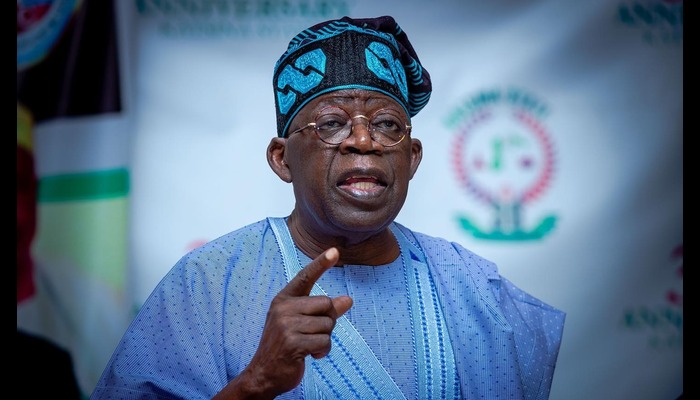
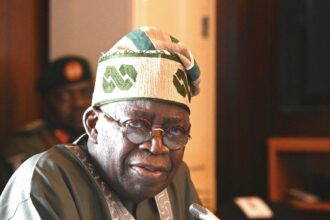
The minimum wage tells you everything you need to know about the relationship between the Nigerian state and its workers. After years of contentious negotiations, President Bola Tinubu signed the National Minimum Wage Act in July 2024, raising the floor from ₦30,000 to ₦70,000 per month. The announcement was received with cautious relief by labour unions, though anyone who paused to do the arithmetic knew the celebration was premature. At ₦70,000, a worker earns roughly ₦840,000 a year before deductions. Analysts have estimated that sustaining a family of four above Nigeria’s poverty line requires far more than that figure can provide. The minimum wage was barely born before inflation, fuel price hikes, and soaring electricity tariffs began eating it alive.
What is perhaps more damning is that even this inadequate number was never universally applied. As of April 2025, just 13 of Nigeria’s 36 states had actually implemented the new wage. Workers in Jigawa, Zamfara, Akwa Ibom, and Bayelsa, among others, continued receiving far less than the law demanded. State governments cited dwindling revenues and delayed federal allocations. But the same governments managed to fund elaborate ceremonial events, procure fleets of vehicles for political officials, and maintain the salaries of legislative aides with considerably less friction. When the money is there, it flows in the right direction; when it is not, workers are asked to understand.
Inside the civil service, the suffering wears a different face. Nigeria’s Consolidated Public Service Salary Structure covers seventeen grade levels, a neat bureaucratic ladder that implies orderly progression and fair reward. In practice, those lower rungs are corroded. A grade level one officer, the entry point into federal service, earns between ₦930,000 and just over ₦1 million per year. Monthly, that is roughly ₦77,000 before deductions. In Lagos or Abuja, where a single room costs far more and a bag of rice now rivals the minimum wage in price, that figure is less a salary than a monthly reminder of vulnerability. Meanwhile, the Permanent Secretary at grade level 17 earns ₦6.9 million annually, a disparity that no government has ever seriously moved to address.
Civil servants deeper into the system speak of a particular kind of exhaustion that has nothing to do with workload. Many workers in Ministries, Departments and Agencies are financially strangled by loan repayments that consume their salaries before the money even reaches their hands. Cooperative societies and bank deductions leave some workers with take-home pay so thin it barely covers transportation to the offices where they sit and manage those very loans. Meanwhile, promotion arrears pile up. In many agencies, staff who should have been elevated years ago remain frozen at their current grade levels because vacancies were never created, because the bureaucracy moved too slowly, or because someone at the top of the hierarchy decided that movement threatened their own authority. The Association of Senior Civil Servants of Nigeria has repeatedly flagged this stagnation as a crisis, and the government has responded with the characteristic language of promise: we are looking into it, steps are being taken, the matter is under review.
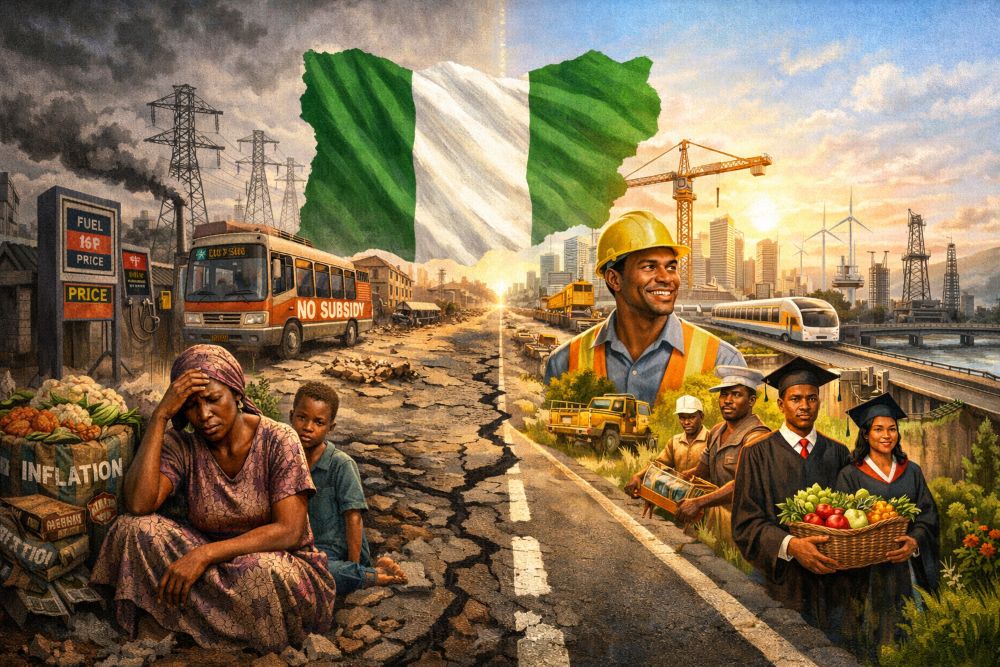
It is worth examining what the government’s broader economic reforms have done to the worker’s daily reality. When President Tinubu removed the petrol subsidy in May 2023, declaring those three words that would reshape millions of lives, fuel prices spiralled and the naira collapsed. The prices of food, transportation, rent, and medicine rose in tandem. Food inflation climbed sharply into 2026, with February alone recording a punishing month-on-month jump. The workers who kept showing up to their offices through all of this, absorbed these shocks without compensation. A February 2025 survey found that 78 percent of workers earning ₦70,000 or below said their wages could not cover monthly food and transport costs. The number speaks quietly but it speaks volumes.
The health sector has not been spared. Nurses, paramedics, and allied health professionals have faced unpaid allowances and deteriorating working conditions while simultaneously watching the cost of their own commutes double. Academic staff unions have mounted strikes over crumbling infrastructure and unpaid dues. Every strike is followed by government negotiations, partial agreements, and a return to the same underlying dysfunction a few months later. The pattern is so familiar it has acquired a rhythm of its own, a grim and repetitive song that nobody in power seems tired of hearing.
Labour unions, for their part, have not been without fault. During the #EndBadGovernance protests of August 2024, when citizens took to the streets in anger and over a thousand were arrested, the Nigeria Labour Congress was conspicuously absent. A movement that drew its energy from the very economic conditions unions are supposed to fight proceeded without organised labour walking alongside it. That absence was noticed, and it deepened a creeping public sense that union leadership has grown more comfortable than combative, more interested in the theatre of negotiation than in the outcome. The demand for a ₦615,000 minimum wage, which unions raised during the 2024 negotiations before settling far below it, revealed both the extent of the crisis and the limitations of the bargaining process. In March 2026, the Joint National Public Service Negotiating Council renewed pressure, calling for a ₦154,000 minimum wage, a 120 percent increase from the current floor. It is a figure that better reflects reality, even if it remains below what independent analysts suggest is needed for dignified urban living.
The way forward is not complicated to describe, even if it is difficult to deliver. It begins with treating the minimum wage as a floor, not a ceiling, and ensuring that every state in the federation implements it without delay or excuse. It continues with a commitment to indexing wages to inflation at regular intervals, so that what a worker earns today does not silently shrink into poverty by the time the next review arrives.
Beyond wages, the government must invest in the infrastructure of daily life that subsidises the cost of working: efficient public transit that does not consume a third of a worker’s salary before they reach their desk, functional public hospitals where civil servants do not have to pay out of pocket for care their job is supposed to guarantee, and affordable housing that does not force families to commute three hours each way from the urban fringes.
Labour unions must rediscover urgency. They must go beyond the annual May Day speeches and engage consistently, visibly, and without compromise on behalf of their members. Workers, in turn, must hold both their government and their unions accountable, understanding that solidarity is not a ceremony but a posture maintained through every season.
Nigeria’s workers are not asking for luxury. They are asking for the dignity that comes from a salary that can actually sustain a life, from a government that counts their contribution rather than merely counting on it. On this Workers’ Day, the marching feet deserve more than applause. They deserve answers, action, and above all, the quiet, uncelebrated respect of being paid what they are actually worth.