By Abubakar Adam Ibrahim
Thu, 9 Apr 2026 6:06:12
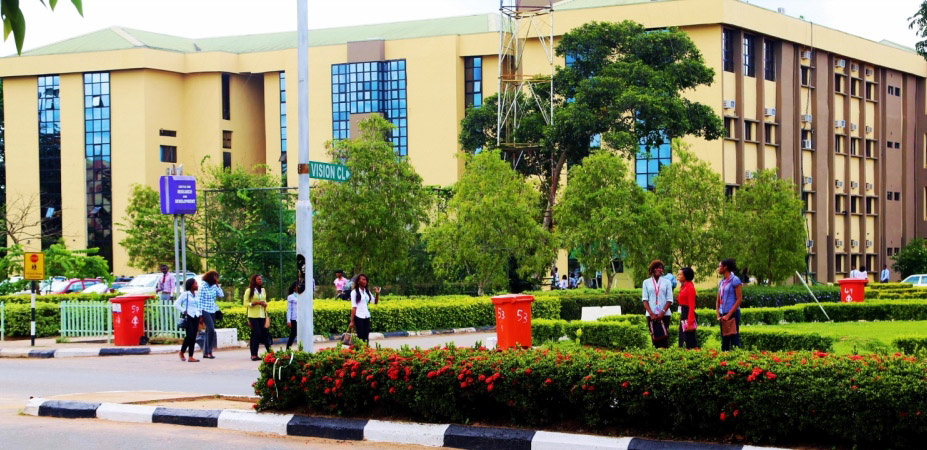
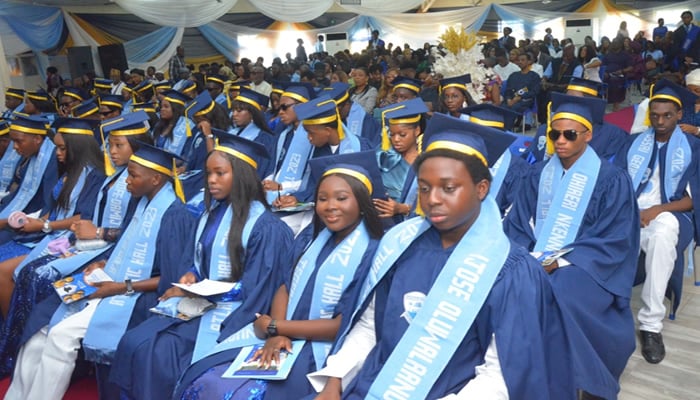
Over the years, universities have proliferated across Nigeria with astonishing speed that one is compelled to marvel at this rate. Between 2015 and 2023, the federal government approved the establishment of over 130 universities. As degree-awarding institutions, these universities have been churning out degree holders with the brutal efficiency of a relentless machine, but as research centres that produce applicable research, well, therein lies the rub.
Nigeria operates the largest university system in Africa by sheer volume, yet it produces a fraction of the research output of countries with far fewer institutions. Somehow, through neglect, politics and chronic underfunding, we have quietly reengineered the system into a credential-dishing machine rather than a knowledge-generating system. We are now at a point where the universities and the graduates they produce are not much different in terms of quality. One only has to engage with a Nigerian graduate to see the banality of thinking that shoddy university training could not improve.

Today, we have about 300 universities, with almost evenly split between private and public ones. These public ones are almost evenly split between state and federal ones. Of course, these numbers change with approvals being issued at a rapid rate. There are about 200 pending applications on file. While these proliferations can be assessed on the basis of our rapidly expanding population, which is projected to hit 400 million by 2050, surpassing that of the US and becoming the third most populous in the world, the issue is in the quality of these institutions and their usefulness in nation-building. We are approving universities based on political expediency and personal interest rather than academic excellence.
About 260 universities, with most of the new ones established in the homes of politicians or establishing governors, the academic staff to student ratio are hugely disproportionate and fall below the global benchmark. As a whole, Nigeria had no university in the QS World University ranking in 2024. By contrast, two South African universities made it to the top 300.
Once, Nigerian universities ranked highly globally, attracting international students and fostering institutional collaborations. However, years of neglect have eroded these achievements. The University of Ibadan and Ahmadu Bello University were once intellectual hubs that drew scholars from across Africa and beyond. Those were the times when Nigeria was a net importer of intellectual capital. Today, it is a net exporter of academic talent.
My main grouse in this column is our research output. While we have about five times as many universities as South Africa, our research output is just about a third of South Africa’s. This is no surprise considering how underfunded university research is in Nigeria. We invest only 0.2 per cent of our GDP on research and development as opposed to the UNESCO-recommended one per cent. The bulk of research funding, about 96 per cent, comes from the government, with the private sector contributing only 0.2 per cent; the rest are self-funded, meaning underpaid professors have to plunk in chunks of their meagre salaries to research. The complete dependency on state funding, which is as erratic as we know it to be, is counterproductive. As bad as that is, the worst thing is that a lot of the research produced from the universities ends up on the shelves and is forgotten.
One prominent example that comes to mind is Professor Ebenezer Meshida’s 26-year research that resulted in the invention of Lateralite, a stabilising material for lateritic soils aimed at making roads cheaper and more durable. He almost gave up his research for lack of funding and other research challenges. Despite being recognised with the NLNG Nigeria Prize for Science in 2008, his innovation never translated to widespread road adoption because there was no linkage between academia and industry to turn research into real infrastructure projects that could have a real impact on the lives of people. Prof. Meshida died in 2019 without ever making the impact he hoped his groundbreaking research would have, and it is hard now to see how that dream would come true with him gone.
The recent plans to introduce the Nigerian Laureate Prize by the Ministry of Education are commendable. This prize will recognise top research from Nigerian universities and will award sizeable prize money to researchers. No doubt, N5 million for undergraduate research, N10 million for Masters, and N20 million for PhD research and innovations will encourage more innovative research; the challenge is ensuring that the award is not compromised by all the things that compromise everything in Nigeria—politics, regionalism, and corruption, to name a few.
The other major challenge is translating these innovations into real infrastructure. We have had the NLNG-sponsored Nigeria Prize for Science for a couple of decades now. In some years, they have had to not award the prize because no suitable submissions were made, but worse, to the best of my knowledge, and I stand to be corrected here, not one of the prize-winning research has made the jump from academia to industry.
To address this gap, we must be deliberate about building bridges between universities and industry to implement the little quality research that is being done there at the moment. But first, we must improve the quality of research coming out of our universities. A culture where students essentially copy and paste research, and their professors, some, not all, are far too lazy or unmotivated to do due diligence, has to be addressed. The idea of universities as research centres where meaningful, beneficial knowledge is produced must take precedence over a system that functions as a mere degree-producing enterprise.
While the TETFund exists and is meant to address this gap by funding research in tertiary institutions, it excludes research institutes whose sole mandate is focused on research. While my column is focused on tertiary institution research, I can’t help but notice this policy absurdity that needs to be addressed. Regardless, we fund research in the way we fund road projects or even Wike’s Kugbo Bus Terminal and establish universities as political monuments rather than institutions that can truly help build the country through research and development.
This poor attitude to the university system has led to a significant proportion of those fleeing Nigeria being intellectuals. A professor who earns $300 a month in Nigeria could easily earn between $5,000 and $7,000 per month elsewhere. This has led to a situation where top universities are recruiting Nigerian intellectuals, reducing the country to a mere talent farm.
Nations that invest in their research ecosystems treat their universities as economic infrastructure. Nigeria, especially recently, treats them as social pacifiers and political rewards. The result is a country that produces millions of degree holders but imports solutions to its own problems, from agricultural techniques to medical research on diseases endemic to its own soil, and engineering models for its own terrain. We must understand that making the country competitive in research will also make it competitive economically. We have to be deliberate about enhancing our existing universities to graduate themselves from degree-awarding institutions to institutions that produce knowledge and genuinely knowledgeable persons who can contribute to nation-building. To achieve this, we must be very deliberate about transitioning university research to the industry in ways that will benefit Nigerians.