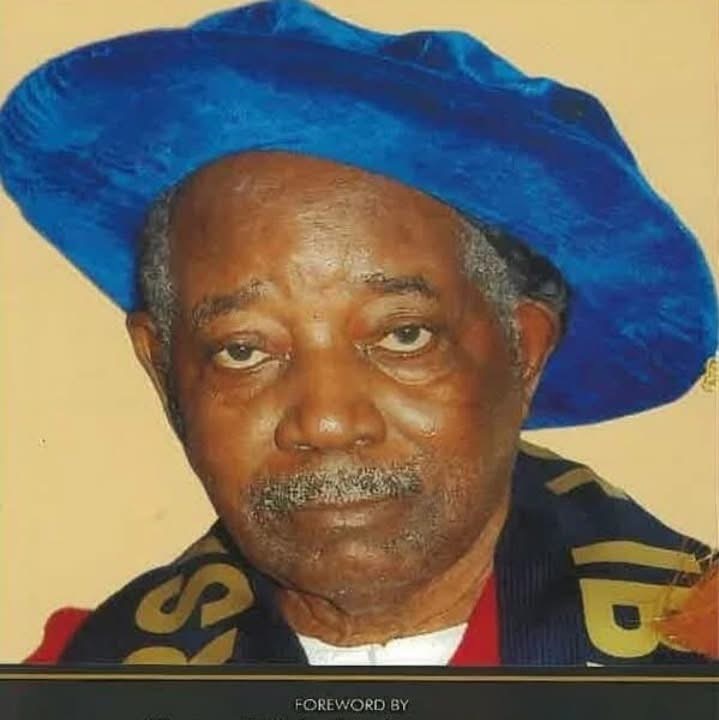
Jacob Festus Ade Ajayi was only 29 years old when he was awarded his PhD in African History. A pioneering Nigerian historian, Ade Ajayi played a central role in redefining the continent’s history by emphasising indigenous voices and perspectives. He challenged the dominance of Eurocentric narratives and worked tirelessly to establish African historiography on its own terms.
Born On May 26, 1929, in Ikole Ekiti, Western Nigeria, Ajayi was raised by Christian parents, Ezekiel Adeniyi Ajayi (a personal assistant of the Oba of Ikole during the era of Native Authorities) and Comfort Bolajoko.
He began his formal education at Christ School, Ado-Ekiti, and later attended Igbobi College, Lagos, between 1940 and 1946. After spending a year at Yaba Higher College, Lagos, he became a foundation student at the newly established University College, Ibadan (UCI) in 1948. There, he earned a BA General degree in History, Latin, and Classics in 1951.
Awarded a Nigerian government scholarship, Ajayi pursued an honours degree in history at the University of Leicester from 1952 to 1955. It was during this time that he came under the influence of Professor Jack Simmons, whom he credited with “making a historian out of him.” Ajayi graduated with a first-class degree in 1955 and went on to undertake graduate studies at the University of London.

His doctoral thesis, supervised by Professor G. S. Graham, focused on Christian missions in Nigeria: a topic chosen because missionary records, unlike colonial administrative archives, often emphasised African agency and participation. This approach was crucial in an era when African scholars were striving to validate the study of African history on its own terms. Ajayi successfully defended his thesis in 1958 and returned to Nigeria as Lecturer Grade II in the Department of History at the University College, Ibadan.
His homecoming to Ikole-Ekiti was momentous. As the first PhD holder from the entire community, Ajayi was welcomed with a traditional 21-gun salute, an honour typically reserved for royalty and dignitaries.
Ajayi’s academic career was deeply rooted in the University of Ibadan, where he served as a lecturer (1958–1963), professor (1963–1989), and eventually an emeritus professor. Alongside the late Kenneth Dike, Ajayi was a leading figure in the Ibadan School of History, an influential intellectual movement that developed Afrocentric approaches to the study of African history. The school also founded the Journal of the Historical Society of Nigeria, which served as a counter to colonialist and racist narratives in Western academic journals.
Ajayi was also a founder of the Ibadan History Series, published by Longmans in the 1960s, a collection of scholarly works that brought new perspectives to African history and remain relevant to this day.
In 1972, the 43-year-old Ade Ajayi was appointed the 3rd Vice-Chancellor of the University of Lagos. When he took over, the university was struggling with disorganisation and low morale. He implemented a series of reforms, including restructuring academic departments and establishing a transparent, corruption-proof appointment system. However, his tenure collided with the Obasanjo military government during the “Ali Must Go” student protests in 1978 over increased school fees. When a student was shot dead by security forces, Ajayi organised a moving campus funeral. He was subsequently dismissed and returned to Ibadan.
Ajayi believed strongly that history should serve everyday society. He played a central role in reforming Nigeria’s school curricula to reflect Africa-focused research, working with examination boards, policymakers, and textbook publishers. He also helped traditional rulers redefine their post-colonial roles and occasionally served as a behind-the-scenes mediator between political figures, while remaining politically nonpartisan.
One particularly practical solution he devised was a handbook of historical events to assist census-takers in determining the ages of non-literate citizens. If someone said they were born in “the year of influenza,” for instance, officials could record their birth year as 1918.
Internationally, Ajayi was active in bodies like the International African Institute in London. He also collaborated with historian Ian Espie to publish A Thousand Years of West African History (1965), which remains a core educational text. The book drew on archaeology and African primary sources, many in Arabic, to reconstruct precolonial African civilisations.
Ajayi’s landmark work, Christian Missions in Nigeria 1841–91 (1965), argued that the colonial era was a brief interlude in the broader sweep of Nigerian history. He contended that colonial powers often worked through existing African institutions rather than supplanting them entirely.
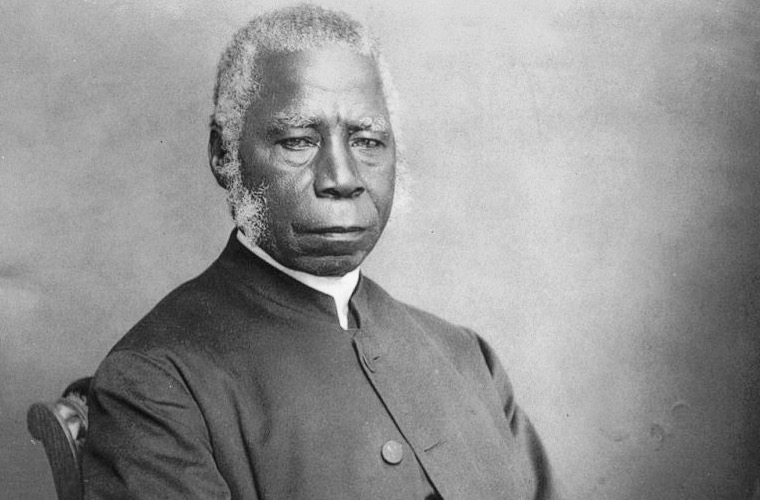
He also wrote a biography of Bishop Samuel Ajayi Crowther, A Patriot to the Core, illustrating how Christianity in Nigeria gave rise to a new class of Western-educated African elites whose aspirations often clashed with both colonial administrators and traditional leaders. In a 1960 article for the Journal of the Historical Society of Nigeria, Ajayi identified this class as the seedbed of Nigerian nationalism.
Importantly, Ajayi did not romanticise the African past. In 2010, he contributed to Slavery and Slave Trade in Nigeria, arguing that the dominant focus on the trans-Atlantic slave trade overshadowed the equally significant trans-Saharan and trans-Indian Ocean slave trades. As with all his work, Ajayi used a blend of oral and written sources, carefully assessed, to elevate African voices and perspectives.
On May 26, 2014, Emeritus Professor Jacob Festus Ade Ajayi made his last major public appearance at his 85th birthday and book presentation of his 558-page biography, “J. F. Ade Ajayi: His Life and Career.”
Exactly two months and two weeks later, he breathed his last at his home in Ibadan. He was survived by his wife of 58 years, Christie Ade-Ajayi (née Martins), his five children, Yetunde, Niyi, Funmilayo, Titilola, and Bisola, and several grandchildren.
A Historian of historians, J. F. Ade Ajayi, as he was commonly known, was buried in Ikole-Ekiti, his hometown, in Ekiti State, on September 19, 2014.