
By Okoi Obono-Obla
Dialogue on Anioma Identity: Between Igbo Heritage and Benin Roots:
I met Barrister Gabriel Egbule Junior when I was in office as Chairman of the Special Presidential Investigation Panel for Recovery of Public Property. We struck a friendship and camaraderie because we shared the same passion for good governance and fighting against corruption. He is a core progressive in deed and action.
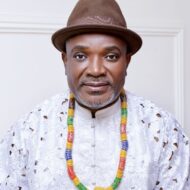
This morning, I saw a post on his wall suggesting that the Anioma people of Delta State have rejected their inclusion in the proposed Anioma State within the South East Geopolitical Zone. I began to wonder, because I was in Ikot Ekpene, Akwa Ibom State, in May 2025 during the zonal public hearing of the Senate Committee for Constitutional Review. The Anioma people came in their colourful numbers, with pomp and ceremony, to support the presentation of their memorandum for the creation of Anioma State, led by their distinguished leader and my friend Senator Munir Ned Nwoko. They loudly declared that they are Igbo people. So, would the same Anioma people now contend that they do not want to be included in the South East Geopolitical Zone?
The following dialogue between myself and Barrister Egbule ensued:
Gabriel Egbule Jnr: Anioma people have flatly rejected being taken to the South East. I really don’t know if there will be any new state creation with this development.
Okoi Obono-Obla: Why the rejection?
Gabriel Egbule Jnr: Historically, we have never been part of the South East. From Western Region to Midwestern Region, Midwest State, to Bendel State, to Delta State.
Okoi Obono-Obla: Are Nigerian geopolitical zones carved on such criteria? Cross River, Akwa Ibom, Bayelsa, and Rivers States were never part of Western Nigeria or the Midwestern State or Bendel State, yet they were lumped with the old Midwestern Region or Bendel State to form the South South Geopolitical Zone. What about that?
Gabriel Egbule Jnr: Chief, in addition, lumping the small people of Delta North into the South East would amount to sentencing them to a lifelong state of being minorities amongst the Igbo people of the South East. The South East as presently constituted shares an uncontested level of homogeneity in language, culture, tradition, origin, and food, unlike the Anioma people. The latter claim to originate from Benin and share similar cultures and traditions. In essence, they will not be comfortable being lumped with our Igbo brothers in the South East.
Okoi Obono-Obla: I know the Benin heritage among the Anioma people, but there is also the Igbo side to it. That is the conundrum of the Anioma people—so complex. In the total sum, we are all one.
Conclusion:
The dialogue reflects the complexity of identity and belonging among the Anioma people. While some embrace their Igbo heritage, others emphasize their Benin roots. This dual identity creates tension in discussions about geopolitical alignment. Ultimately, the question of where Anioma belongs is not merely political but deeply cultural, and it underscores the broader challenge of defining unity within diversity in Nigeria.



The benefits of having a state of their own outweighs whatever disadvantage they think they will fave by being grouped into Southeast. But then it is their choice, Anim state has already completed their brand new fully furnshed and ready to uae government house and state secretariat in Orlu in readiness to grab the slot of extra state for Southeast. So its not an automatic slot for Anioma people. They have compete for it if they need it. Else other will happily grab the slot.
Gabriel Egbule is either willfully lying to Okoi Obono-Obla or he is totally ignorant of the position of Anioma people and their Southeast kins on state creation — Anioma is the choice for both. The lone state to be created is specifically to give the Southeast a 6th, just as is obtainable in most zones of the country. Anioma people have agreed to join the Southeast zone in an Anioma state which will be populated and run by them, so how is that going to make them a minority of anything, as claimed by Gabriel? Anioma state will just become another Igbo state, just as Abia, Imo, Anambra, etc. Is anyone in Imo making Abia a minority? Is anyone in Anambra making Ebonyi a minority? Are you sure that this Gabriel is a lawyer? Anioma people are Igbo people, they are not descended from Benin, contrary to the lie peddled by Igbophobes. Igbanke people of Edo are also Igbo people, they have signaled that they are joining Anioma state. No state is slated to be created from the South-South, so if Anioma people reject joining the Southeast, then Anioma state will have to wait until the next round of state creation — maybe in 50 years.
Anim state will never be created because it a selfish and greedy Orlu people’s criminality calling. We have carried Orlu people for generations after generations but all they want to do now is introduce clannishness in Igbo land by criminally carving out all of the oil producing towns in Imo state (none of which is in Orlu) and calling them Anim state, with capital in Orlu. Unfortunately for greedy Orlu, Ohaji-Egbema, where most of the oil wells are situated does not want to have anything to do with Orlu, they have held a press conference dissociating themselves from Anim state. Equally, Ihiala and the other towns in Anambra state criminally grouped into Anim by Orlu have refused to have anything to do with Orlu. Meanwhile, all these crooked politicians from Orlu who have governed Imo state in the last 20 years have criminally and cunningly built the state House for Anim state in Orlu using Imo state’s money. Orlu are criminals, if I had my way, I would chase them out of Imo state — they contribute nothing (natural resources-wise) to Imo state but they poach everything, greedily and cheatingly. We are trying to reunify all Igbos but Orlu are cunningly and criminally doing the opposite — there will be no Anim state, nobody wants to deal with Orlu’s crookedness and clannishness. After milking Owerri zone dry all these decades, Orlu are are cunningly creating a state, which will be nothing but the next Afghanistan and Eritrea combined — we civilized these Bantus, but they are now acting as if they could ever be smarter than their masters of the 1930s, 1940s, 1950s, 1960s, and 1970s? Tufiakwa!