
Nigeria’s Democratic Journey and the Evolution of Electoral Law:
by Okoi Obono-Obla
Nigeria has practiced democracy for over a quarter of a century, from 1999 to 2026, marking the first time in the nation’s political history that democracy has endured as the form of government for such a sustained period. Excluding earlier phases, democracy first took root in 1951 with the introduction of the MacPherson Constitution, which ushered in democratic elections. This lasted until 1960 when Nigeria gained independence from the United Kingdom, and then until 1966 when the military toppled the civilian government—a span of 15 years.
When juxtaposed with the period from 1979, when the military returned power to a democratically elected civilian government, until December 31, 1983, when another coup terminated that dispensation, democracy lasted roughly four years and three months. Altogether, the years when Nigeria experienced a semblance of democracy between 1951–1966 and 1979–1983 amounted to about 19 years.
The present democratic dispensation, beginning with the 2003 Electoral Act, granted political parties wide latitude in nominating candidates. This latitude, however, gave parties unrestrained powers, including the removal of names of candidates who had validly emerged from primary elections. Such practices led to chicanery and last-minute substitutions, denying legitimate candidates the opportunity to contest under their party’s platform.
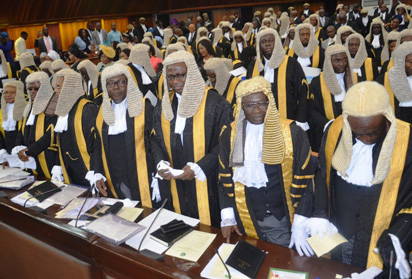
A classical example was the refusal of the Peoples Democratic Party (PDP) in 2007 to allow Rt. Hon. Rotimi Amaechi, who had validly emerged as its governorship candidate for Rivers State, to contest. Instead, the party substituted him with Mr. Celestine Omehia, whom Amaechi had defeated in the primaries. Amaechi challenged this injustice, pursuing the case from the Federal High Court to the Supreme Court of Nigeria. In its landmark judgment, the Supreme Court held that “the candidate of a political party is the person who won the primaries, not one imposed by the party leadership.” This ruling restored Amaechi’s mandate and underscored the principle that internal democracy within parties must be respected.
As a direct consequence of this case, the National Assembly, through the 2010 Electoral Act and subsequent amendments up to the 2026 edition, curtailed the powers of political parties to arbitrarily substitute candidates. Section 33 of the Electoral Act 2026 now bars political parties from changing or substituting candidates whose names have been submitted to the Independent National Electoral Commission (INEC), except in cases of death or withdrawal.
A pertinent question arises: what happens if a candidate dies after nomination but before the polls? Section 33 provides the answer: if the Chief Electoral Officer is satisfied that a nominated candidate has died, he shall countermand the polls in which the deceased candidate was to participate, and INEC shall appoint another convenient day for the election within 14 days.
This demonstrates how law evolves to meet the demands of society. As an organic instrument, it adapts to prevailing circumstances, ensuring that democracy remains resilient and responsive.
Conclusion:
Nigeria’s democratic journey reflects both struggle and progress. From interrupted experiments in the past to the current 27-year stretch of uninterrupted democracy, the nation’s electoral laws have matured alongside its political culture. The Amaechi v. INEC case remains a watershed moment, reminding us that democracy thrives only when the rule of law protects the will of the people. As society continues to evolve, so too will the laws that safeguard Nigeria’s democratic framework.
@ Okoi Obono-Obla