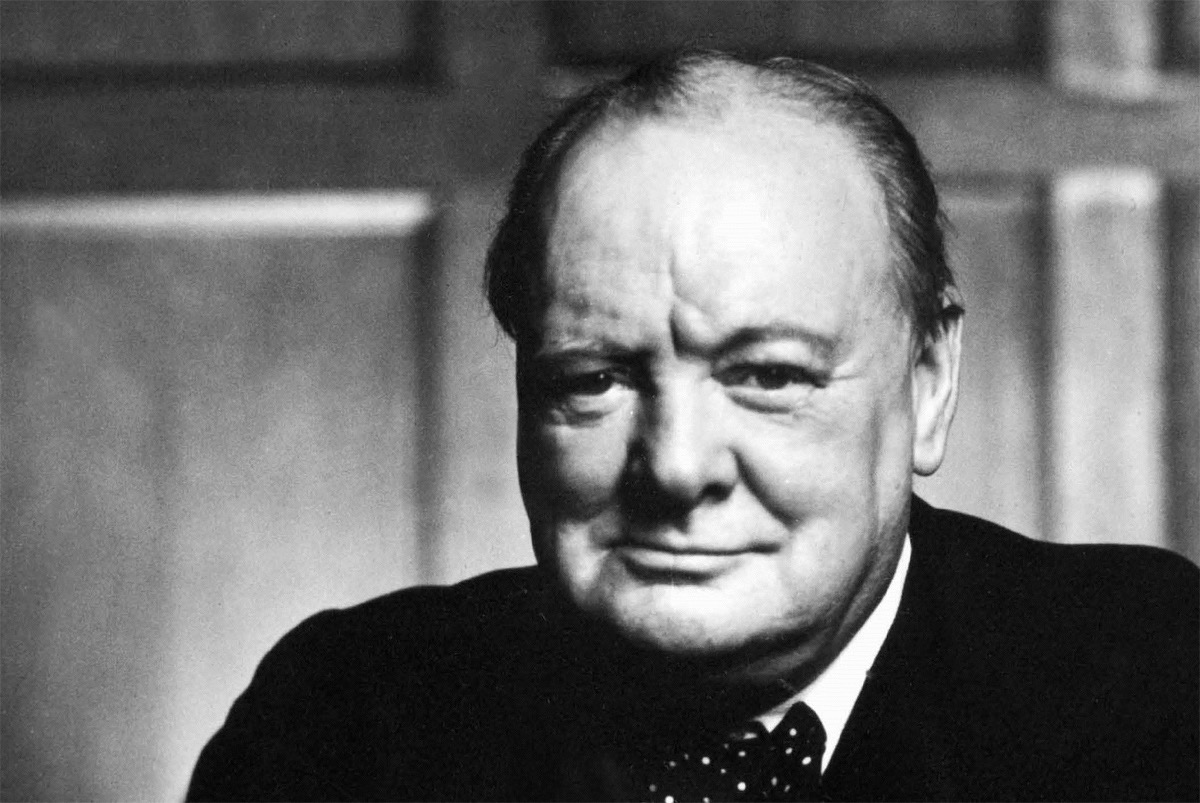
Churchill’s Legacy: From Wartime Leadership to Global Vision:
by Okoi Obono-Obla
President Donald Trump has dismissed the British Prime Minister, Sir Keir Starmer, as someone who does not measure up to the stature of the legendary wartime leader, Winston Churchill. According to Trump, Starmer’s unwillingness to cooperate with the United States in its ongoing conflict with the Republic of Iran demonstrates a lack of the heroic and sterling leadership qualities that Churchill embodied. Churchill’s leadership, he argues, was instrumental in swaying the course of the Second World War toward the spectacular victory achieved by the Allied forces over Germany and Japan, who at one point seemed poised to overrun the world.
At a time when the United Kingdom was on the brink of defeat, suffering devastating blows from the German blitzkrieg on London, Churchill’s sheer courage, determination, and brilliant military strategy pulled the nation back from despair. His leadership turned the tide against the formidable German military machine and inspired a remarkable comeback.

Winston Leonard Spencer Churchill was born on 30 November 1874 at Blenheim Palace, Oxfordshire. He was the eldest son of Lord Randolph Churchill, a prominent Conservative politician, and Lady Jennie Jerome, an American socialite. Educated at Harrow and later at the Royal Military Academy Sandhurst, Churchill began his career as an officer in the British Army. He saw action in India, Sudan, and South Africa, where his daring escape from Boer captivity made him a national hero. Alongside his military service, he worked as a journalist and writer, honing the oratory and literary skills that would later define his political career.
Churchill entered Parliament in 1900 and, despite setbacks and controversies, steadily rose through the ranks. His resilience and determination mirrored his personal motto: “Never give in.” By the time he became Prime Minister in 1940, Britain was facing its darkest hour. His speeches—marked by defiance and inspiration—galvanized the nation and rallied the Allies. Churchill rose like a phoenix from earlier political failures to become one of the greatest leaders the United Kingdom has ever seen in modern times.
Beyond the war, Churchill’s influence extended into global diplomacy and culture. In 1953, he was awarded the Nobel Prize in Literature “for his mastery of historical and biographical description as well as for brilliant oratory in defending exalted human values.” His writings, including The Second World War and A History of the English-Speaking Peoples, remain monumental contributions to historical scholarship.
Churchill also played a pivotal role in shaping the post-war world. Alongside President Franklin D. Roosevelt, he was instrumental in the creation of the United Nations in 1945, laying the groundwork for international cooperation and peace. The Universal Declaration of Human Rights, adopted in 1948, reflected ideals that Churchill strongly championed—universal dignity, freedom, and justice. Furthermore, he was a driving force behind the Atlantic Alliance, which bound the United States and Europe together in a collective security framework that evolved into NATO, ensuring stability in the face of Soviet expansion.
In contrast, Trump suggests that Starmer’s reluctance to align with the United States in its current struggle reflects a failure to rise to the same level of historic leadership. While Churchill’s legacy is defined by courage, vision, and decisive action, Starmer’s stance is portrayed as hesitant and uncooperative.
This comparison, aptly framed as “Churchill’s Legacy and the Measure of Modern Leadership,” underscores the enduring shadow of Churchill’s example in British politics. Whether fair or not, modern leaders are often measured against his extraordinary achievements, a reminder that wartime leadership and post-war vision demand qualities that transcend ordinary politics
By Okoi Obono-Obla